

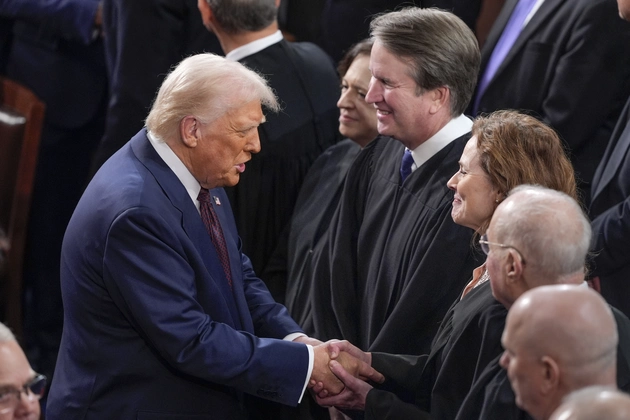










Secretary of the U.S. Department of Health and Human Services (HHS) Robert F. Kennedy Jr. has become one of the most controversial members of President Donald Trump’s cabinet. Known for his leadership among vaccine skeptics, Kennedy has recently implemented new policy shifts that have sparked a national debate about public health, science, and governmental responsibility.
Despite lacking medical credentials, Kennedy has spent years engaging in rhetoric about vaccine safety. He has been involved with numerous vaccine-related conspiracy theories and uninformed claims, such as in a 2005 article that tied autism to thimerosal, a medicinal compound used in certain vaccines. During the COVID-19 pandemic, he also promoted misinformation about vaccines, suggesting that they caused injury and were merely being used to exploit the public for profit.
Since being appointed HHS Secretary, Kennedy has turned his longstanding skepticism into federal policy. One of the first such changes occurred in May 2025, when he directed the Centers for Disease Control and Prevention (CDC) to remove the recommendation of the COVID-19 vaccine for healthy children and pregnant women. In June, Kennedy dismissed every member of the Advisory Committee on Immunization Practices (ACIP), the federal group that issues official vaccine recommendations, and replaced them with new appointees, many of whom lack expertise in immunology and vaccines. Kennedy’s new, vaccine-averse panel voted in June to remove thimerosal from all flu vaccines. As stated by the American Academy of Pediatrics, this action ignores extensive research that proves thimerosal’s safety. Thus, many experts are concerned that this decision will encourage skepticism and reduce vaccine availability in low-resource communities by removing these immunizations from circulation.
Vaccines are one of the most effective tools in public health, as they train the body’s immune system to recognize and defend against specific harmful diseases. In doing so, they reduce the likelihood that a disease will cause serious harm or death. School Nurse Sheila Quinn said, “Vaccines help ensure that people stay safe and don’t face a worse outcome from an illness.” Vaccines also work to protect a larger community, as explained by Science Faculty Mary Kelley. “The concept of herd immunity is really important. It means that if others around you are vaccinated, it’s very hard for that virus to be transmitted through a community,” she said. Herd immunity is especially critical for vulnerable populations such as young children, older people, or individuals who are immunocompromised.
Student sentiments regarding the recent policy changes seem broadly negative, particularly on the basis of RFK Jr.’s expertise. “I feel like there is some murky ground between science and personal belief that I disagree with. I would rather trust an expert or someone with a Ph.D. or with a background in research than someone who does not,” Claire Chow (Class II) said. Many students seem to criticize RFK Jr.’s lack of qualifications and question his ability to separate politics from science. Casey Grimm (Class II) said, “RFK Jr. appointing all new people to the ACIP is not fair, as well. This should be something non-political where there are just facts on the matter and experts who know the facts.”
Although students recognize the overall benefits of vaccines, perspectives on policies and individual decisions vary depending on how they weigh personal choice and public health. “I just go to the doctor’s office and do whatever the trained professional recommends I do,” said Nayan Seetharam (Class I). Seetharam is a proponent of relying on expert judgment over personal discretion, and he furthers his stance by arguing for the mandatory vaccination of all children. “Children are very susceptible to these kinds of diseases, so when you let parents make their own decisions for the baby, they may be putting the baby at risk,” he said. While supportive of vaccines overall, Chow described her family’s more cautious approach. “My family has also been more prone to checking how accurate the flu shot is each year before deciding whether to take it. My opinion is to do whatever suits you: if you are immunocompromised, the vaccines may be lifesaving, but if you are someone who rarely gets sick, I question whether you really need to take it,” Chow said.
In a time of rapid governmental change, it appears that students believe it is crucial to stay informed and listen to the numerous experts working to protect individual and public health. At Nobles, regardless of differing opinions, students consistently prioritize scientific evidence and expertise over overpoliticization