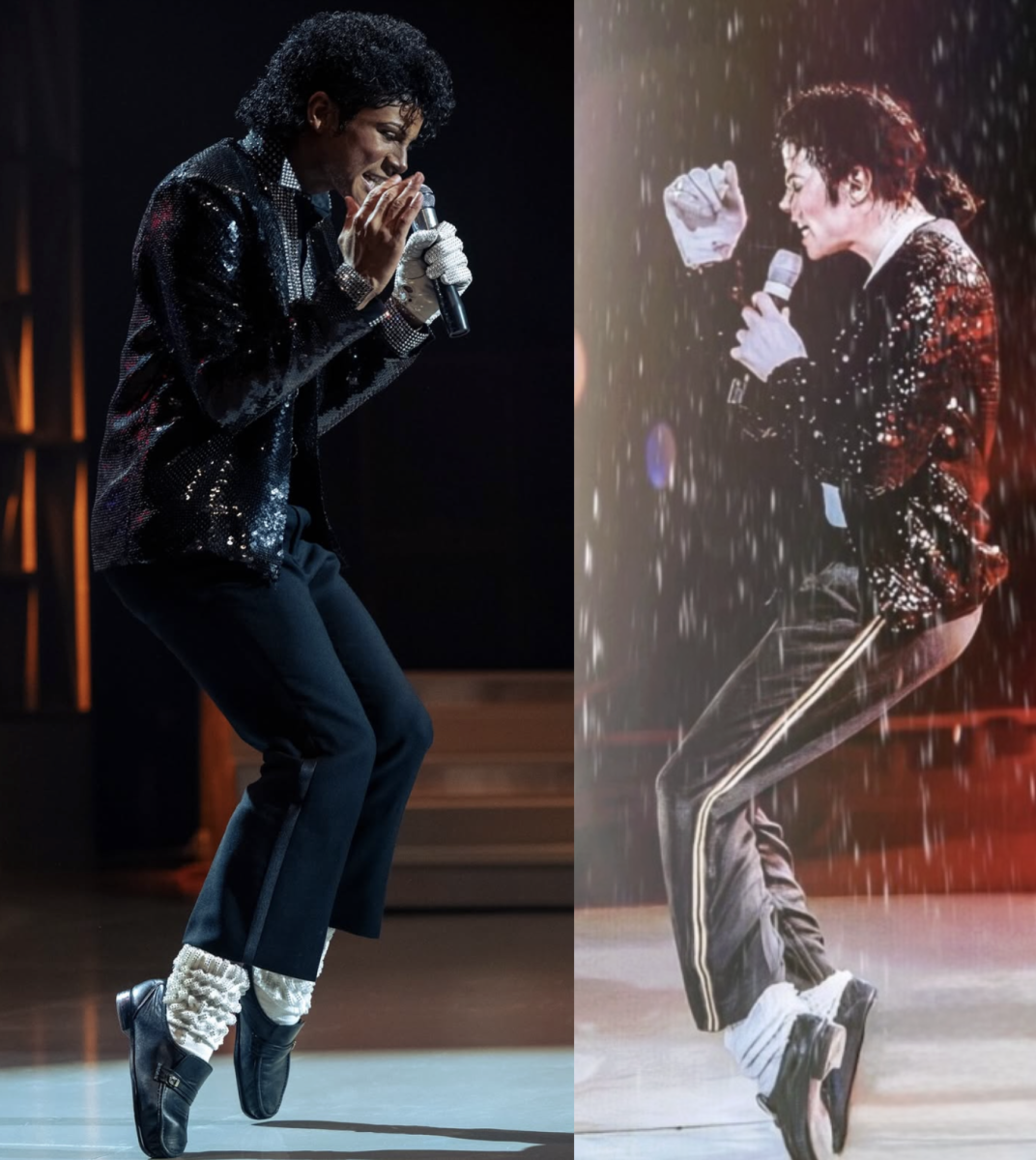























“The best conversations come out of our attempts to make meaning of a person’s life or legacy, and even if it’s not perfect, it’s something that can teach us a lot about the way in which we’re remembering them and the way in which we move forward as a society,” Harper Tyng (Class I) said. The recent release of Michael, a biopic about Michael Jackson backed by his estate and starring his nephew, Jaafar Jackson, has reignited debate over how film should handle the legacy of a controversial figure and the feasibility and morality of separating an artist’s work from their personal life.
The plot of Michael ends in 1988, years before the first child sexual abuse allegations emerged in 1993, so the movie makes no mention of these allegations that Jackson faced later in his life. Jackson Estate Co-Executor John Branca was heavily involved in production, and reportedly told the filmmaking team, “Unless you understand that Michael’s innocent, we can’t have you.” Jackson’s daughter called the film “sugar-coated” and filled with “full-blown lies,” and many critics called it deeply sanitized. Despite negative reviews from film critics, such as Rotten Tomatoes’ critics’ rating of 39%, the audience rating of 97% indicates that fans largely enjoyed the film despite the controversy surrounding it.
When a biopic ignores its subject’s most controversial chapter, people are left to discuss whether this choice is permissive or violates a responsibility to display a full portrait of the subject. “Every movie has flaws, and they don’t show the entire story. It’s not necessarily on the filmmaker to show everything, because I don’t think it’s on filmmakers to educate us,” Amrit Hari Madhav (Class I) said. “It’s about educating ourselves, because at the end of the day, the film industry is for entertainment.” Under this view that filmmakers are ultimately only responsible for entertainment, at least within the context of biopic films, accusations that Michael glosses over Jackson’s alleged crimes are immaterial.
Tyng provided a rationale for why biopics might often portray their subjects in a more redeeming manner. “Most biopics try to kind of venerate figures, for example, Oppenheimer. When we tell stories, we tend to want to make things more positive than they actually are, even if we want to try our best to depict all the shades of gray in between,” she said.
With the Jackson estate’s role in the film’s development, students considered whether the film’s perspective was unduly influenced by those with a vested interest in Jackson’s legacy. “Any group of people whose duty is to upkeep an image of someone is going to do their job, whether for good or for bad,” Tyng said. “They’re trying to push against negative depictions of him because it’s their responsibility. Any estate does that, and it’s very common in the industry, not specific to Jackson.”
The 97% audience score from Rotten Tomatoes suggests that fans are willing to compartmentalize, separating Jackson’s influence on pop culture from the controversy surrounding him. Still, the film has raised debate about whether filmmakers should encourage that compartmentalization and whether viewers should engage with, and thus, support it. “When you’re making a film, your goal is to have as many people want to watch that film as possible. That means you’ll shoot the parts of his life that you know are going to appeal to the public the most,” Jameson O’Neill (Class II) said. “While the allegations could have been an interesting addition, I think it’s fair to say more people like Michael Jackson than don’t, and would enjoy the experience less if the movie were more negative.”
Tyng pushed back on the idea that intentionally avoiding difficult topics is permissible in filmmaking. “We should always attempt it, even if it’s going to be difficult,” she said. For viewers unsure how to approach the film, Michael You (Class III) offered a practical middle ground. He said, “If you’re interested, you should watch it, but it’s important to know that it was funded by his estate.”
In a cultural landscape filled with artists who have committed awful crimes, from Sean Combs to Harvey Weinstein, and who have used their position to spread hatred, like Ye (formerly known as Kanye West), consumers must decide when it becomes unacceptable to separate an artist’s work from their identity. You drew a clear line. He said, “The line is when somebody says, ‘Do you know the things he’s done?’ and you say, ‘Yes, but he made good music, so I don’t really care about the other stuff he did.’ That’s not okay, but enjoying the music while also recognizing who he was, I think that’s fine.” Numerous factors may sway the decision to enjoy the work of a controversial artist, and Hari Madhav outlined a few. “It’s not alive versus dead that matters to me. The magnitude of the crime might impact my willingness to listen, as well as the value of what they produced,” he said.
Whether one views the film as a fair artistic portrait or an estate-sponsored glorification, the conversation Michael has generated about legacy, accountability, and art serves an extremely valuable purpose by forcing consumers to confront the nature of storytelling. By engaging critically with media rather than passively consuming it, audiences play an active role in shaping the role of art in modern society.