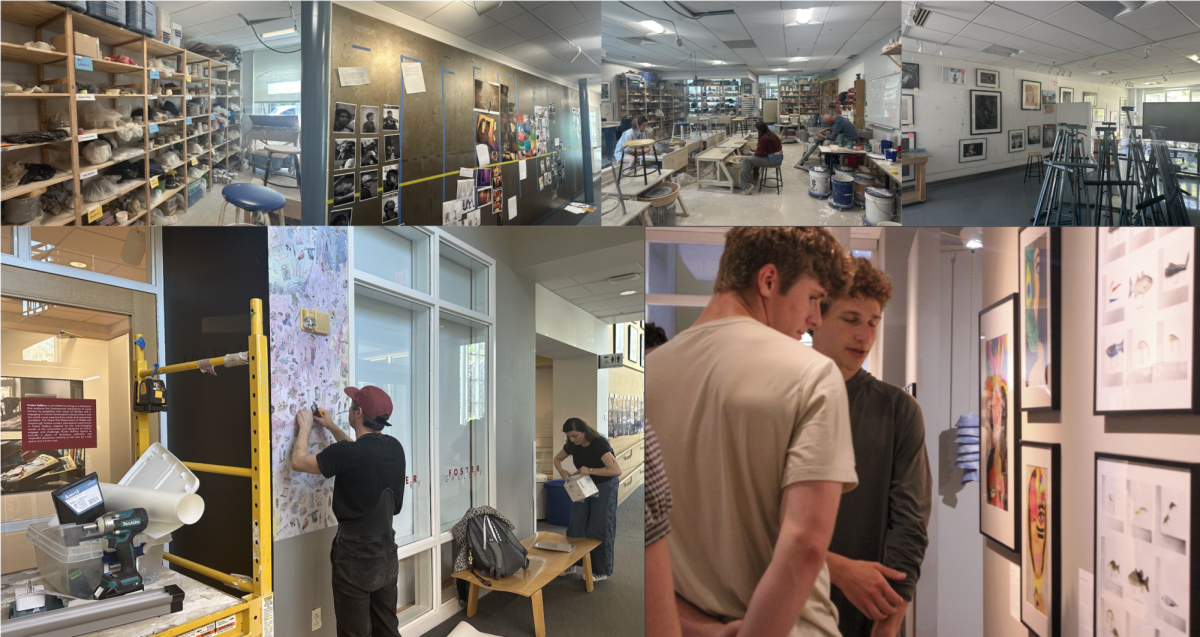









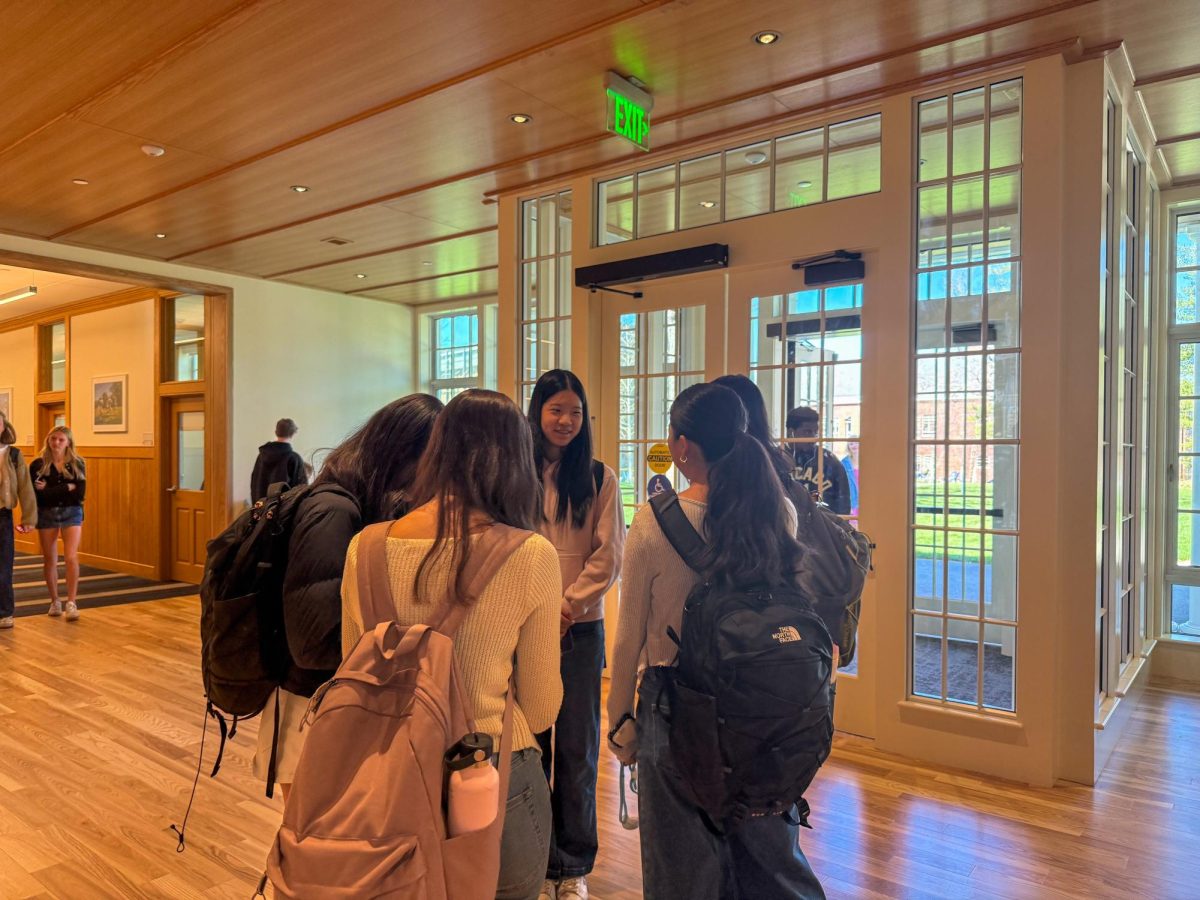






Most teachers spend their days standing at the front of the classroom, but this year, Daniel Halperin tried sitting among the students. Over the last two years, Halperin has tried rolling clay in the ceramics studio to more recently conjugating French verbs in Evelyne Ayivi Martin’s classroom. The longtime Performing Arts Department Chair and Director of Theatre has swapped roles and rediscovered what it means to be a student again.
“I want to learn new things,” Halperin said. “I took French when I was younger, and I have a son who’s living in Montreal. Going to visit him kind of spurred me to get back in the French classroom.” For Halperin, the decision wasn’t just about picking up a language again; it was about curiosity and empathy. “It’s easier to avoid learning new things as an adult because you can just do what you’re used to doing,” he said. “But it’s important to do things that hurt your brain a little.”
That mindset is what led him into the ceramics studio for the first time two years ago, where he revisited another creative passion. “Anytime I put myself in an artistic situation where I’m relatively clueless and students know more than I do, that’s really good for me,” Halperin said.
For students, having a teacher suddenly appear as a classmate seemed like a plot twist. “I was really surprised originally, and it was not at all what I was expecting,” Sophie Kalvelage (Class II), who shared a ceramics class with Halperin, said. “Everyone was also pretty taken aback and confused. It was never really explained to us what was happening.” Parker Kathan (Class IV), a student in Halperin’s French class, agreed that it was unexpected, but also provided a more positive outlook. “I was a little surprised, but I thought it was really cool,” she said. “If I were a teacher here and wanted to learn another language, I’d totally want to take a class.”
After the initial shock, both students said the classrooms quickly found their rhythm. “Honestly, it didn’t really change the class,” Kalvelage said. Many students seemed to share this sense of normalcy, even as they adjusted to a different classroom dynamic. “We mainly just carried on like normal after getting over the original surprise and confusion,” Kathan said. “He doesn’t really act like a teacher, but he’s also not like a kid either, kind of somewhere in between.”
For Halperin, stepping into that “in-between” space of student and teacher has been eye-opening. “It reconnects me with the experience of being unsure of yourself, of being the vulnerable human in the room,” he said. “My field often requires a high amount of vulnerability from students, and putting myself in vulnerable positions helps me understand that.”
That new perspective has already made its way back into his own classroom. “I have extra compassion and empathy for what students’ days are like, how busy they are, and how many different people they’re asked to follow,” he said.
Both Kalvelage and Kathan noticed that value. “It really reinforced the idea that it’s never too late to learn something new and that we’re all always learning,” Kalvelage said. “The willingness to be open and put himself in our shoes was definitely an interesting concept and sort of refreshing in a way.” Kathan echoed that sentiment. “It shows that you can never stop learning, even when you’re a teacher,” she said.
Of course, balancing teaching and learning wasn’t easy. “Finding the time and picking things up slower; that’s been the most challenging part,” Halperin said. “Your brain has much more pliability when you’re younger … things don’t stick quite the same way.” Still, he believes the challenge was worth it. “It’s good for students to see that adults want to learn things,” he said. “It’s cool for students to see teachers trying something new, not for a grade, not for college, not for their parents, but just because they want to.”
Although Halperin dropped the class to better focus on his work in Vinik Theatre, his time as a student has reminded him of something he has always known as a teacher: the best classrooms are the ones where everyone, regardless of their role, continues to learn.