






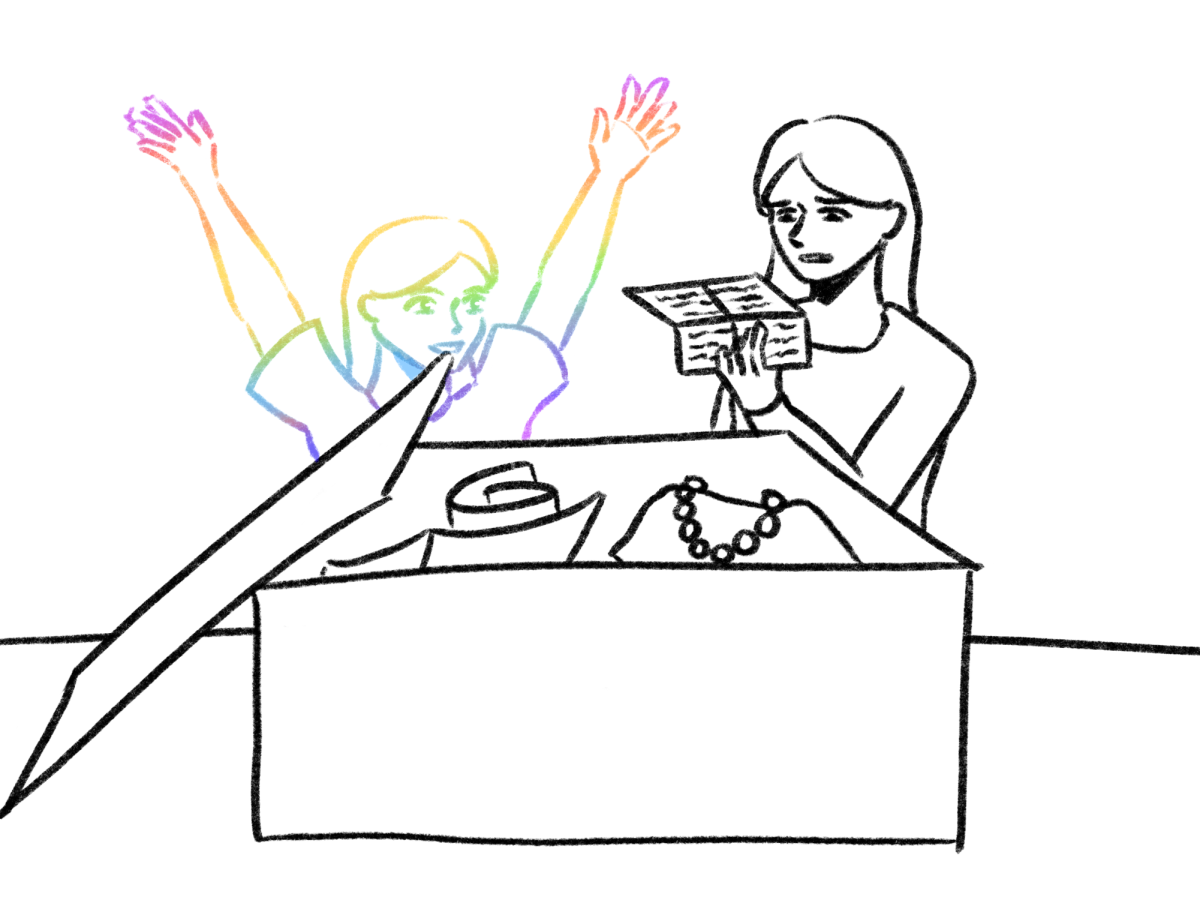
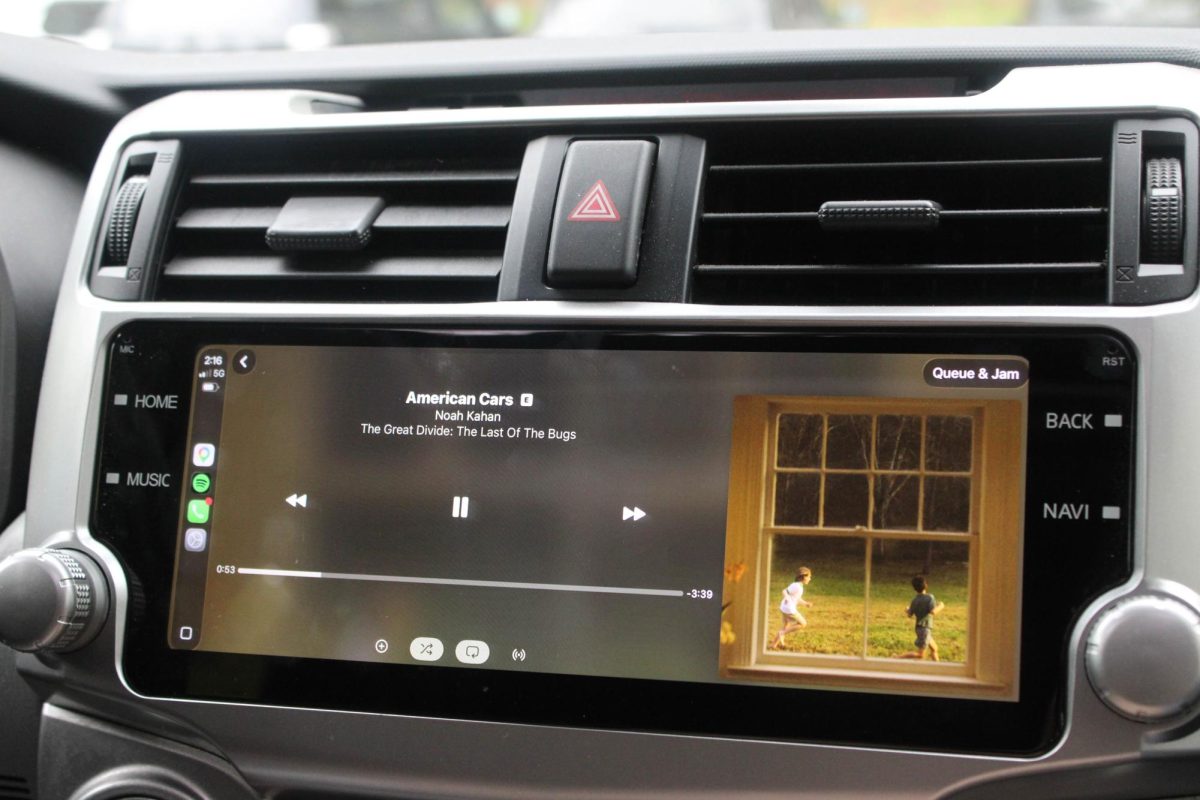



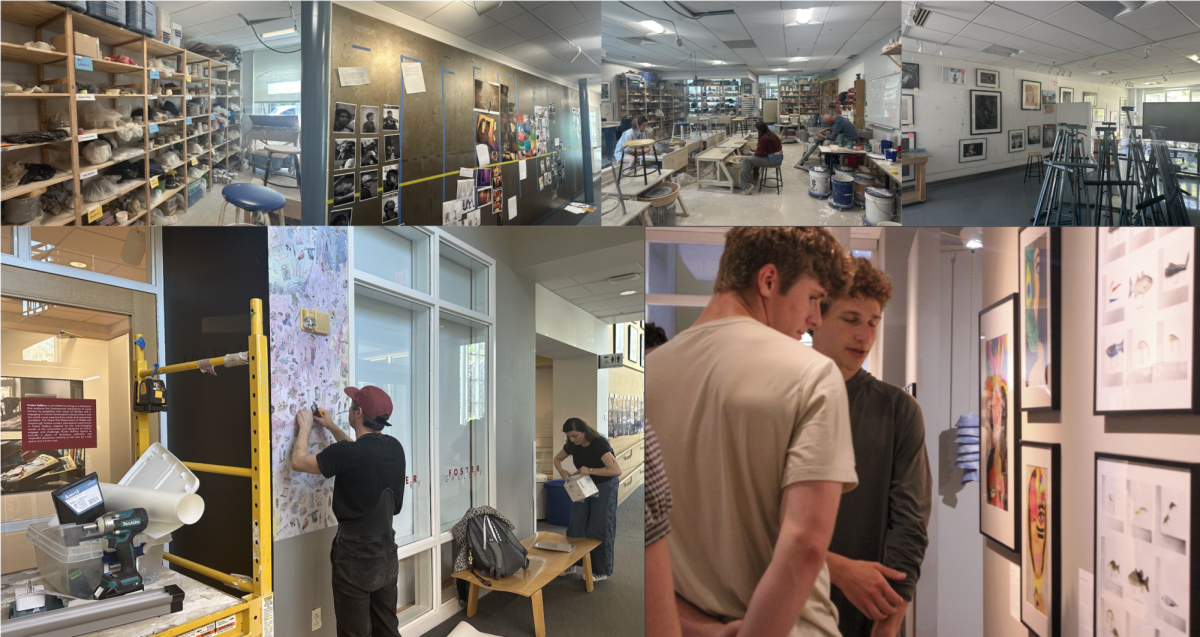
On Thursday, May 7, Foster Gallery reopened its doors, not as a classroom, but to display a yearly fixture in our community. The AP Art Show is the culmination of students’ work throughout the year. It displays media ranging from photographs collected in a cigar box to the shapes of houses carefully etched into clay mugs.
The exhibition is important both for supporting the artists in our community and for making Foster Gallery a gathering space for all. At other times of the year, the gallery serves as a vessel for outside artists and their own works. Former Director of Foster Gallery John Dorsey said, “We always wanted the student show to be the culminating show of the school year. We’re bringing in artists from all over New England, but we wanted a student show to be the final show.”
As the year’s final display, the AP Art Show not only shares artists’ works with the community but also illuminates their creative process. Students usually spend an entire year delving into sustained investigations, so it can be quite difficult to consider the complexities of other classmates’ projects until the show itself. This concept of tunnel vision was compelling enough for some students to make it the focus of their project.
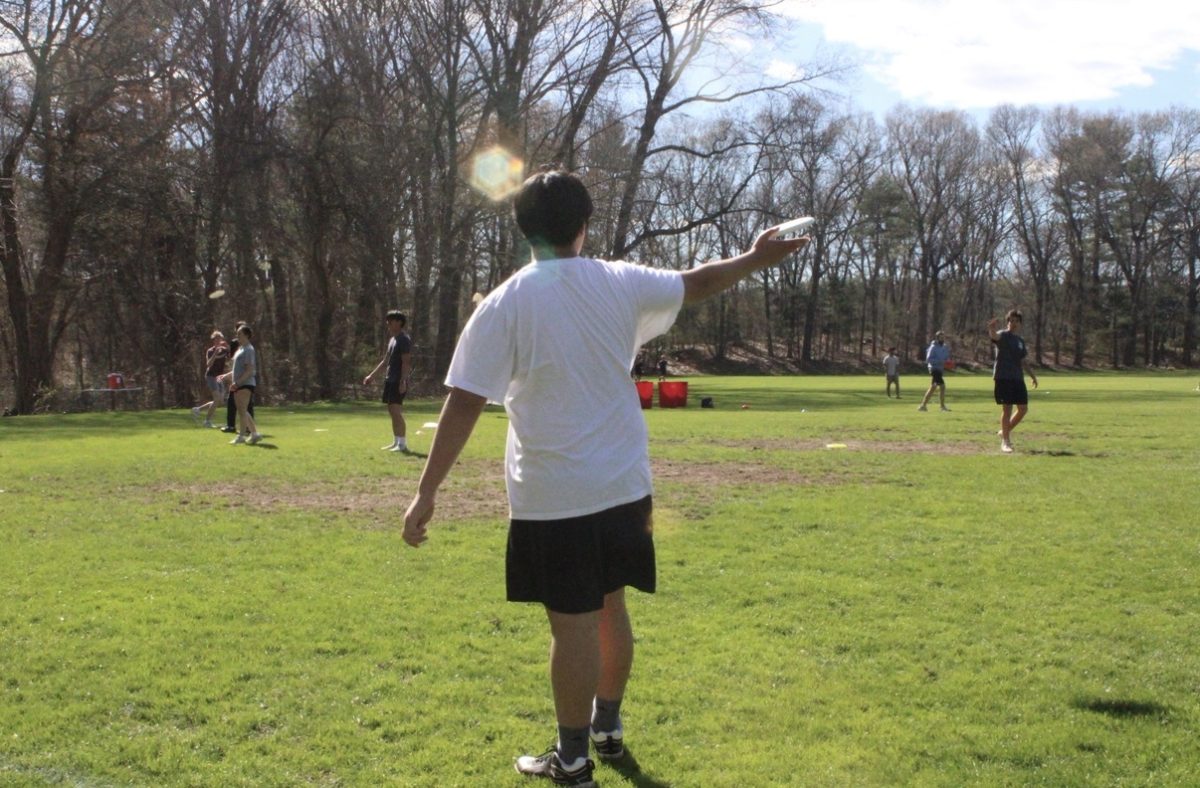
“I’ve always been interested in the concept of sonder, which is that everyone is living a different life, and you would never know how everyone’s life is equally as complex as your own. It was hard to narrow down how I wanted to portray it. But, in the end, I realized that shots depicting isolation were the best way to go,” Gabi Thompson (Class I), a photographer, said.
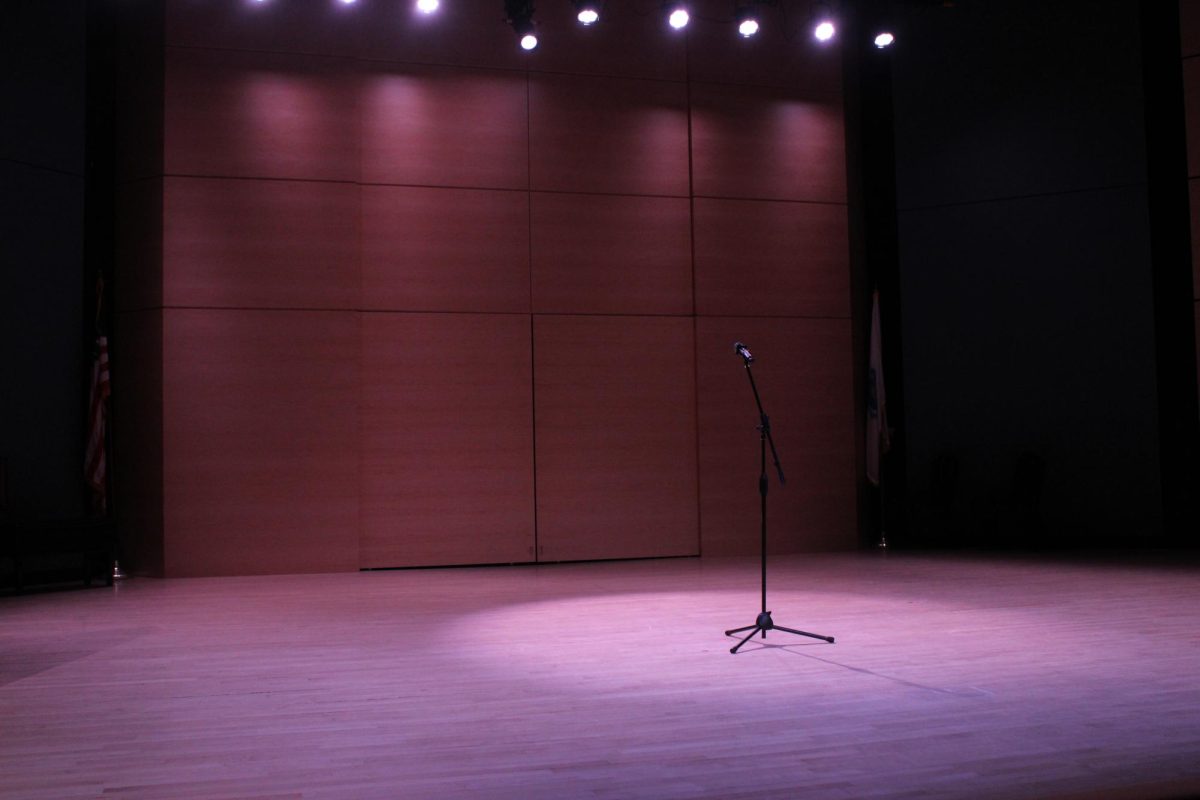
For some, the AP show was the first time seeing peers’ work on display, and for others, their first time being in Foster since it was repurposed as a classroom. Leading up to the show, the space’s unique utility became apparent to teachers, students, and gallery directors. Sometimes, when we were acting out something for Hamlet or doing some interpretation from Heart of Darkness, we could play around with the lights and make use of the space. It felt like there’s a space of acting and performance in there because the space is designed for presenting,” English Faculty Kim Geneeco said.
Despite the added utility of having Foster as a classroom space, the lack of an art gallery in our community did not go unnoticed. “I’d say [Foster] felt kind of empty, even though there are tables and stuff in the room. I feel like not having walls up or artwork on the walls was weird,” Mahali Cook-Wright (Class I) said. The Foster Gallery directors were forced to get creative to continue sharing art with the community while their space was repurposed. Visual Arts Department Chair John Hirsch aptly described this idea. Foster is not just a room–it’s an entire program. A program that was able to overcome the hardships brought on by the Shattuck renovations
“In spite of the fact that our formal space was not available, we still held artist talks in the drawing studio of the middle school. There’s also always art on display around the school. So art and self-expression will always find an outlet.” Visual Arts Faculty David Roane said.
The repurposing of Foster was not simply a story of overcoming a temporary inconvenience; It fostered lasting growth within the arts program by opening the gallery to more people outside of the visual arts at Nobles. “We had artist talks that were in Spanish, and we had Spanish classes coming to those artist talks. We also had a variety of English classes that came to different artist talks, to talk about narrative, so that was interesting,” Hirsch said.
Community outreach from the gallery is important not only for raising awareness of the arts but also for fostering curiosity about the role the arts play in students’ lives. That is one of the reasons why the AP Art Show is such a popular event in Foster’s program: because it exposes some of the most story-driven and emotionally attached art to the entire school.
Ultimately, Nobles gains the opportunity to behold the products of years of grueling brainstorming, weekends spent chipping away at pieces, and days of soul-searching, to understand the artists more deeply. “You get this live version of an art show in your school, and see it every day, but at the same time, it’s a place that everyone can go to. And so it’s this amalgam of both a learning space and a chance for interaction with the art,” Director of Foster Gallery Curtis Mann said.