













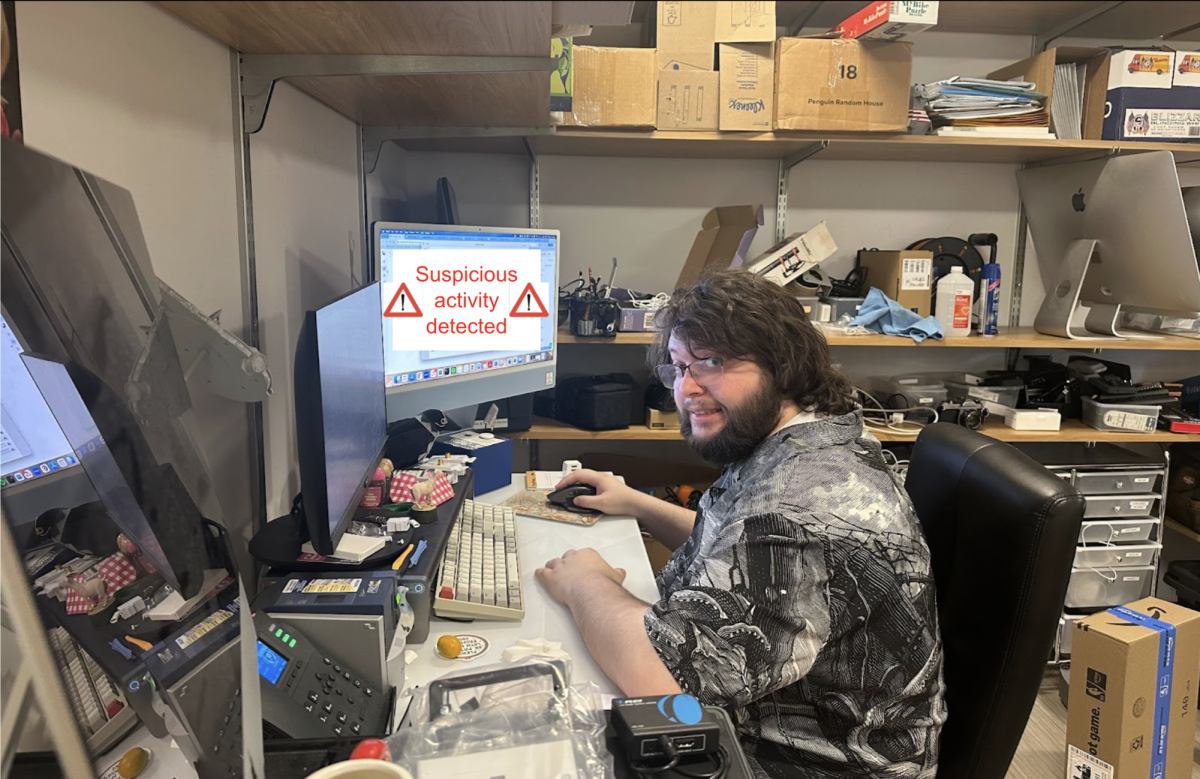
No policy change in recent memory has shocked 10 Campus Drive as much as the recent decision granting Computer Street access to the search history of any device connected to the NoblesSecure network. While Nobles maintains that this is a benign practice crucial to ensuring the community’s well-being, some are concerned about their personal privacy and the consequences of publicizing certain searches and behaviors that are perhaps best left alone.
Students’ desire to maintain personal privacy does not necessarily imply that they are immoral people. Nnamdi Achebe (Class II) said, “I’m not a bad guy, but we all have private things that we do on our computers, and having access to that has to be against the First Amendment, right?” Privacy concerns merged with legal ones as Achebe argued that his rights must be protected. Achebe only offered vague suggestions when pressed about what he specifically wanted to keep hidden so badly. “I’m busy with personal projects, if you will,” he said. Some students were even more secretive about their online activity. “I don’t think I need to elaborate, necessarily,” Anders Lewis (Class III) said.
Regardless of the ambiguity of the specific behavior students engage in online, one message is clear: the consequences of leaked search history transcripts will be severe, perhaps even life-changing. “The risks of the school finding out what students are up to include getting traumatized from what they see. I don’t want that to happen to my teachers or anyone else, so they should all just stay away,” Achebe said. He also speculated about the consequences students may experience. Achebe said, “I can only assume suspension and/or expulsion for many in the Nobles community.” Lewis offered his own prophecy, assuming an equally grave perspective. “A lot of people are going to be facing the disciplinary committee,” he said. This solemn realization, coupled with perhaps some personal deflection and projection (Achebe and Lewis described consequences “for many in the Nobles community” and “a lot of people,” respectively), represents a reality check for Nobles students that their search history must be cleared regularly.
One can only assume that the administration and Computer Street have benevolent intentions behind this policy change, but for students, paranoia and distrust inspire fear. With concerns about privacy, legal rights, and potential consequences, many students have not received this new policy well, raising the question: What can students do to protest this development and enact real change?
Limited only by the imagination of the Nobles student body, the possibilities for protest are truly endless. A wide range of ideas, ranging from refusing to attend school to downloading malware onto the Nobles WiFi networks, could all prove effective so long as the student body backs them wholeheartedly.
Beyond large-scale protests, students can also preserve their individual immunity in various ways. One obvious avenue students may pursue is to clear incriminating evidence before it is even noticed. “They can have access after I wipe my entire search history. But before then, it’s all off limits,” Achebe said. This strategy would proactively avoid any issues with illicit search history, though the method may raise suspicion when Computer Street peeks into a student’s data, revealing that they apparently have not conducted a Google search since January 2022.
In the event that one finds themselves faced with incriminatory accusations pertaining to their search history, they might avoid legal trouble or expulsion by claiming that a friend pulled a prank by searching up strange and compromising inquiries as a joke, or even that they were attacked by hackers from Milton looking to pare down their competition before Nobles-Milton Weekend. These excuses may work, but it is important to note that they require some serious conviction and acting skills, perhaps beyond the capacity of the average student. Ultimately, fear over this policy change serves as an important lesson: students must remain vigilant in the stewardship of their digital footprints, or they risk serious consequences.