






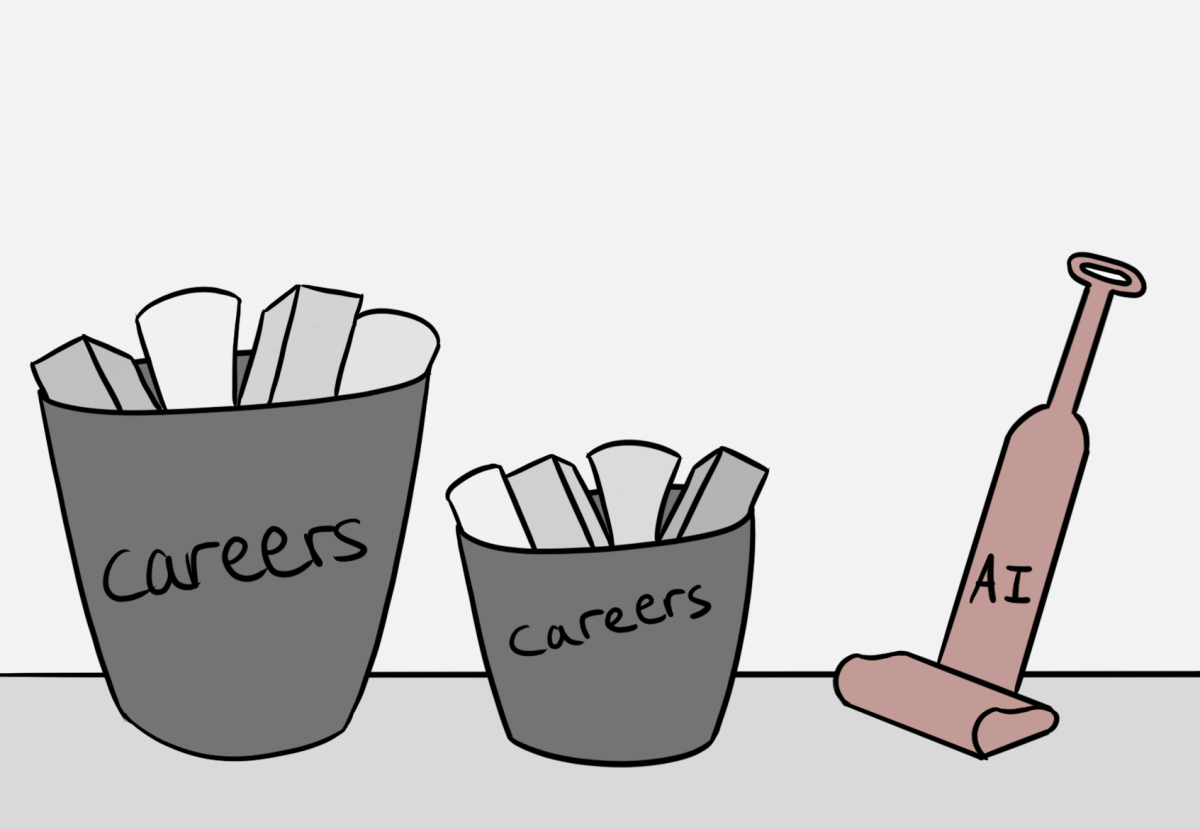
When considering undergraduate study, Nobles students are encouraged to think critically about the rapidly changing world they will enter post-high school. In particular, the growing impact of artificial intelligence on future careers has been impossible to ignore, raising questions about what fields will be the most valuable, insulated, and stable in years to come.
As of right now, no one can say for sure what the future will look like. But what is known is that AI capabilities are growing exponentially. Matt Schumer, CEO and co-Founder of OthersideAI, perfectly encapsulates this idea in his article “Something Big Is Happening.” His article covers all things AI, focusing primarily on its development over the past 6 years and its impact across fields. Schumer’s friend Dario Amodei, CEO of Anthropic, says we may be “only 1–2 years away from a point where the current generation of AI autonomously builds the next.”
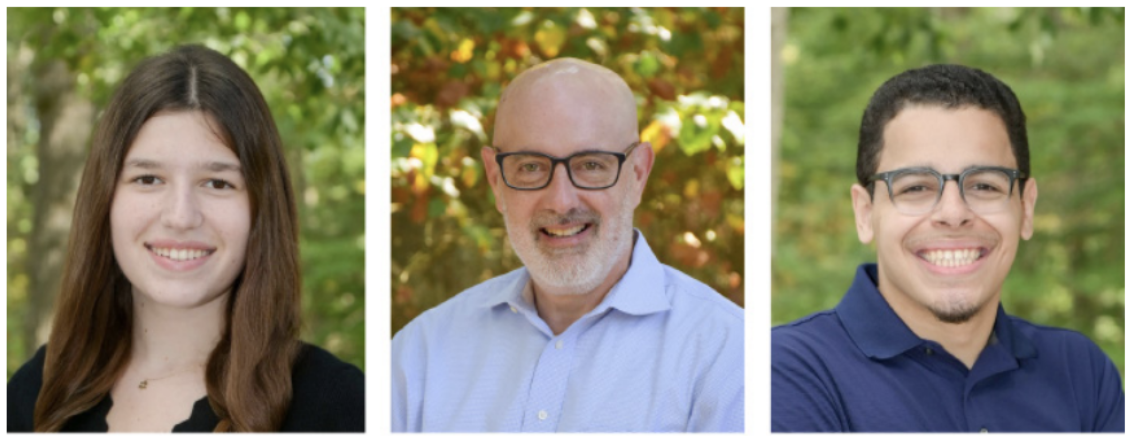
“Nobles students will be graduating from college in four to ten years, depending on where you are at Nobles. I think AI capabilities will greatly improve over that time. Anything that a human does on a computer, you can expect AI to become very good at, if not much better at, than humans very soon,” Computer Science Department Chair Max Montgomery said. “Much of knowledge work, white-collar work, that is mediated through a computer screen and a keyboard are very exposed to ever-improving AI capabilities.” This “knowledge work” Montgomery is referring to exists mostly in fields like finance, law, academia, and software engineering – all fields Nobles students consistently gravitate towards.
But just because AI will be doing entry-level jobs does not mean it will be doing all jobs. “People are calling it the expertise gap. So in software engineering right now, you’re already seeing much of the introductory work done by AI. You still need advanced engineers, but increasingly you need fewer of them, ” said Montgomery. The question then shifts to how we will fill this “gap.” Again, Montgomery offered some insight into how he believes this will work.
“I think some of this is just going to solve itself in the sense that AI is just going to eat all the way up the stack, even to the most advanced people, for certain verticals of work. That expertise gap, in certain fields, might just widen and widen and widen until it swallows all of it,” Montgomery said. But again, this grim future is only hypothetical, and as always, the future remains largely unknown.
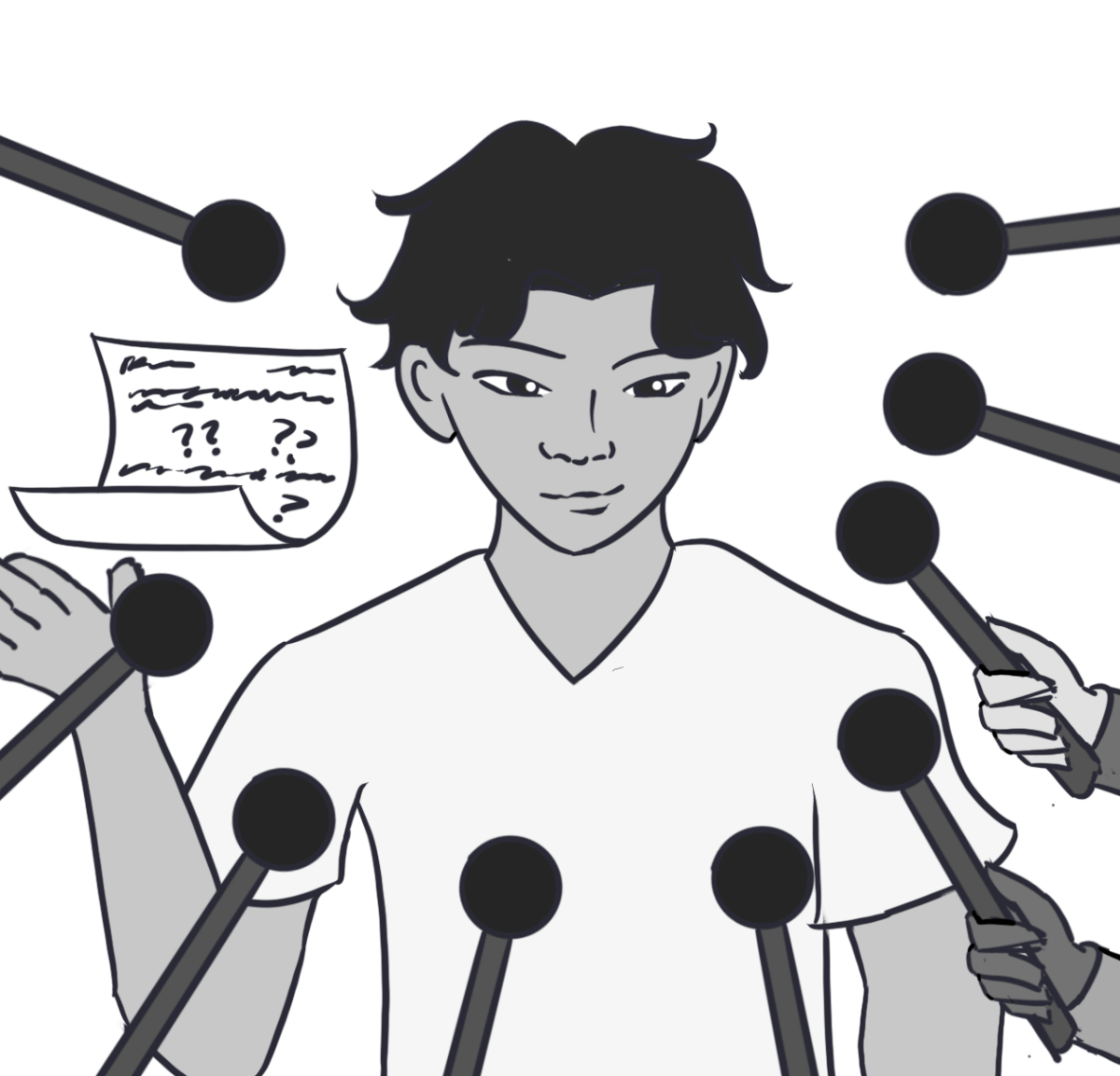
The impact of this expertise gap on the job market is top of mind for many seniors. “I am definitely a little bit anxious about what AI will mean for my future. When I was applying to college, I put down economics or business, and I think that a lot of entry-level jobs in those fields are being [replaced] by AI,” said Jackson Fai (Class I).
Yet for Fai and all the other Nobles seniors who share his anxiety, it is important to note that there are many ways to best prepare for this ever-changing world of AI. Jobs that require hands-on work or direct human interaction are most likely to be insulated from AI developments. But if those fields are not for you, there are still many other skills to focus on that can set someone up for success in an uncertain future.
“I think the ideas of critical thinking, which can occur without the study of AI, will be so crucial, because it’s really difficult to predict what the technology landscape will look like, but everyone can agree that the ability to think logically, research, and use evidence, will all be important,” said Director of Teaching and Learning Mike Kalin. But it will also be important to have a handle on AI and computer science, as it will eventually impact every job and vocation in some way.
Montgomery agreed with Kalin. “Having a basis of computational thinking, a basis of computation understanding, a basis of computational intuition, an understanding of data and technology is really important and should be thought of as part of a liberal arts education,” he said. “But I also think that humanity and what it means to be human is more important now than ever, even for those who are going to lean more towards the STEM side.” This idea is echoed by many leading voices in the AI conversation, who agree that, no matter how skilled AI becomes, human connection and interaction are irreplaceable.
This is something that Nobles students are already picking up on. “The ability to lead a team and interact with people is something you will never be able to replace. I think Nobles really pushes us to learn how to think on our own and how to learn so that we can be better prepared to go out into the world and not just regurgitate information but engage in meaningful discussion,” said Ashley Loeber (Class I).
Beyond that, as AI continues to grow, it’s more important than ever that students are willing and able to respond to changes in the job market. “I think those that are extremely adaptable, extremely flexible, really creative, and have a broad set of interests and knowledge are going to be the ones that are going to adapt most easily to the rapidly changing world, and find a niche in it,” Montgomery said.
Kalin also had advice to add. “I think one of the best ways to prepare for this AI transition is to be an expert in a particular discipline or domain. I think sometimes people think that we are going to be able to use AI to reference all historical developments, but there is still a place for just knowing the facts and ideas independent of AI,” Kalin said. So, just because AI is changing the workplace environment does not mean there aren’t things you can do to set yourself up for success.
Whether you are a senior or a sixie, this much is true: AI will affect your future in some way. But rather than running in fear, it is time for Nobles students to face AI and lean into learning how to use it as a tool rather than as a competitor.