





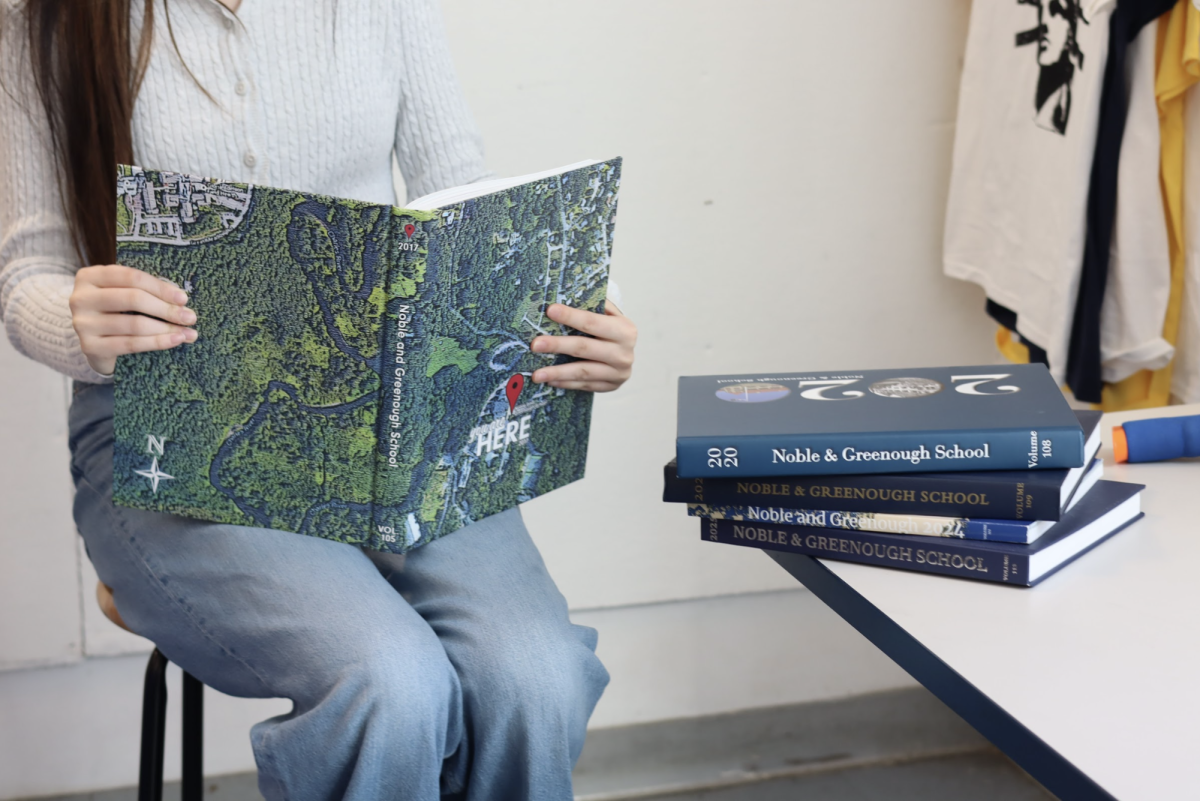
Every year on yearbook distribution day, students gather with friends around tables to flip through pages and laugh at old photos. While most only see the finished product, the creation of the Nobles Yearbook is a months-long process involving design decisions, photography, and constant communication. A small group of students and faculty members collaborate to produce a publication with one goal in mind: to capture the school year in just a few short pages.
Unlike many afternoon programs, the yearbook focuses on a single project that represents the entire school community. English Faculty Jordan Evans, who has helped lead the program for three years, said the process is unique because of its long-term, collaborative nature. “What’s nice about the yearbook is that you get to spend a lot of time and effort creating one product … there are a lot of ways to be creative together,” she said.
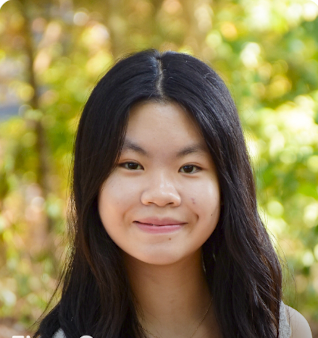
Mia Chu (Class I) joined the yearbook staff in her freshman year because it offered a quieter alternative to more intense afternoon programs. “I wanted something a little lighter,” she said. For Mia, the yearbook’s main purpose goes beyond design. She believes its value comes from the memories it preserves for students years later. “If you look back in a few years, it should remind you of what Nobles was like,” she said.
Landon Zou (Class II) joined the yearbook this year in an effort to try something new. “We go to the photo room, and then we go on the computers … there’s a website for yearbook design, and we put together the pages that we’re assigned. Or we go to sports games and take pictures,” Zou said. Even simple pages can take longer than expected to complete. Gathering photos, confirming names, and contacting teams are often the most time-consuming steps. “Finding the right names to add and accurate information is probably the most challenging part,” he said.
The program itself has evolved over time. Evans explained that several faculty members have helped lead the program in the past, and that each year brings changes in style and leadership. This year, the program has become much more artistically driven. “In past years, it was very formal with an elegant, clean design,” Evans said. “This year it’s going to be completely different … a little more bold and a lot less plain.”
Photography Lab Tech Teaching Assistant Hannah Latham, who joined the program this year, was instrumental in introducing many of these changes. As an artist, she saw the yearbook as an opportunity for students to take greater creative ownership. “I wanted kids to be able to photograph events themselves and feel like journalists. I wanted it to feel like an artistic expression of that class year,” she said. To support that goal, students now bring photography equipment with them to capture candid shots of games and events across campus.
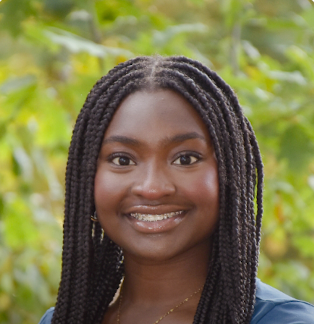
Nicole Han (Class I) also joined the yearbook in her freshman year. She believes that the process is especially dependent on communication within the broader school community. “For sports pages, we have to gather pictures, the team motto, and the captain’s message. Sometimes, captains haven’t decided what they want to write yet, so it can take a week just to get everything … A lot of people don’t realize how much work goes into it,” Han said.
Despite the logistical challenges, many students find the work rewarding, especially when they see the finished product. Han recalled one moment in particular when the team received a physical sample of the yearbook cover. “It was such a cool moment … we got to see our idea come to life,” she said. This year’s yearbook includes several creative changes, including a composition notebook-style cover and a sheet of custom stickers designed by students.
It seems that the shared sense of purpose is what makes the program so meaningful to those involved. While the work can be tedious at times, Evans says the final distribution days make the effort worthwhile. “It’s really fun to see how excited students are … especially seniors. I love seeing students looking through it, signing it, and sharing memories,” she said.
In the end, the yearbook is more than a collection of photographs and captions. It is the result of months of collaboration between students and teachers working together to capture a single year in the life of the school. And while most students only see the final product, those who create it know just how much work and creativity go into every page.