




















Nobles is one of the nation’s most highly regarded independent prep schools. Yet, the school averages only one international student per several years.
The most obvious reason for this is that Nobles is a 5-day boarding school, and thus, students who don’t reside regularly in the U.S. need to find somewhere else to go on the weekends. Most of the past international students who have come to Nobles have stayed with Boston-based family friends or relatives. Thai exchange student Mui Pooposakul (N ’97) lived with old friends she affectionately calls her “American family.” Her host father, nicknamed “Uncle Joe”, had attended Nobles as a part of the Class of 1966. “For me, [staying with the family while at Nobles] was pretty easy, because I’d known them since I was little. I’d lived with them for a couple of summers … so I had a place to live and people to take care of me,” Pooposakul said.
However, for many international applicants, the school’s 5-day boarding system is a hindrance. “There has always been tremendous interest from the international student population … so the admissions office gets lots of inquiries, and then they say, ‘Well, you’ve got to find a place for your kid to live on the weekends and on vacation.’ Then the families go, ‘Oh, well, maybe we should look at seven-day boarding,’” Former Head of Upper School and Director of Admissions and EXCEL, Ben Snyder, said. The school loses several applicants a year to larger, 7-day boarding schools because of this limitation, but finding a solution to this challenge does not seem to be a priority for Nobles.
The school already has a diverse, vibrant student body and has plenty of applicants each year. “It’s not really what the school’s in the business to do, to go find host families when 1000+ kids are applying for 100 places at Nobles anyway,” Snyder said.
In the 1980s, Nobles had only three international students, but they had a profound impact on the student body. When the first international students came to Nobles around 1959, there were only around 50 students per graduating class, all of whom were white men. On top of this, at that time, the state of the world was more tense. “If you had someone from Germany in the early 60s, you’re 20 years away from having been at war with them,” Snyder said. Having international students on the Dedham campus at the time felt monumental, and, as Snyder suggested, students might have had a more stereotypical and distant view of international students.
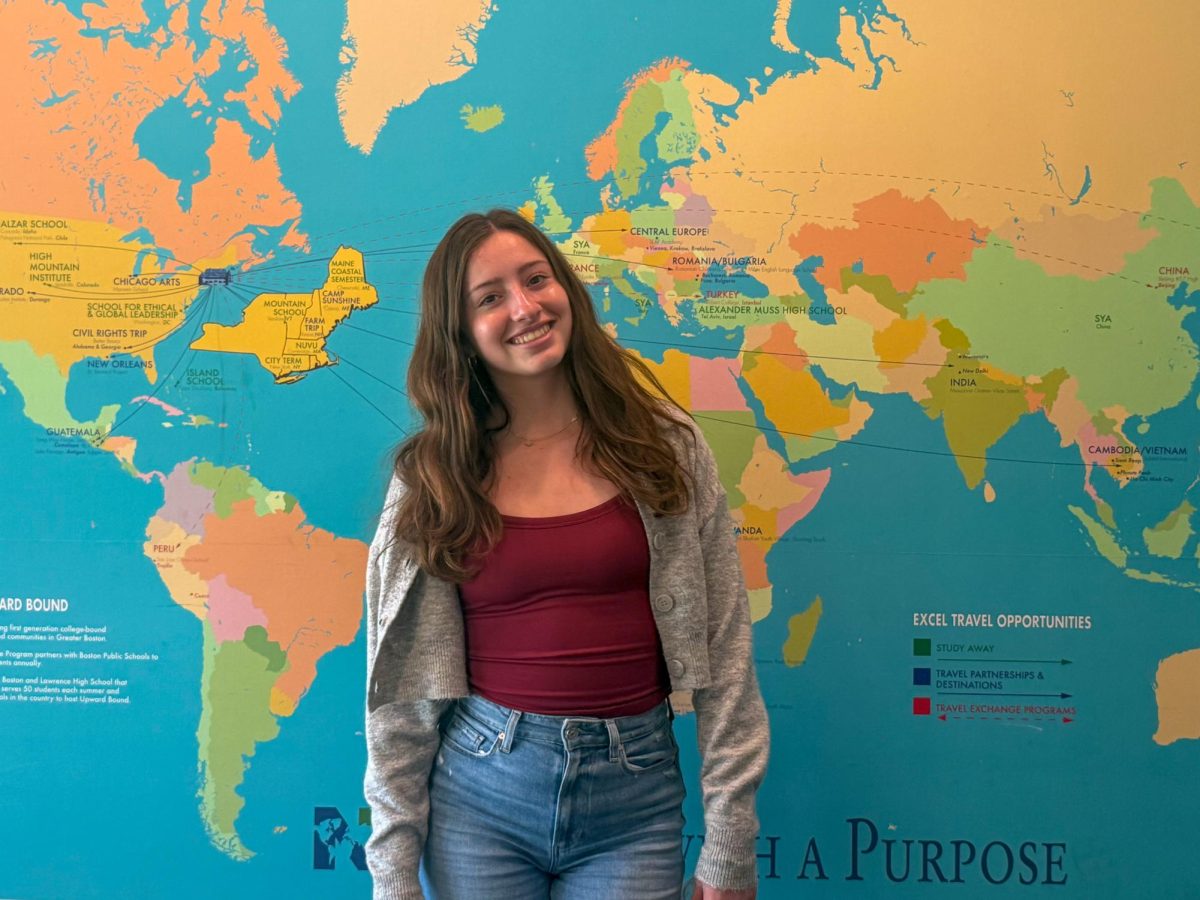
Now, with the ever-expanding EXCEL and study abroad programs, the school focuses less on bringing international students to campus and more on sending nearly one-third of its student body abroad each year. Back when international students initially came to Nobles, domestic students typically remained in the United States for most of the year, with few travelling to more distant places, now common EXCEL destinations. “Kids are getting out into the world doing really interesting, challenging, enriching stuff … you can have a much broader impact on the student body by getting more kids out into the world,” Snyder said.
While the school may be limiting itself by not being more accessible to the international population, it finds another way to still have an important impact on communities worldwide: sending domestic students to international destinations with EXCEL and study abroad, and thus broadening their perspectives and the school’s reach.