

















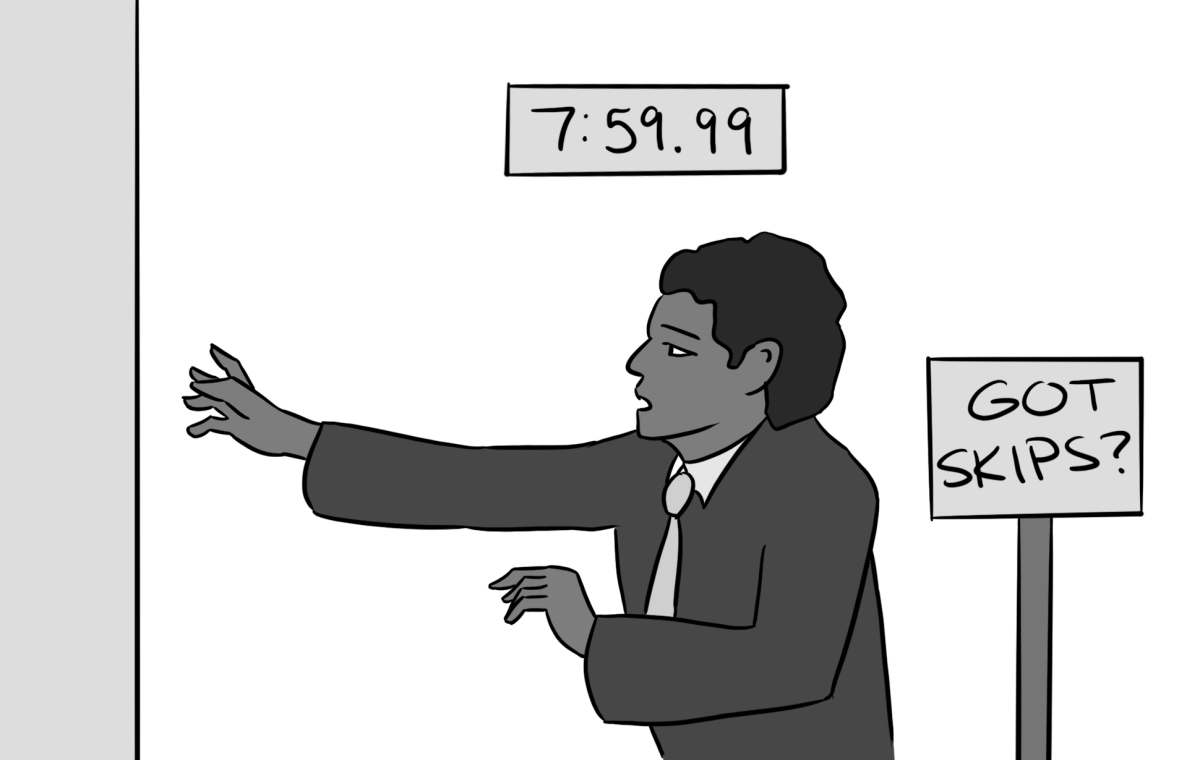
Week after week, Lawrence is filled with empty seats that should be occupied by students. Terrible winter weather, horrific accidents, unspeakably long drives, and the occasional doctor’s appointment all get in the way of being on time. As the assembly skip countdown reaches zero, a new message lights up one’s Gmail. Detention on Tuesday.
However, some manage to find their way through the chaotic mornings. When faced with every type of challenge, from morning drowsiness to highway slowdowns, they make it to assembly on time. And when they get to the end of the season, having continually avoided the deans’ wrath, they are punished for meeting the expectation of punctuality through a reset to their skip counter.
I believe that unused assembly skips should be carried over to the next season, allowing students to accrue skips over the span of a year. The Guide’s current policy states that, “Students are allowed ten total Assembly absences per year (three in the fall, four in the winter, and three in the spring) without consequence.” And while this may seem reasonable, we can do better.
With the current assembly policy, students are being penalized for not using all of their skips. However, if unused assembly skips were to carry over, students would be incentivized to attend assembly more consistently at the beginning of the year. “I feel like there should be some sort of reward system. A whole bunch of people who have assembly skips usually just miss at the end of the semester, because they have those skips left over, so why not use them?” Faris Dawes (Class II) said.
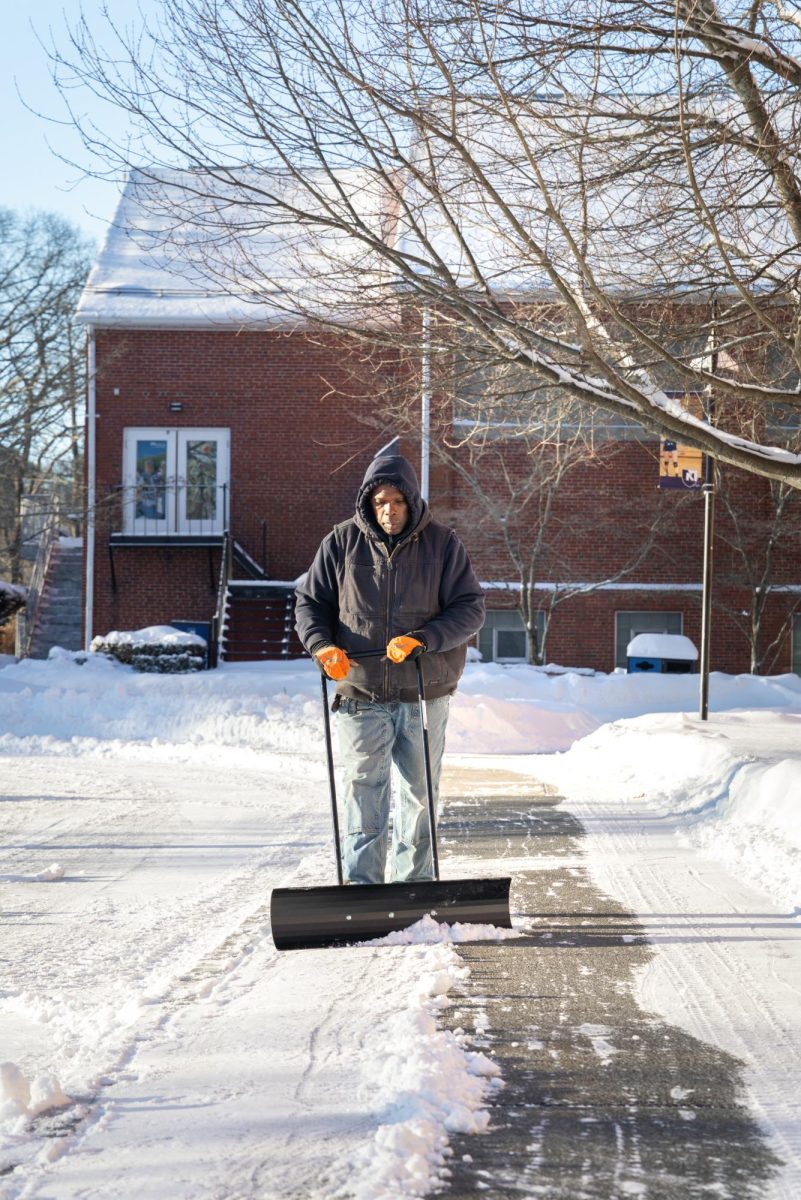
This “carry over” policy would allow students to build a greater understanding of and connection to the assembly stage earlier. Furthermore, students would be able to utilize these saved assembly skips in the winter, when they actually need them. When the weather is treacherous, roads are dangerous, and traffic is congested far beyond what’s normal in the fall or spring.
Considering that the current Nobles policy allots one extra assembly miss in the winter to accommodate those obstructive weather conditions like icy roads, having unused skips carry over into such an unpredictable season gives students more leeway. Winter introduces a new factor to consider when planning one’s mornings, one that does not emerge in the milder fall or spring. “With the winter, it’s tough. Sometimes it’s raining, sometimes it’s snowing, it’s just bad weather. In the fall, it’s usually pretty light, so I wish I had more for the winter. Honestly, even though we get four skips in the winter, I wish I had a little bit more, because there are a lot more weather issues that happen,” Jack Babka (Class I) said.
While the Nobles policy may seem equitable, as it gives everyone the same number of skips, having only three to four chances to miss assembly without a detention favors students who live closer to the school. Assembly skips are far more valuable to students who live farther from Nobles than to those who live in Dedham or nearby areas like Needham or Westwood. There’s more traffic to consider, one has to wake up earlier, and there is more variability when travelling for longer periods. Not only that, but houses in the Dedham area are very expensive, so not everyone can afford to live closer to Nobles in the first place, which is all the more reason to adjust the current assembly skip policy. Nobles aims for inclusivity in our community, and adjusting this policy is just another dimension of achieving that goal.
Mia Perron (Class IV) said, “There could be more leeway with people who live super far, because sometimes you do everything you can, leave your house and think that you’re perfectly on time, but then you realize, halfway through your drive, that there’s no way you’ll be on time.”
Some may argue that if students save all their assembly skips over the year, they will miss excessive assemblies in the spring. However, students would need a near-perfect attendance record throughout the year to earn those extra skips in the spring, as the focus of my proposal is to make winters easier. Furthermore, my improvement on our policy is meant to give students more freedom over how they manage their time in the morning, so if they want to miss ten assemblies in a season, that is their choice. It should not be Nobles’ job to punish students because their schedule is busier in some seasons and lighter in others.
Moreover, assemblies in the spring usually have the most entertaining performances, so the problem of dismal attendance will solve itself. Students would most likely not even want to skip the more entertaining spring assemblies, such as Fringe Fest and the inevitable multitude of ‘Senior-sendoff’ performances.
Ultimately, the current assembly rules, while acceptable, can be made so much better. Allowing students to accrue assembly skips over time will encourage good attendance, make winters easier, and better accommodate those who live far away from Nobles. Avoiding detention from missing assembly should be a breeze, not a burden.