

























From scaly reptiles to small-feathered dinosaurs and hairy companions, many students and faculty care for far more unique pets than the typical cat or dog, each with their own stories, adventures, and quirks.
Science Faculty Regina Campbell-Malone was enthusiastic to share her experiences with her six backyard chickens. During the pandemic, she opened her home to these little birds alongside her massive great dane. She said, “[Each chicken has] its own name and its own little personality. Some of them like to be with people more than others, some like to be inside versus outside, and some like to sleep while others love to run around for hours.” When asked if having pet chickens is more work than a more typical pet, Campbell-Malone said, “It’s not as hard as people probably would think. They are all trained to come back in when they’re called, although they naturally will at night.” She also noted that the workload for maintaining her pets and their living spaces is minimal. “You can do what you need to do in five minutes a day. Every now and then, there’s a little bit where maybe once a week you’re doing something for half an hour, or once a year when you’re doing a full clean out, it might be, you know, around half a day’s work,” she said.
Campbell-Malone shared that the biggest challenge of owning chickens is that it’s hard to tell when they’re sick. “Prey animals tend not to show any signs of illness, because if they did, it’d be easy for predators to target them in the wild,” she said. This adaptation caused many of her chickens to act as if they were completely healthy until they were in critical or near-critical condition. She said, “I have to say goodbye to a lot of chickens that I didn’t expect to.”
Overall, Campbell-Malone believes people would love chickens if given the chance. She said, “It’s a lot of fun to have chickens running around all day. And I think people don’t understand how great they are until they’re around birds. They don’t understand that birds have personalities and can be really different. They are each really amusing characters. I like just watching them run across my grass like little dinosaurs.”
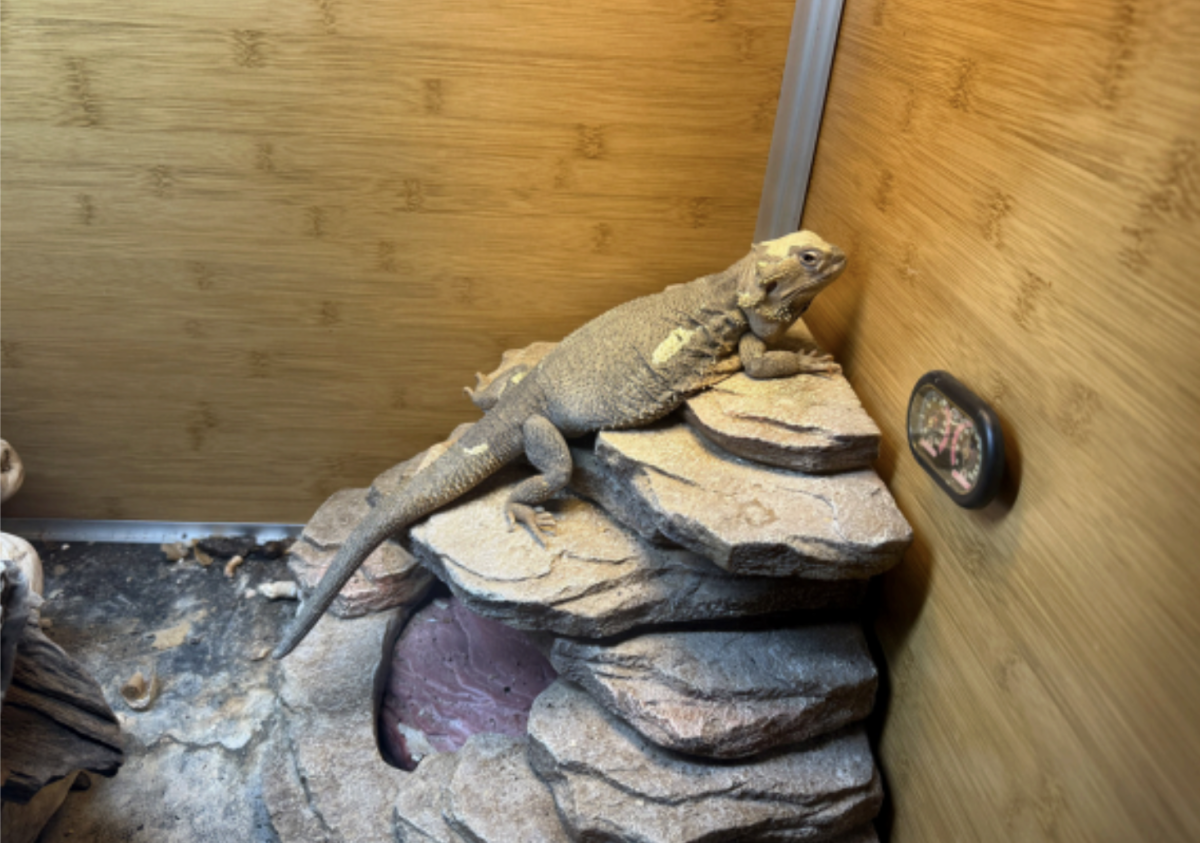
On the other side of the pet spectrum, Sam Johnson-Price (Class II) chooses to spend their time with slower-moving reptiles who spend the entirety of their days inside. Johnson-Price was eager to share their experience with the bearded dragon they call “Dendro.” They said that they got their bearded dragon in middle school after their parents told them they wouldn’t get them the snake that they asked for. When I asked whether they would prefer to have a snake or a bearded dragon, they said that they are really happy their parents said no because they love spending time with Dendro.
Johnson-Price said that the only major con they tell people wanting a Bearded Dragon is that it’s difficult because “you can’t be squeamish at all. To feed Dendro, you need to order a bunch of bugs, like roaches. I really hate roaches. So does my mom, but we just need to suck it up, because, in the end, bearded dragons are awesome.”
These stories show that unique pets bring just as much joy, enjoyment, and curiosity as more mainstream animals do. Whether it’s little dinosaur-like chickens running across a backyard or lizards living peacefully in their homes, each underrepresented pet shows the immense enjoyment that comes along with the ownership of a pet, unusual or not.