










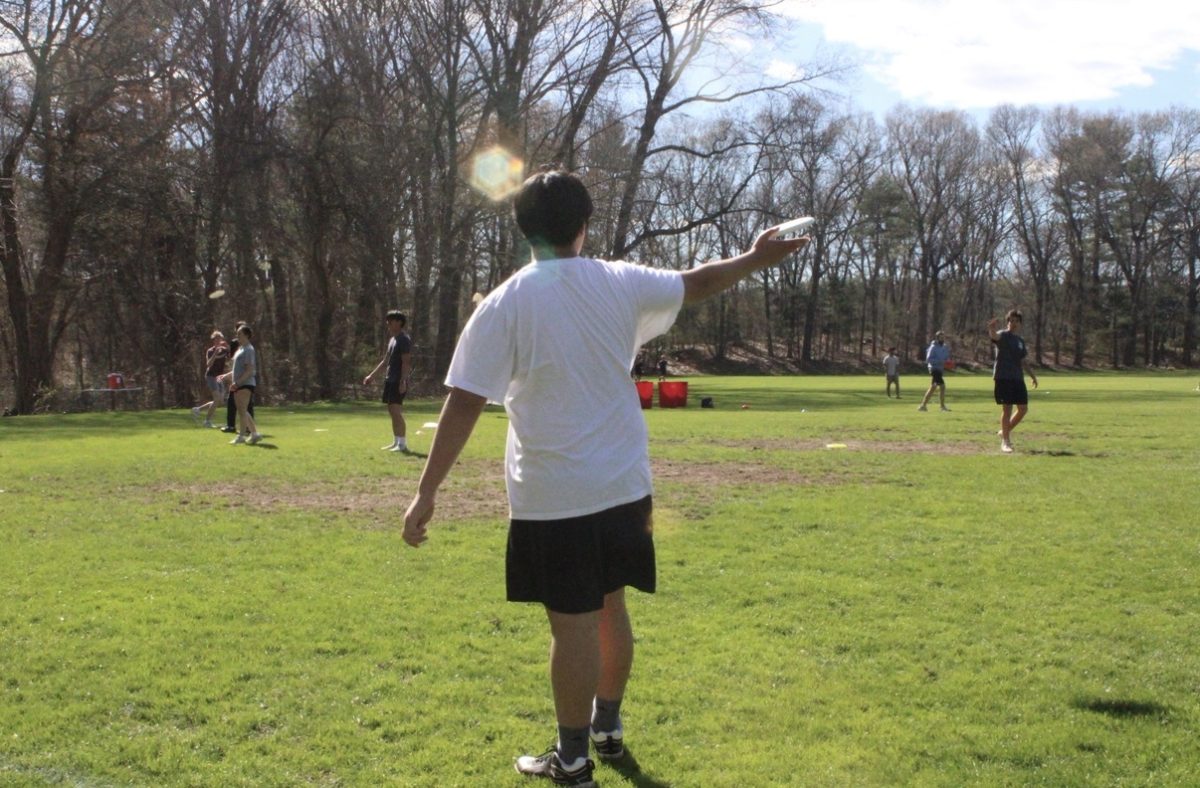



Athletics are a massive part of Nobles’ culture. However, athletes often feel underappreciated by their peers, especially compared to those in public schools. In interviews with numerous athletes at Nobles, the overwhelming majority expressed disappointment with the lack of enthusiasm in student sections.
Although this does significantly affect the athletic student body, it is not entirely fair to solely blame students who do not participate in sports teams. Kavi Shankar (Class I), a former Wellesley High School student, noted that student sections at Nobles are less lively due to the relatively small student body. “I think it is just the sheer [size of the] student body. Wellesley High School has around 1,600 kids, versus Nobles, which has 600 kids total. Within that number, only 500 or so are in the Upper School,” Shankar said.
Jack Mullins (Class II) believes that Nobles puts a large emphasis on some sports rather than others. At his former school, Westwood High School, Mullins believes there was significantly more attention focused on basketball than on most other sports. Consequently, he’s noticed a large difference in turnouts at Nobles compared to the packed gyms he was used to at Westwood High School. “I feel like for basketball, it’s significantly fewer people going to games than in my old public school. I think, on average, for most Wednesday and Friday nights, we probably had upwards of 500 people at [games against Wellesley]. When I came to Nobles, I was really surprised because it’s more like 25 to maybe around 50,” Mullins said. Because of the smaller turnout at Nobles’ games, his team has learned not to factor it into their overall performance. “The crowd does not play a part in winning unless you’re at a place like [Roxbury Latin] on a family night [where families of students are encouraged to come out and watch their kids’ school’s games], or another big school like Tabor, where they really celebrate,” Mullins said.
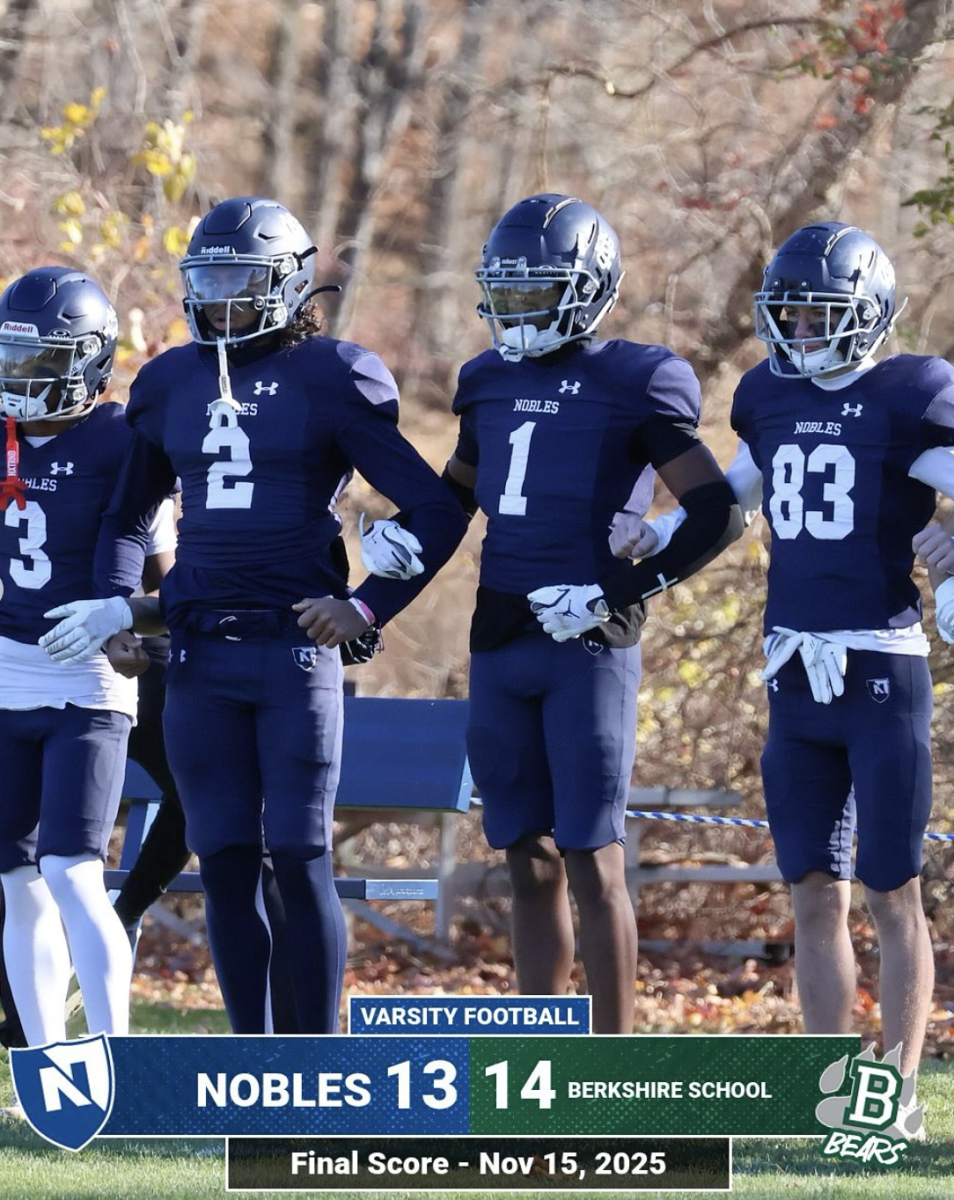
While most Nobles games have a relatively small student section, important games like playoffs can have attendance that competes more closely with that of public schools. Nate Pichardo (Class II) said that the turnout and energy at his Varsity Football games depend on which game. “Usually, I would say that it isn’t really an enthusiastic environment, because there is never really a student section for most games. But I’d say big events, such as FNL or the bowl game, are definitely a big part of that whole Nobles experience,” Pichardo said. One example of a game that Pichardo recognized as a very lively and memorable was Friday Night Lights (FNL) in 2024. He said, “FNL last year for the boys soccer games, and we all rushed the field. I would say that was pretty memorable because it showed the passion students have and how much support they have for one another.”
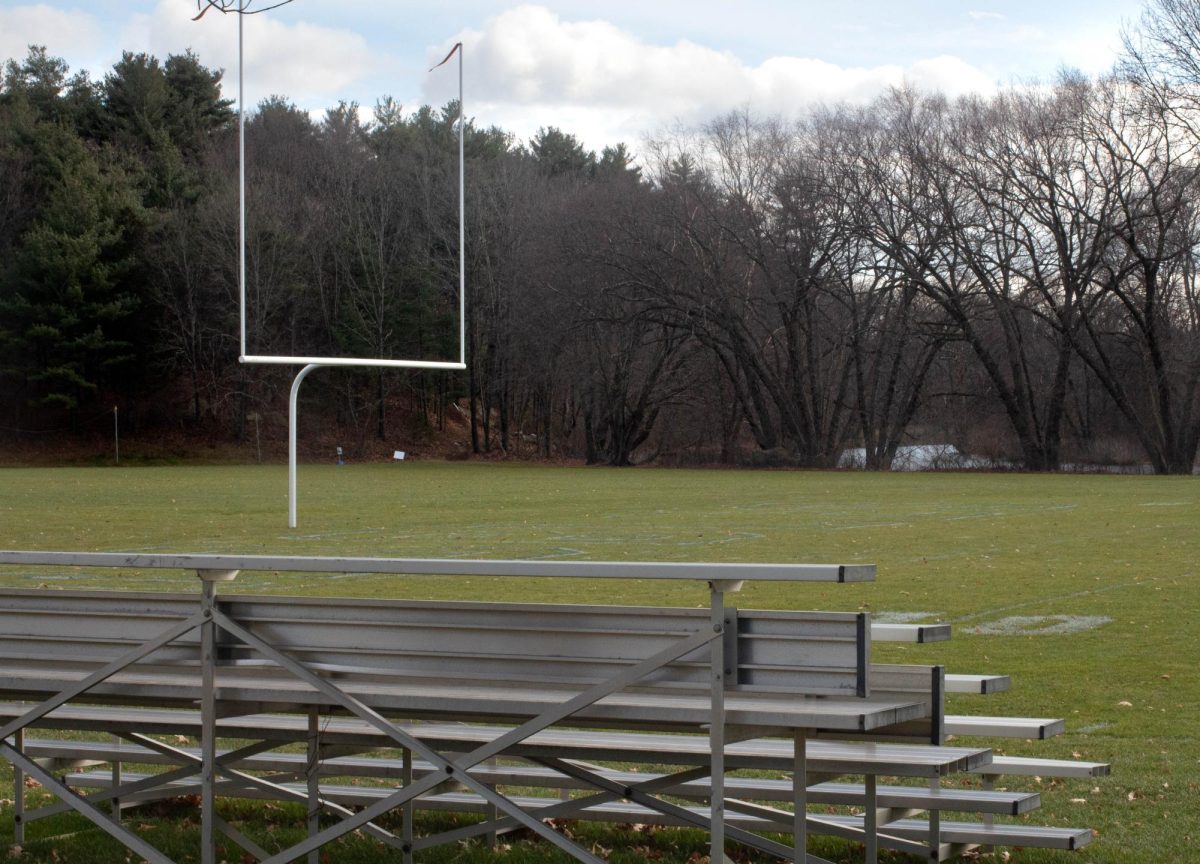
A lack of certain facilities also has a large impact on the student support culture at games. “The bleachers are a big thing, especially for football. I think it’s hard for everyone to watch a game like that when you’re just standing on the field … I also think, how far away sometimes the games are, is a big challenge for students. For example, people don’t really want to walk all the way up to the turf to go see a game, especially if it is cold or rainy,” Shankar said.
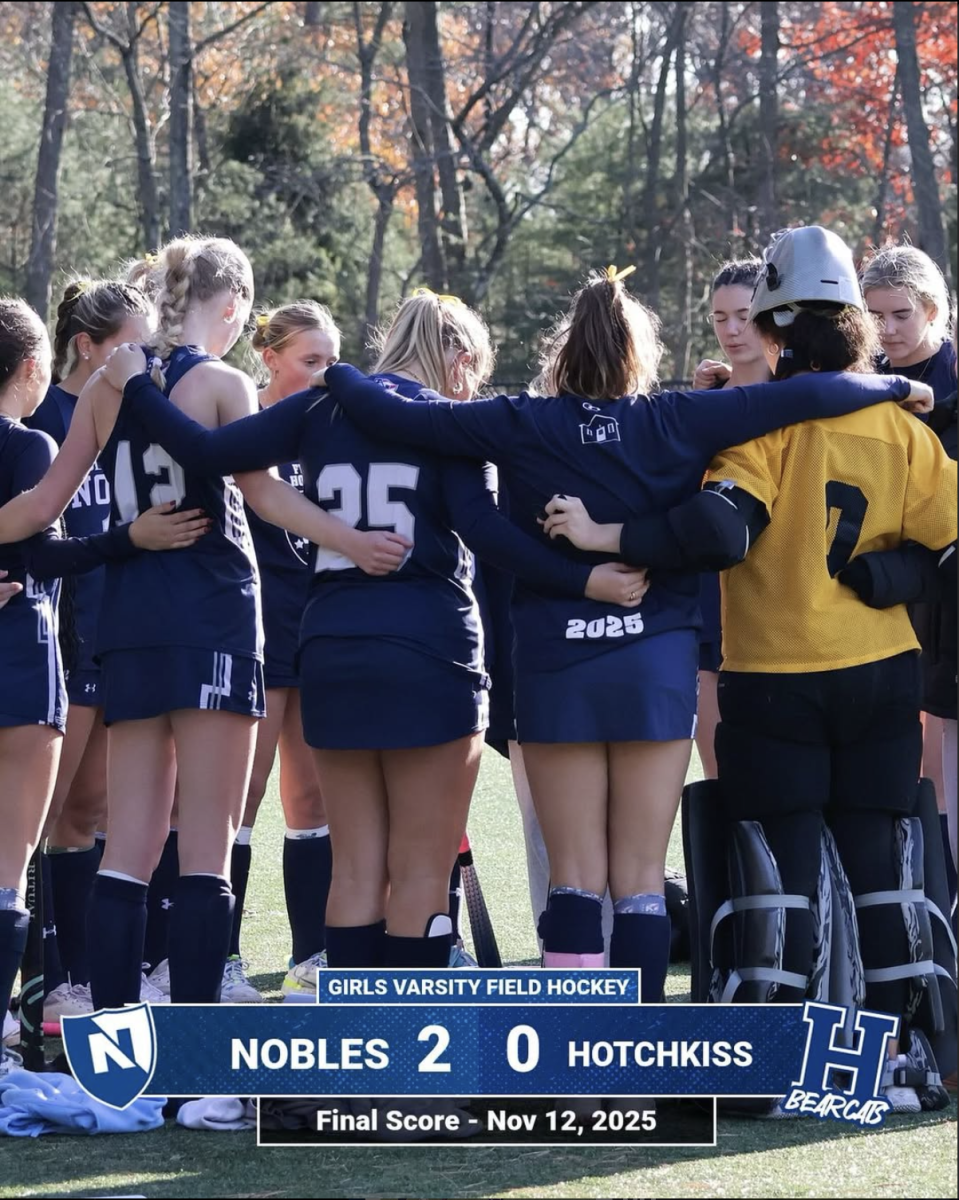
Lastly, female student-athletes observe the inequality in turnout for women’s versus men’s games. Shankar touched on this when asked about one of the most prominent games she had gone to. She said, “The majority of students, especially when there are two big games at the same time, only go to the girls’ games when boys’ games are at halftime, which was only around 5-10 minutes.” Izzy Kittredge (Class II), a member of the Nobles Girls Varsity Basketball team and previously Girls Varsity Basketball and Lacrosse at Medfield High School, reinforced this claim. “If there was a game at 4:30 for the boys and 6:30 for the girls, they would all go to the boys’ game, then not show up [for the girls’],” Kittredge said. The gender gap in appreciation for sports further hinders student turnout to games.
In all, though student sections at Nobles differ from those at public schools, they are not complete opposites; it is the student body’s job to help bridge this gap in enthusiasm and school culture.