





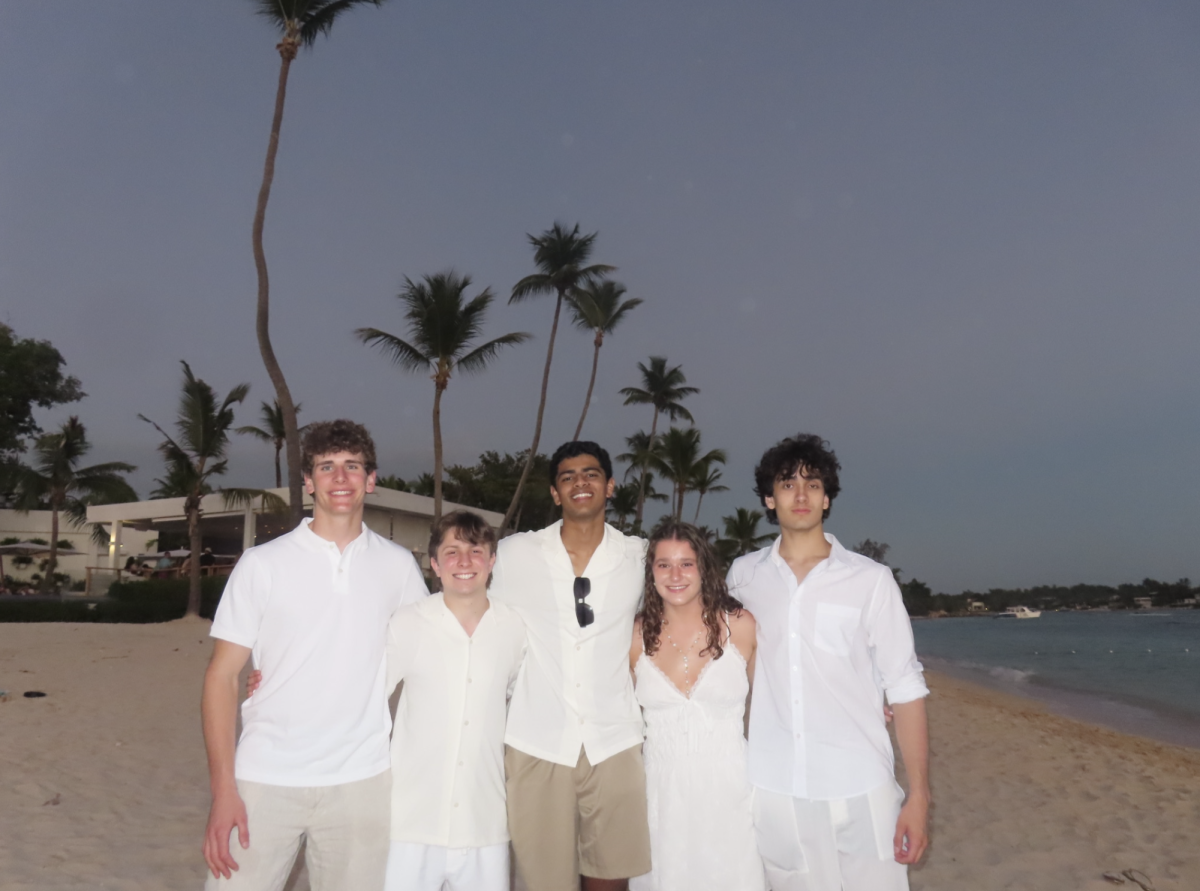



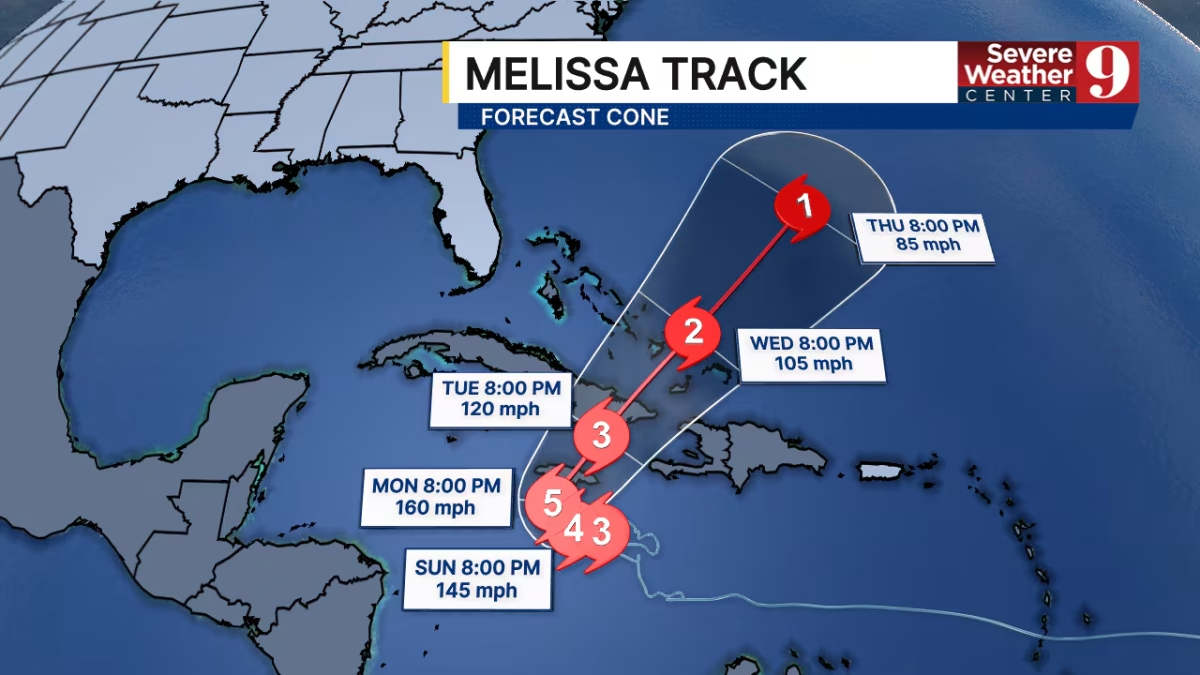
Hurricane Melissa has had severe impacts on the Caribbean, particularly in Jamaica, where wind speeds were recorded at an average of 185 miles per hour (mph), with gusts of up to 240 mph. The intensity of the storm has prompted meteorologists and the scientific community to consider adding a category six to hurricanes, with storms like Melissa becoming increasingly more common due to global warming. This fact, unknown to a large portion of the Nobles community, is one of the reasons Ayaan Mohammed (Class II) was motivated to present on the topic in assembly. “I think it’s really important to talk about [Hurricane Melissa], because at Nobles we don’t really get to talk about things going on outside of the community that much,” she said. Mohammed believes that there isn’t room for discussions about global issues, such as hurricanes, in the typical Nobles curriculum.
“Hurricanes draw their strength from the ocean, and due to global warming and rising ocean temperatures, the storms could continue to get stronger and stronger,” Harrison said. Carbon dioxide emissions into the atmosphere cause ocean temperatures to rise, making storms like Melissa more likely to repeat themselves. “Hurricanes today and also wildfires are testing how resilient an ecosystem is after it’s been hit, and the frequency we are seeing is not normal,” Science Faculty Deb Harrison said. The agricultural system of Jamaica has seen its native pollinator populations decimated, an ecosystem change that could take several years to fix. The root cause of hurricanes often stems from countries where they are least common. “The gains and progress of developed countries affect the least developed countries with the poorest economies because of carbon emissions,” Harrison said. The carbon produced by factories and industrialized countries is causing ocean temperatures to rise globally, resulting in an increasing pattern of violent and unpredictable storms.
Montego Bay, one of Jamaica’s largest tourist destinations, has been devastated by Hurricane Melissa. According to the Jamaica Tourist Board, 4.1 million people traveled to Jamaica for tourism purposes in 2024, generating $4.3 billion, which represents 10.5% of Jamaica’s total GDP. “I included the Montego Bay devastation in my presentation because I think it’s a place people recognize, and it made it more personal,” Mohammed said. The unfortunate reality is that many only know about the destruction in Jamaica because it is associated with tourism. “I would hope that everyone who had concerns during the hurricane was thinking about Jamaica as a place where people live, not as a tourist destination,” Harrison said.
“I would say I haven’t seen that much about [Hurricane Melissa] in the news, honestly, besides the assembly presentations. Among my friend group, no one is really talking about it,” Lucas Keefe (Class II) said. He was appreciative of the presentation because he believes that learning about current events in a forum like an assembly is one of the best ways to stay informed. “It was definitely important to hear about it in assembly, because the presentation was a good way of hearing about news,” Keefe said.
On the contrary, King Gross (Class III) believes that Nobles students actually know and seek out information regarding current events. “I think that Nobles students in general are always learning, they always want to know more. I think our media literacy is great here, and people take advantage of the tools here.”
The reliability of these tools is a concern that emerges in the new digital age. “I only kind of saw news about Hurricane Melissa from TikTok, so not the most reliable source of information. You only see what the algorithm pushes towards you,” Gross said.
Hurricane Melissa will affect Jamaica in a myriad of ways, from the destruction of crops to the rebuilding of a national culture. Nobles students can play a small role in helping Jamaica rebuild by staying well-informed on the matter. This act gives the community a greater appreciation for the suffering occurring in Jamaica and the knowledge of ways to actively help the country recover.