












In the late 1960s and early 1970s, the American education system underwent a massive curriculum shift. Schools eradicated home economics courses from their classrooms, primarily due to funding cuts, a focus on testing, and a belief that the classes were reaffirming gender roles. However, I believe that, if executed correctly, home economics education will be something incredibly valuable for younger generations.
The skills one learns in home economics courses are essential for adult life, which makes it imperative that high-schoolers practice them early. Teenage students are on a journey towards independence, applying to colleges and moving towards a life without parental supervision. “Every student should learn how to provide for themselves, because at the end of the day, once you graduate high school and college, you’re going to be a full-fledged adult,” Instructional Assistant John Clark said.
Providing for oneself requires a variety of skills. “Basic skills like cooking are important because what if you don’t have enough meal swipes in college or don’t want to go out to dinner?” Jacinta Wangari (Class I) said. No matter where one is in their life, whether it be in a college dorm or an apartment as an adult, food is necessary for survival.
While we remain at Nobles, we’re far removed from needing to cook for ourselves thanks to FLICK’s weekly meal prep. However, it is still important to keep track of what we eat and its nutritional value. “The reality is that a large number of people don’t know where food comes from. And that’s a problem, because it stops you from having a healthy relationship with food, which allows you to practice more preventative health, as opposed to just getting sick and going to the hospital,” Classics Faculty Mariza Rosado said. “Knowing the health benefits of different foods could be important for students.”
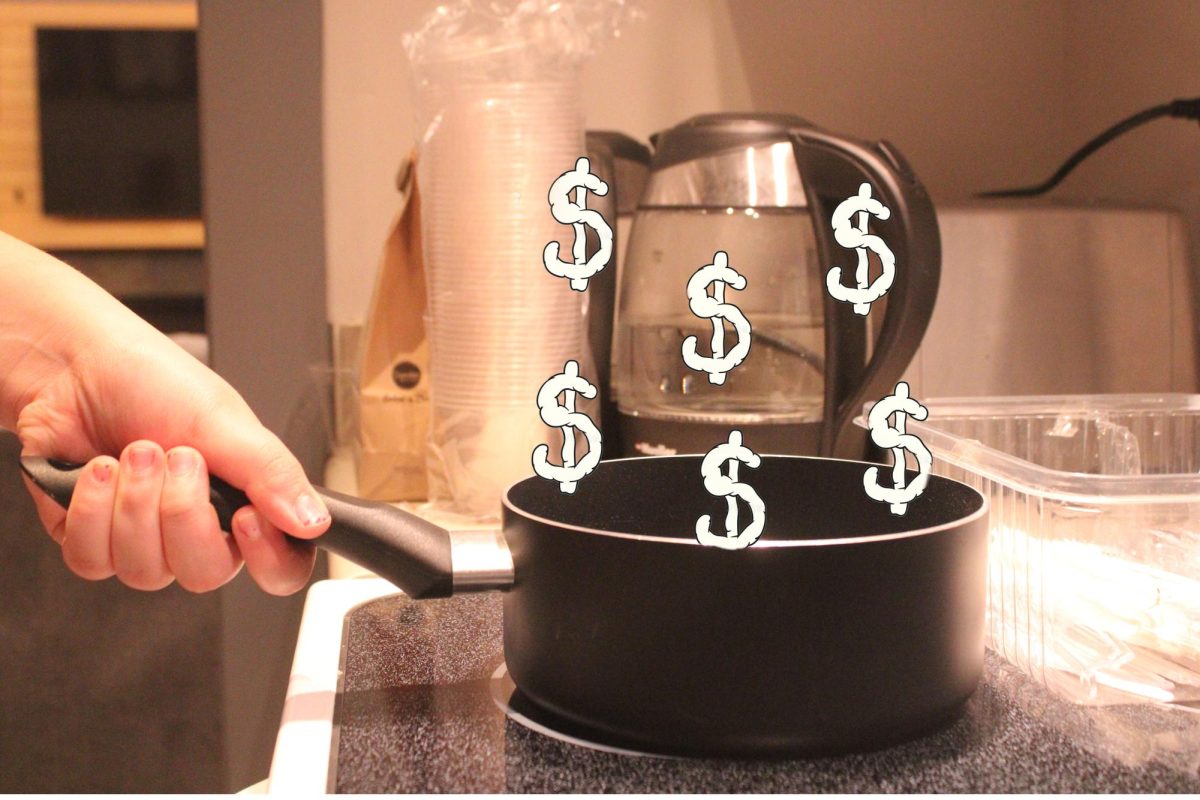
The next skill students must learn is budgeting money. If students know how to cook for themselves and specifically cook the right things to eat, budgeting is paramount, as healthy food is expensive. Clark said, “We should make sure that everyone has that basic skill of how to prepare a solid, nutritious meal at a good, fair price.” A prospective home economics class would not only discuss money in the context of food, but also consider finance as a whole. When students turn 18 and become legal adults, managing finances intensifies in complexity.
“I think one of the most important skills is personal finances. You start building your credit at 18, and it’s a pretty confusing thing. Especially with taxes and everything, understanding finances is needed to transition into adulthood,” Jackson Fai (Class I) said. The complexity of taxes and credit building clashes with the rise of simplified payment methods like Apple Pay, and further illustrates why fiscal wisdom is so necessary to teach in schools. Rosado said, “I think some young people have no sense of money because now with Apple Pay, you don’t see the money you’re spending. You just tap.”
Whether it be cooking nutritious meals, budgeting money, or building a credit score, there are numerous life skills that teenagers must learn before they move forward in life. Classes that teach these skills are not vestiges of the past, as some may believe, but highly relevant and necessary in the modern day. “We should definitely have a variety of different types of life skills classes. And I think the students should be able to choose what path they want to take,” Clark said.
Others believe the class should be mandatory for different reasons. “If parents are investing so much in subscribing to a school to help their child survive in the world outside of the Nobles, then I think it should be a requirement,” Rosado said
However, there is still sentiment to suggest that mandatory home economics would cause time management issues in students’ busy schedules. “I don’t think it should be mandatory, because there are a lot of people who take six classes, and if we had to add this class, it would really spread us thin,” Wangari said.
Despite issues with adding more mandatory classes, there is still room in our schedule to replace another course with a life-skills-focused one.
“It could replace the junior year P.D. class. I would be the same person if I didn’t take that class. So if it was replaced with a life skills class, that would be helpful because I think those are skills that are more important for life,” Wangari said.
Ultimately, our schedules should be adjusted to give us the skills we need to succeed outside of Nobles, not only academically but in our daily lives.