




















Somewhere on the Nobles campus, a student emerges from their Algebra II Accelerated test with fresh tears in their eyes and a TI-84 calculator with only incorrect answers as they head to the bathroom to mope in a stall for 20 minutes. But this time, their usual routine gets interrupted by a fluffy, rowdy puppy trying to snuggle away their sadness. After spending a few minutes with their new canine best friend, they’re off to conquer the rest of their day! If teachers were allowed and encouraged to bring their dogs to school each day, the campus mood and morale would be greatly lifted.
It may seem improbable that dogs would be conducive to students’ learning. Yet, canines are, unsarcastically, prime examples of the principles Nobles holds so dear: the five core values. Those five pillars — playfulness, generosity, belonging, curiosity, and respect — can effectively and efficiently be taught to the student body by these canines.
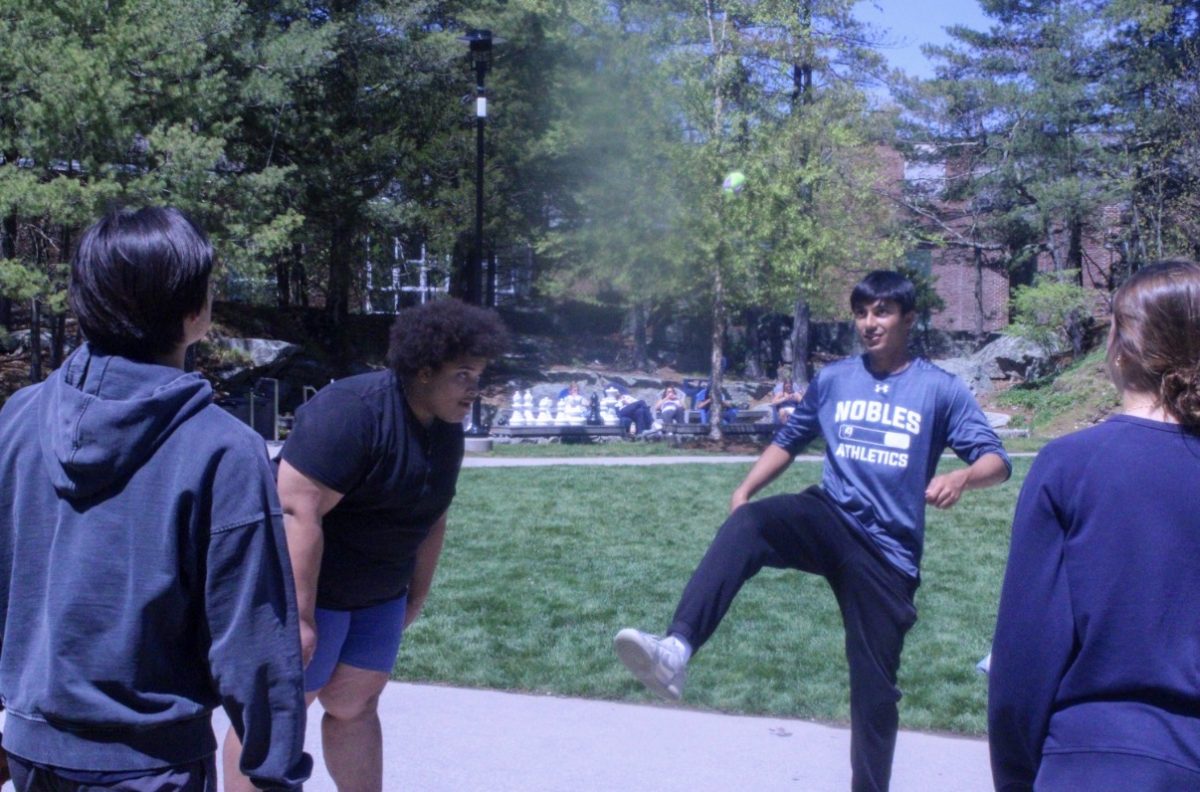
Of course, the first value that comes to mind when thinking of dogs is playfulness. Canines are constantly demonstrating their ability to find joy and play whenever possible. Dogs would certainly have their fair share of playing opportunities on campus, whether it would be engaging in a game of hacky sack with student aficionados, rolling down Castle Hill with the Ski Team, or chasing the experiments thrown or catapulted by AP Statistics and Honors Physics classes.
And although playfulness is the most obvious of the core values exhibited in our furry friends, it is far from the last. Dogs exhibit generosity every day: they are generous to each other while playing with tennis balls, generous to other animals when they guard houses (because they really aren’t barking, they’re protecting everyone from burglars), and generous to humans in their ability to empathize. Nobles Heads Together (NHT), which routinely brings dogs in to visit, acknowledges dogs’ generosity in helping their human friends get through the school year. Sharon Cheng (Class II), a leader of NHT, said, “Pets make things less stressful. Dogs are a great way to [help everyone step away from their work and relax] and make everyone happy.” Imagine if these dog-induced dopamine levels didn’t come only a couple of times each year, but every day!
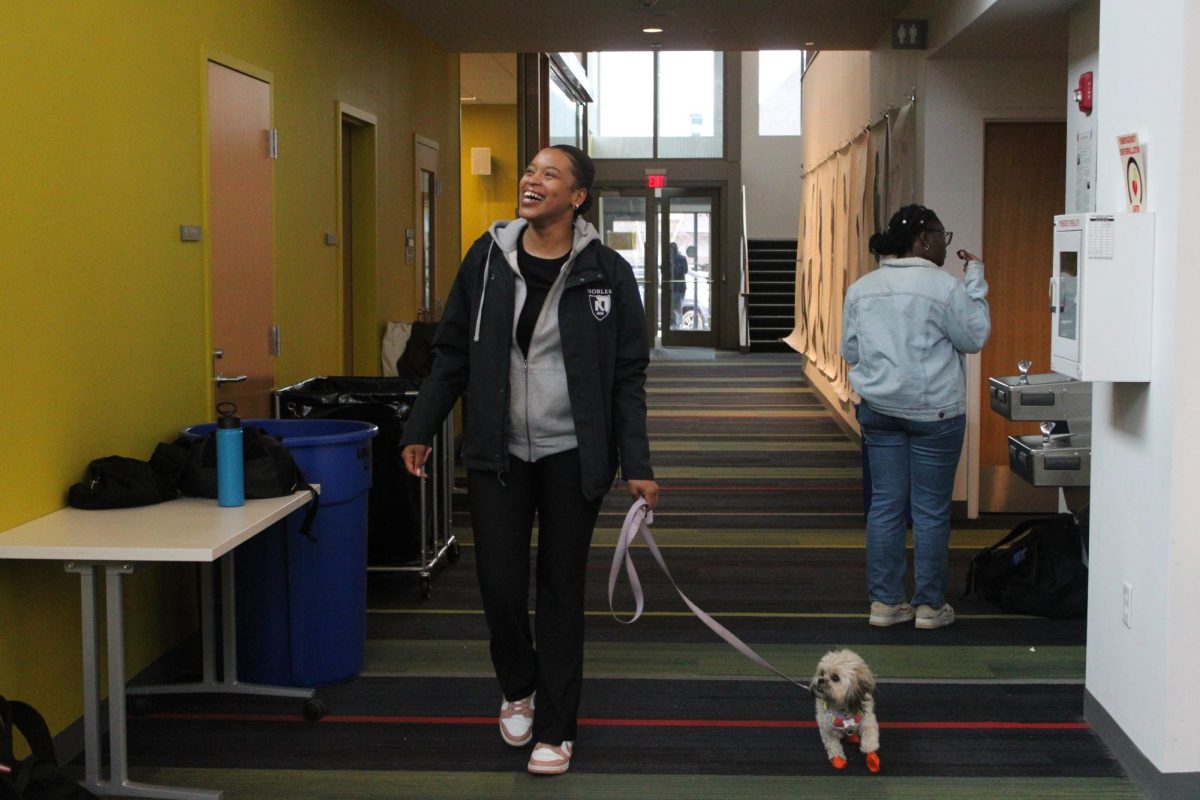
Furthermore, accepting canines on campus would be a way for the human population to demonstrate its generosity. Tiauna Walker, Achieve program manager and proud parent of Honey Lynn, her Shih Tzu mix who lives in the Castle, said, “[Honey Lynn] would love it. She would be excited about the people, a new environment, and the rug. She would be ecstatic.”
The next value easily exemplified by canines is belonging. If a student has ever had the joy of having their own dog, they know the power these furry friends have in making others feel they belong. Each dog has a unique way of connecting with their human, whether that’s watching television curled up on the couch or embracing their human friend’s love of running by joining them for daily jogs.
Nevertheless, belonging reveals the clearest dent in this plan: allergies. To address this barrier, the school would have dog-friendly spaces and non-dog-friendly spaces. Classrooms would generally be dog-friendly, and students with severe allergies could work out a plan to avoid them on a case-by-case basis. Like establishments in the Boston area, the Castle cafeteria would be pet-free. Teachers would be able to leave their pets outside, in their classrooms, or in their offices while at lunch. With these limits as a foundation, further adjustments to these guidelines could be made along the way.
It is important to emphasize the deeper curiosity that dogs have to highlight their embodiment of our core values. Of course, canines exhibit curiosity on their walks, yet they also exemplify this value in other ways. Quoted from the core values themselves, the principle behind curiosity is to “value the exchange of diverse perspectives.” Dogs don’t discriminate based on what breed they and their friends are, and, though I don’t profess to speak dog, I assume they appreciate their differences. If dogs didn’t value the mixing of distinct breeds, we wouldn’t have the thousands of hybrid breeds we do.
Lastly, it’s necessary to recognize canines’ ability to show deep respect for their furry and non-furry peers. Dogs epitomize respect by always looking out for their humans. According to the American Kennel Club, 90% of people surveyed felt safer having their dog nearby, and 88% said their dog made them a better person. There would be much more kindness and respect in the human population if they were granted the opportunity to learn from these experts.
Dogs are unique examples of the values Nobles aspires to model. By inviting canine friends to school, the community would experience more happiness, less stress, and would further “unlock the potential to do good.”