









The Class of 2026 is the first to graduate with four full years of high school undisrupted by COVID-19 restrictions. With the first COVID restrictions rolling out in schools across the country almost exactly six years ago, in March of 2020, now is an appropriate time to look back on how this Nobles class experienced COVID and what they have gained from (almost) completing four normal high school years.
When lockdown began, this year’s seniors were in sixth grade. Students now note that they had ample time to identify and explore their passions, which they eventually developed further in high school. “I rekindled my interest in chess during COVID, and then once we went back to school, I was able to play in person and have fun,” Jeffrey Liu (Class I) said.
These middle school pastimes evolved into real interests, shaping the class today and making them uniquely specialized. Isabel Goddard (Class I) said, “I think we are more of a specialized class. People have really found their niche by using that time [during COVID] to concentrate on one thing in particular.” Being able to cultivate these interests and further develop them through in-person exploration in high school is what enabled this specialization.
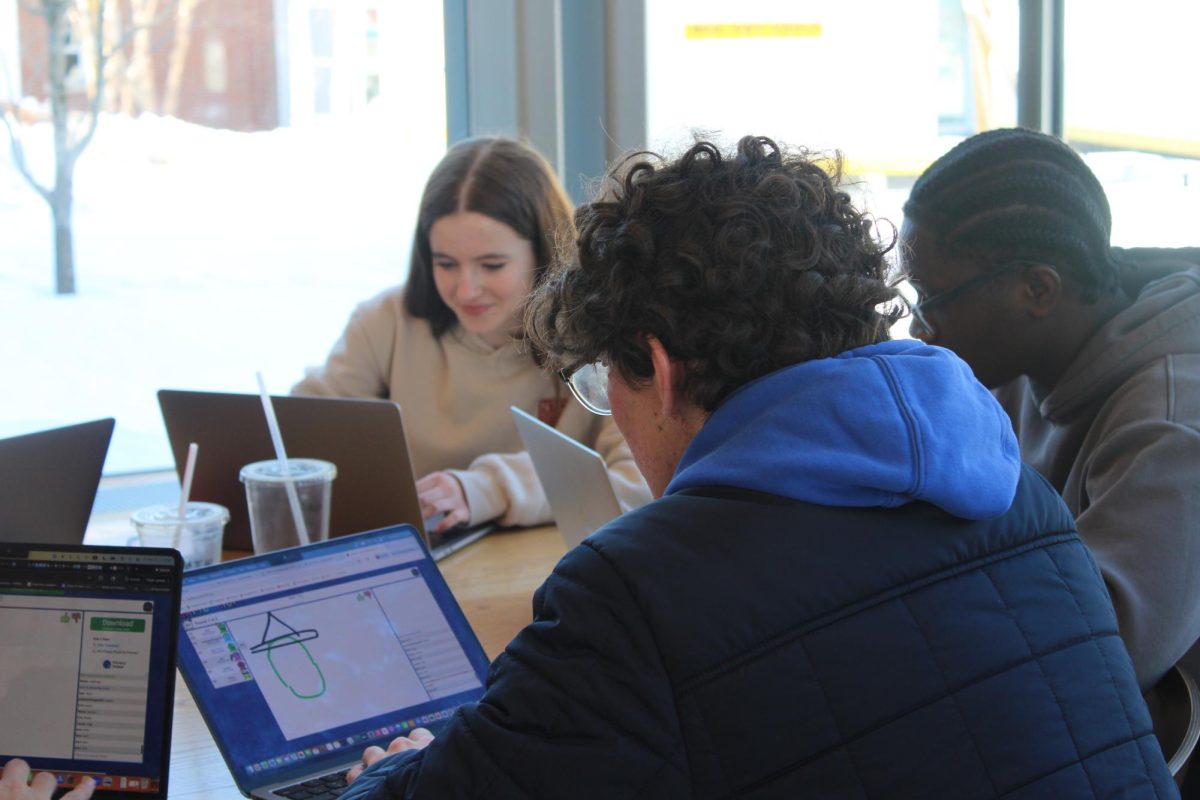
Liu currently does robotics through Nobles and enjoys spending time with the group in person. “Imagine if that were on Zoom—that’d be terrible. I wouldn’t be able to do [robotics] if we were online,” Liu said. Having non-remote high school years to develop interests is critical, and perhaps the most effective way to delve into interests.
Screens and online interactions still played a role in shaping seniors’ high school years, even though no classes or activities were held on Zoom. “I think with every subsequent class at Nobles, [technology] does play a bigger role in the social interactions that people have,” said Alex Yoon (Class I). While this is also a product of growing up in the digital age, students have grown comfortable with and slightly dependent on interactions on online platforms. “I’ve become more [tech] savvy overall,” Goddard said. “I feel like it’s so easy for me to pick up my phone and start scrolling. Having that time isolated [during lockdown] makes everyone a little bit more prone to picking up their phone and starting to scroll.”
While online interactions were crucial to preventing complete isolation during the pandemic, problems arose as a result of technology’s steady presence in students’ lives. “Parents became almost grateful for virtual connection for their kids, so gaming became a bigger deal,” John Gifford, who was Assistant Head of School and Head of the Middle School during COVID, said. “Fortnite has a dissing culture. And I feel like some of that language, and that attitude, was the way that [students during COVID] were learning how to interact and be brought into everyday life.”
Mandy Chukwu (Class I) elaborated upon this perceived deterioration in behavior, applying it to screens more broadly than online games. “I feel like people are so comfortable saying rude things to other people, because they don’t get repercussions for it,” Chukwu said. Increased screen time has made these negative online interactions more common.
Senior examinations of the standard high school experience versus a COVID-disrupted one primarily lie in student development. “Being in school has helped with maturity overall. I feel like if I were stuck at home [for part of high school], it would put my life on pause, but time would still be passing. By not having my high school years affected by COVID, I’ve been able to keep growing every year,” Goddard said. This developmental lag, potentially felt by students with abnormal high school experiences, could have lasting effects. “Your ability to talk and communicate with people is just hindered long-term,” Yoon said.
Co-director of the Putnam Library and Personal Development teacher Talya Sokoll notes that this disruption may have still affected many current students, despite them having had a “normal” high school experience. “Kids who are in high school now, including seniors and everybody else, had other really important developmental moments interrupted in their lives. Developmentally, middle school and late elementary school are really important times for kids. We’re not really going to be able to see the full effects [of COVID] until everybody who was in school has graduated, and the next generation of kids comes through,” Sokoll said. For this reason, they did not identify any stark differences between students who have completed four regular years of high school versus those who have not.
Christian Gonzalez Pena (Class I), who came to Nobles as a sophomore, provided an example of the developmental and maturity delay COVID caused at his old school among other freshmen. “There are a lot of lessons that could have been learned and a lot of maturity [to gain that some students] lost their eighth-grade year. There was this whole trend to destroy public or school property. Sinks and wall phones were ripped out of the wall. The reason why that trend was so successful was that COVID was a year when people got more relaxed. Responsibilities were a lot more loose,” he said. “Not to say that everyone had lost maturity and developmental time. It wasn’t total chaos, but some people took advantage of the shift while people were still trying to bounce back.”
Perhaps having the four full years does not matter as much, and it is simply having a disrupted education in general that delays students’ development. Despite this, the Nobles senior class seems to have made the most of their high school years.