


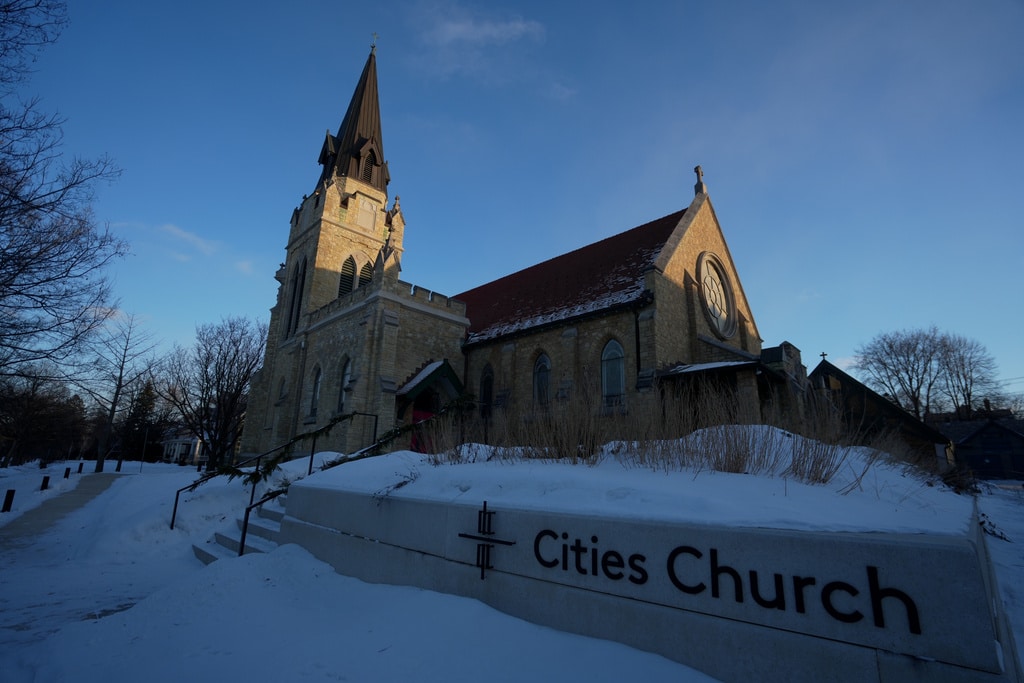
On January 18, 2026, a group of approximately 36 demonstrators entered Cities Church in Minneapolis, Minnesota, interrupting a worship service to protest David Easterwood, one of the church’s eight pastors and the leader of the Minneapolis field office for the Immigration and Customs Enforcement Administration (ICE). Easterwood, who was not preaching on the day of the protest, has been a deportation officer since 2015 and was promoted in 2025 to lead ICE officers across Minnesota, North Dakota, South Dakota, Iowa, and Nebraska. This protest came during the build-up of ICE officers in Minnesota in what is known as Operation Metro Surge, a program to arrest “dangerous criminal illegal aliens” and deport them, according to the Department of Homeland Security. The protest was especially in response to the fatal shooting in Minneapolis by an ICE officer of Renée Nicole Macklin Good, a 37-year-old mother of three and U.S. citizen, during an altercation that occurred just 11 days prior.
Leading the demonstration was Nekima Levy Armstrong, an ordained pastor, the former head of the National Association for the Advancement of Colored People (NAACP) Minneapolis, a lawyer, and an alumnus of the Brooks School in North Andover, MA. During the demonstration, Levy Armstrong called for Easterwood’s resignation and led chants of “ICE out” and “Justice for Renée Good.”
After the protest in Cities Church, a federal grand jury indicted nine protestors, charging them with “conspiracy and interfering with the First Amendment rights of worshippers”, as reported by the Associated Press. One of those indicted was longtime CNN host Don Lemon, who claimed he was there as a solo journalist live-streaming the protest; on Friday, February 13, Don Lemon pleaded not guilty and was released from federal custody. In a statement just after being released, Lemon said, “For more than 30 years, I’ve been a journalist and the power and protection of the First Amendment has been the underpinning of my work.”
At Nobles, some students focused primarily on the significance of First Amendment rights for both worshippers and demonstrators as they debated the merits of the protesters’ charges. Christian Gonzalez Pena (Class I) said, “My line is if people were harmed in a physical way…People were scared, I can imagine, and I feel bad that people got caught in the thick of it, but it’s the First Amendment. They have the right to at least protest.”
Mai Schotland (Class II), while acknowledging Gonzalez Pena’s point, recognized the other side of the coin: that people need to be mindful of what they are communicating, even under the First Amendment. “Right to free speech doesn’t mean you have the right to say whatever you want about anything or anyone,” Schotland said. “You have a right to use your voice …but there’s nothing in that right to speech that is immunity to consequences that this speech will bring you, and I think that’s important to remember.”
Levy Armstrong told the Associated Press just after the protest, “If people are more concerned about someone coming to a church on a Sunday and disrupting business as usual than they are about the atrocities that we are experiencing in our community, then they need to check their theology, and they need to check their hearts.” Ultimately, Levy Armstrong, along with two others, was charged with violating two acts: the Conspiracy Against Rights statute and the Freedom of Access to Clinic Entrances (FACE) Act. The latter includes a highly disputed “Republican-sponsored clause that provides for penalties for disruptions of worship,” according to the Associated Press.
Ryan Taylor (Class II) argued for their charge under the FACE Act by exposing what appears to be a double standard that the anti-ICE protestors established during their protest. “You want to see places of worship as a safe space for people to practice their religion away from all interference, and that hasn’t necessarily been the case for what ICE has been doing,” he said. “Whatever your politics are, churches haven’t necessarily been a safe space from [ICE]. It’s hard to then take the other side when [anti-ICE protestors come and] it’s not a safe space for the people who just want to go and practice.”
Nnamdi Achebe (Class II) elaborated on Taylor’s sentiment, suggesting that they should have been charged with trespassing. “You may be frustrated that this pastor is an ICE agent, and you may not align with his beliefs, but that doesn’t allow you to go in or disturb a sermon,” Achebe said. Nevertheless, Astou Traore (Class IV) proposed that the protesters’ intent may have been precisely the impact that Achebe found troubling. Traore said, “ICE agents are coming into a lot of people’s homes, and I feel like there’s cases when they go in without a warrant or they take people pretty illegally. So the disruption of the protesters into such a sacred place just helps show how scary and threatening ICE’s actions are.”
As the government begins to play a larger role in deciding what counts as free speech, and debates over Constitutional rights become more frequent conversations, students’ critical thinking about these issues fosters necessary, nuanced discussions that help shape the future of the governmental sphere.