


















In recent months, an uptick in tragic and dark humor has been observed on social media. This type of content makes jokes out of shocking, controversial, or disturbing current events, often in the form of online memes. Jokes in the same vein are often delivered in person, indicating that tragic humor has seeped into everyday conversations and Gen Z’s daily vernacular.
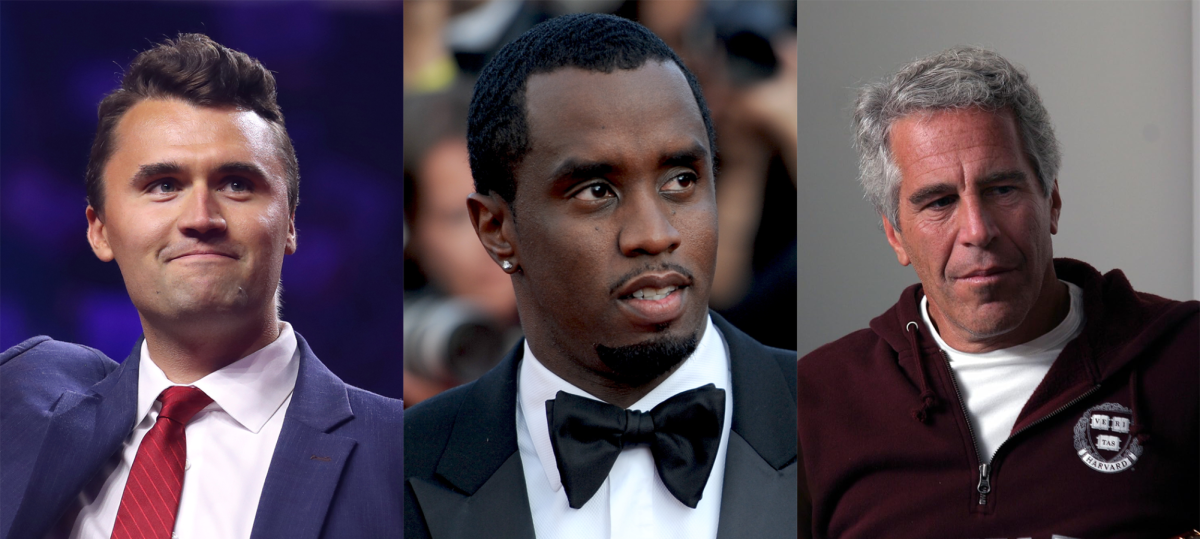
Currently, prevalent tragic content is largely concentrated on three controversial figures: the recently assassinated right-wing political activist Charlie Kirk, rapper and human trafficker Sean Combs, and financier and child sex offender Jeffrey Epstein.
“Kirkified” images, which are AI-generated images of various people with Kirk’s face superimposed upon their own, the AI anthem “We Are Charlie Kirk,” and the incorporation of “Kirk” into slang, for instance, the word “lowkirkenuinely,” are strong examples of popular tragic humor. These memes have become so common, it is difficult to go a day without seeing them. “[I see Charlie Kirk memes] very often, probably every couple of Reels,” Nathan Nguyen (Class III) said.
As a result of the sensationalist tendencies exhibited by social media algorithms, disturbing content has become nearly unavoidable. According to the National Institutes of Health, “studies have found that tweets with more emotion and out-group animosity tend to receive higher engagement [online] … engagement-driven algorithms do indeed amplify such emotionally-charged, politically divisive content.” Seeking to boost viewer engagement, social media platforms make it difficult to opt out of such provocative content.
This type of content is received differently by many social media users. Abi Afagla (Class II) said, “I find the ‘kirkification’ ones funny. I think I just see them a lot.” Other students point out the unempathetic nature of these memes. “I think sometimes it can be done in bad taste … The guy died, give him a break,” Nguyen said.
An important distinction must be made between Kirk memes and those of Combs and Epstein, however. “Diddy and Epstein are getting memed for something they did, versus Charlie Kirk is getting memed for something that happened to him. I feel like it’s more righteous or easier to make memes of [Combs and Epstein], because they made horrible choices that got them into these situations,” James Fair (Class II) said.
Both producers and consumers of tragic humor should exercise extreme caution when interacting with the type of content. A common thread in all Combs and Epstein jokes, in particular, is that the identities and stories of all the victims remain unmentioned. Nguyen said, “[In the case of] Epstein, for example, I feel like people brush over the fact that he did do that to kids. I think some people might forget about the victims when they make those jokes.”
When speaking about these figures within the context of news or serious discussions, people seldom elicit a laugh or any positive response. When removed from this context, laughter becomes much easier. “Once you look at [something disturbing] through a phone, it becomes entertainment,” School Counselor LaTasha Sarpy said. “We’re living in the modern-day Hunger Games. It’s not as pronounced or as organized as the book, but that’s what we’re doing. We don’t want to have to deal with the reality of what’s really going on. So we put some humor into it.”
That said, a hallmark of Kirk’s memes is that political opinion does not appear to affect whether people find them funny. “Both people on the left and the right might find this amusing because it’s not necessarily taking sides,” English Faculty Mike Kalin said. Likewise, those who scorn Combs and Epstein still joke about them, thus striking a balance between disapproval and humor.
Some argue that laughter is a coping mechanism for the turmoil and sense of unsettlement that characterizes Kirk’s story. Alex Muñoz (Class II) said, “Our brains aren’t made for seeing death. The average person probably wouldn’t see anybody die in their life. Having access to seeing these things can have detrimental effects on us. [Making light of tragedy is] just a way for our brains to work through our emotions.”
However, the memes may also be an attempt to condemn Kirk’s beliefs or denounce the crimes of Combs and Epstein. “The memes I’ve seen of Charlie Kirk, Diddy, or Epstein are really making fun of them,” Afagla said.
Another interpretation of these memes is that they are Gen Z’s way of leveraging their power. Despite being ineligible to vote, the younger generation can influence political matters by eroding a figure’s image through this type of tragic humor. “I think it’s arising from a lack of agency. There’s definitely a cultural idea that we can’t really do anything or achieve any change because of people in power. So the only thing we really can accomplish is to use modern media to damage the image [of the people in power],” Henry Kocher (Class II) said.
Perhaps, in the digital age, we utilize humor to claim agency, though this approach does not offer aid to the victims of Combs’ or Epstein’s crimes. The abused and mistreated must not be forgotten, and we must, as a society, take collective measures to protect those in similar situations going forward. Whether that be looking out for a friend in an abusive relationship or offering sympathy to those impacted by violence, it is imperative that we extend tangible aid instead of standing by and laughing.