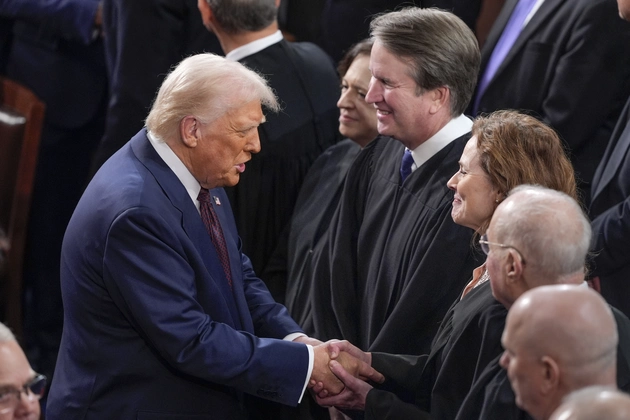






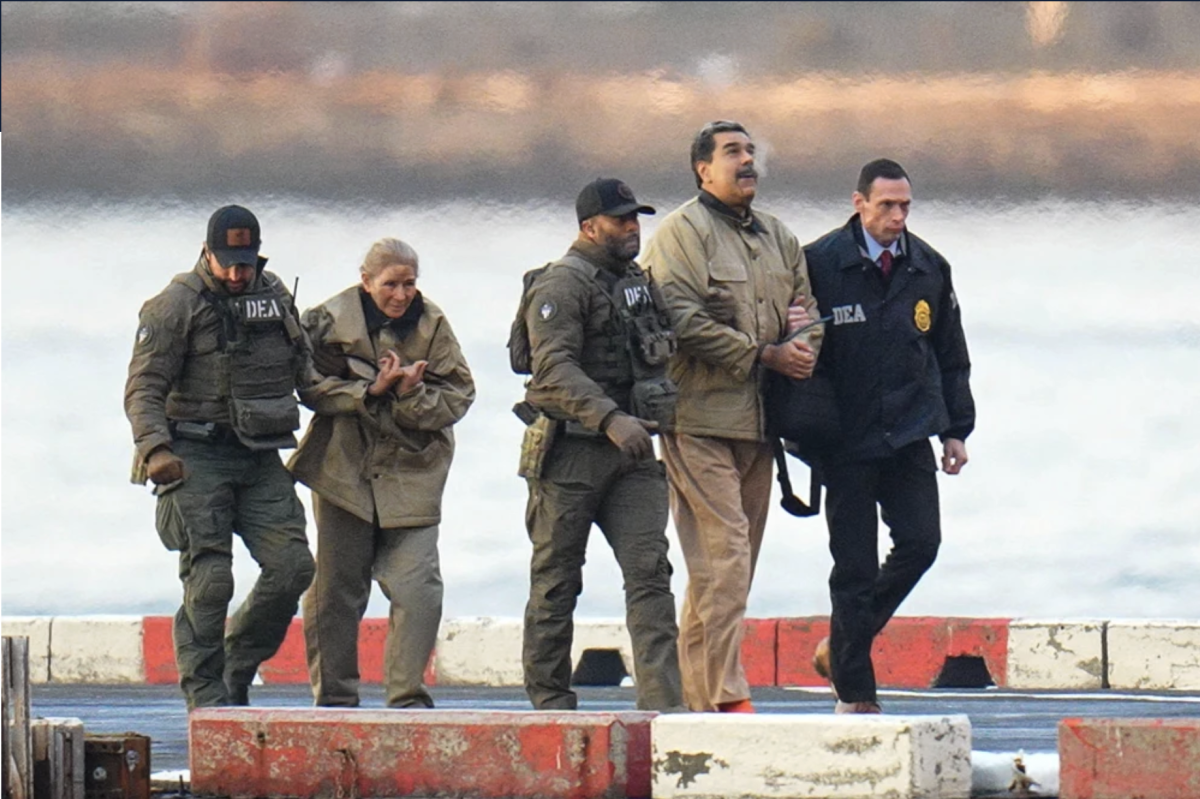
On January 3, 2026, United States President Donald J. Trump ordered the special operations force of the U.S. Army Delta Force to enter Venezuela and detain President Nicolás Maduro. Jaeliz Martinez (Class IV) was visiting family in Puerto Rico when the mission commenced. “There was a lot of aircraft activity right above us. My grandma said there’s never that many planes going over, and then we woke up and heard the president had been extradited,” Martinez said. Sending the military to a foreign nation to abduct their leader could be classified as an act of war, which would ordinarily require both congressional and international permission. However, President Trump sought neither of these and circumvented the traditional process. Trump stated that the motive behind this attack was primarily to dismantle Maduro and to disrupt narcoterrorism in the region.
Most of Venezuela’s modern challenges can be traced to Hugo Chávez, the president before Maduro, who rose to power in the early 2000s on a populist platform. Chávez promised the people economic reform and equal opportunity, but over time, he consolidated power by raising oil prices and weakening democratic institutions. Utilizing the steep incline in international oil prices, Chávez expanded the state economy by nationalizing oil and replacing the leadership of PDVSA (a now state-owned oil and gas company) with government loyalists. With this extradition, some argue that Trump is attempting to regain control over the crude oil reserves in the region, particularly through U.S. oil giants like Chevron and ExxonMobil. After Chávez’s death in 2013, Nicolás Maduro became president and continued many of Chávez’s policies.
Maduro’s leadership led Venezuela into economic collapse, marked by hyperinflation, widespread shortages of ordinary goods, and mass emigration. Political opposition was increasingly suppressed, elections were widely contentious and disputed, and humanitarian conditions deteriorated as millions of Venezuelans were displaced. By 2026, Venezuela was plagued by political instability and social unrest, leaving many citizens yearning for change. This desire for transformation, however, was not a call for help to the United States to intervene in Venezuela. Thus, the United States’ ultimate involvement was incredibly controversial, with opinions divided over whether this would be the beginning of a better future for Venezuela or if this new precedent set by the United States would trigger more unsanctioned invasions of sovereign nations.
Despite the uncertainty, many express gratitude for Maduro’s removal from power. “For the most part, Venezuelans were happy and grateful, even though a lot of people think it was about oil,” Martinez said. Tomás Hernandez (Class I) held a similar opinion. “People were putting words into the mouths of Venezuelan citizens, saying they didn’t like it. That’s incorrect. For the most part, this was a cause for celebration,” Hernandez said. His family, as he stated, was overjoyed at the end of Maduro’s reign.
However, the end of Maduro’s rule did not mean the end of corruption within the government. Sebastian Guzman (Class I) said, “After they took Maduro out, everybody was super happy. But now there’s no police, no law enforcement, and the gun violence was absurd.” He went on to mention that schools and universities had to go remote due to safety and security concerns. Guzman also explained that Trump intervened in Venezuela for oil, but did not neglect to mention that, at this time, Venezuelans are incredibly hopeful.
To Amanda Rosa (Class I), who has family and family friends from Venezuela, Trump’s decision to invade Venezuela was very personal. “At first, there was a lot of joy about Maduro being out of power, but then it felt like there was less of a change than people expected. Just taking out a figurehead isn’t going to do much if the rest of the government is still the same,” she said. After being taken out, Maduro appointed Vice-President Delcy Rodríguez as acting president, who shares the same anti-imperialist Chavista ideology as Maduro.
The act of removing the leader raises the question of whether deposing someone from a corrupt throne eradicates the corruption from within. In the case of Venezuela, experts say that it seems unlikely. Analysts and social organizations such as Transparency International emphasize that to root out corruption, you must rebuild democratic institutions, establish an independent justice system, and ensure transparency and accountability at all levels of government. A change in leadership does not seem sufficient. But it is a step in the right direction, and after years of dictatorship, Venezuela has some hope for a brighter future.