











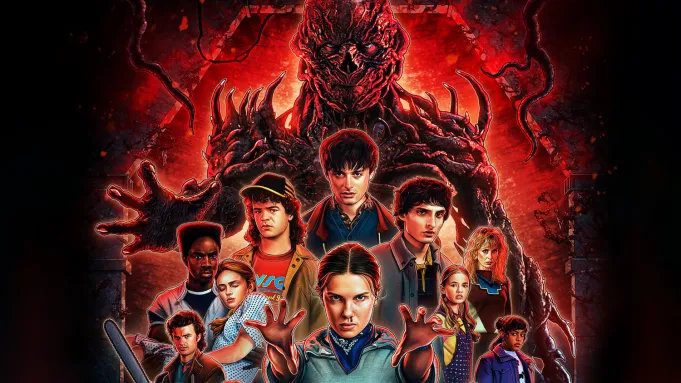
The ten-second countdown on New Year’s Eve is a festive, unifying, and hopeful occasion, typically done at 11:59 p.m. For dedicated Stranger Things fans, however, the main countdown of the night this past year took place four hours earlier, when the final episode of Season Five was released on Netflix.
Watching the last episode of Stranger Things marked the end of an era for numerous Nobles students, many of whom began watching the show around 2020. “I like the depth of the characters and how they’ve been building up through all the scenes,” Landon Zou (Class II) said. “I feel like I’ve grown up with [the characters]. I see myself in Will Byers. We have a lot of similarities.” The characters are certainly relatable and easy to love, contributing to Stranger Things’ remarkable quality. Nate Newmark (Class III) said, “It’s a great show, one of the best shows of all time. The storytelling is good. The writing was very good, at least for the first couple of seasons.” However, the fifth and final season was controversial.
A few students praised Season Five, which was released over the course of a month in 3 separate volumes, with many focusing on the first. “I thought overall, it was really well done. [Volume One is] extremely good,” Eitan Friedman (Class II) said. “The whole scene with Will getting his powers is really well done. The acting was really good, too, especially with some of the younger actors like Derek and Holly.”
Vivienne Harrington (Class IV) said Season Five was the turning point in which “everything exploded in [the directors’] faces.”
The second and third volumes of Season Five drew criticism for a notable decline in writing quality compared to the first volume. “I hated [Season Five]. I think that the first volume was really good, and then I think it went downhill, in terms of the writing and plot with Volume Two and Volume Three,” Jacinta Wangari (Class I) said. “Apparently, one of the [directors] divorced his wife between Volume One and Volume Two. I think that she was a ghost writer and was doing a lot of stuff between seasons one and the first volume of Season Five, because the writing went so downhill [in Volume Two].”
Regarding areas where the season fell short, students identified a myriad of plot holes and loose ends that remained unresolved by the end of the final episode. “I was confused how Max graduated when she was in a coma for 2 years. I feel like that was forced to try to give a cute ending,” Wangari said.
The “cute ending” Wangari speaks of is in part due to the ease with which the main characters defeated the season’s main antagonists, Vecna and the Mind Flayer. These antagonists should have been more challenging to vanquish. Newmark said, “The fight with this immortal being lasted three minutes. [It] was unrealistic.”
The lack of consequential deaths was also critiqued by many Nobles students. “There should have been way more deaths,” Wangari said. While perhaps wishing for more deaths is gruesome, including more fatal scenes is necessary to preserve the emotional, engaging, and comfortably heartbreaking aspect of the show. Given that the show centers on dangerous monsters, it is highly unrealistic for everyone to survive. “It feels like plot armor. The writers tried to give each individual character a happy ending. I think that good writing doesn’t necessarily mean that every character has a happy ending. I think it means that every character has a good story,” Wangari said.
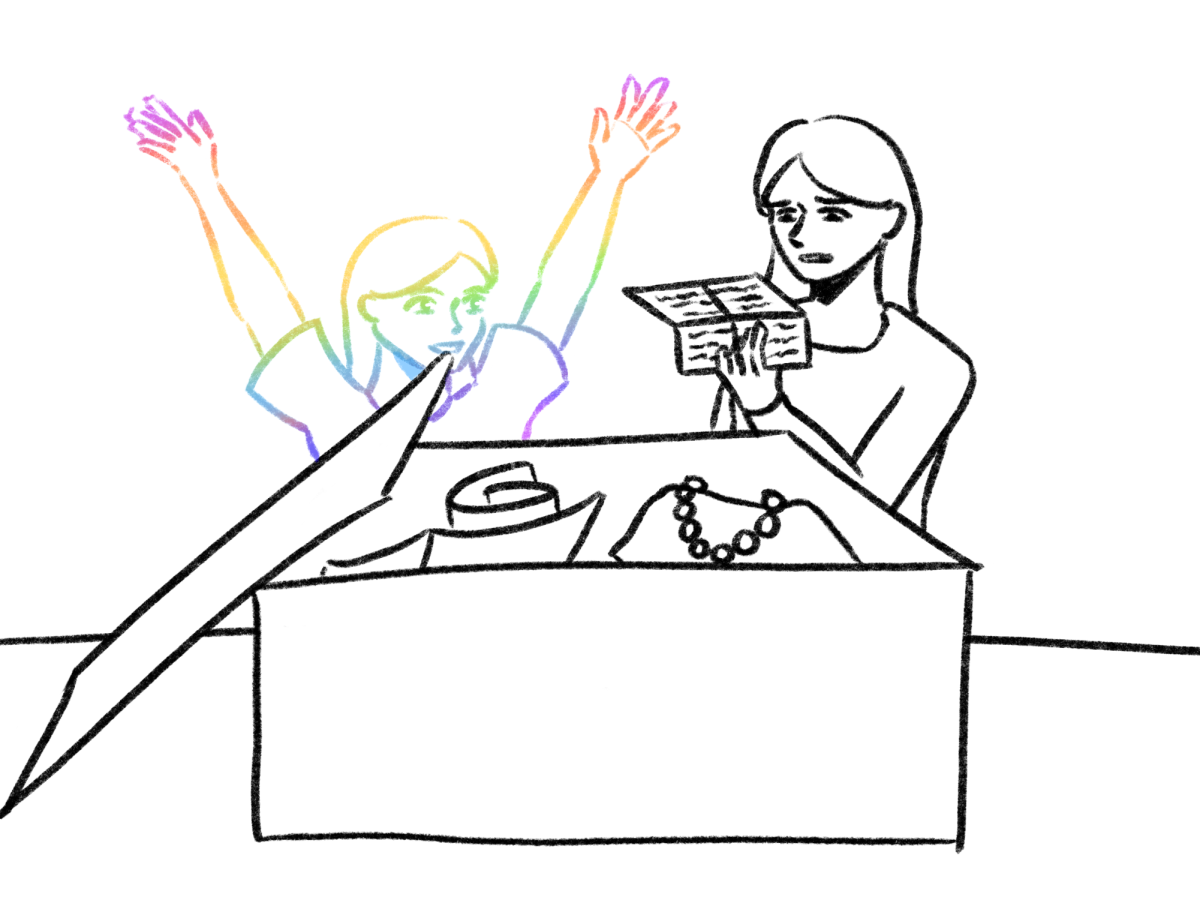
The scene in which protagonist Will Byers comes out as gay, a significant moment in the show, elicited varied responses as well. “Why was the whole cast there? I feel like he could have just done it with his mom, his brother, and maybe Mike,” Newmark said. Despite the threat of Vecna’s control over Will serving as the impetus for his coming-out speech and the surplus of characters in the audience, the scene was indubitably wholesome. “I actually liked it. I was crying,” Wangari said. “I thought it made sense for Will to do it in front of everyone if Vecna was going to use that against him. I thought what he was saying was human.”
Some drew more serious conclusions from the coming-out scene. Harrington said, “I felt that they were mocking queer or gay people. It was a caricature of a coming-out scene. It was so aggravating.” Several students perceived that the scene included cliché dialogue that inaccurately conveyed the authentic emotion and candid nature of coming out in real life.
While the inclusion of Will’s scene contributed to greater representation of LGBTQ+ characters in media, the fact that Will ’ship within the Stranger Things fandom, colloquially dubbed “Byler,” did not end up in a romantic relationship with one another. Some fans felt this was queerbaiting, which is a marketing tactic involving alluding to queer relationships but not actually depicting them. “A lot of the biggest fans ship Byler, and I think that they used that ship as a way to profit. They just wanted to make money and ensure [that fans] continue to invest in the show,” Wangari said.
Having a queer relationship develop among straight relationships in a TV show with a storyline that is not centered around romance would also have contributed to the normalization of such relationships. Zou said, “I think that [Mike and Will not ending up together] is telling all these young queer people that they can’t actually find love, and the best they can ever do is find acceptance in themselves.”
Despite Volume One being perceived as excellent and chock full of skilled acting, the fifth season of Stranger Things largely fell short of fan expectations. That said, given how invested many fans are, it is possible that they were never going to like how the show’s creators wrapped it up, because they did not want the show to wrap up at all. It is difficult to let go of something that has brought one such joy.