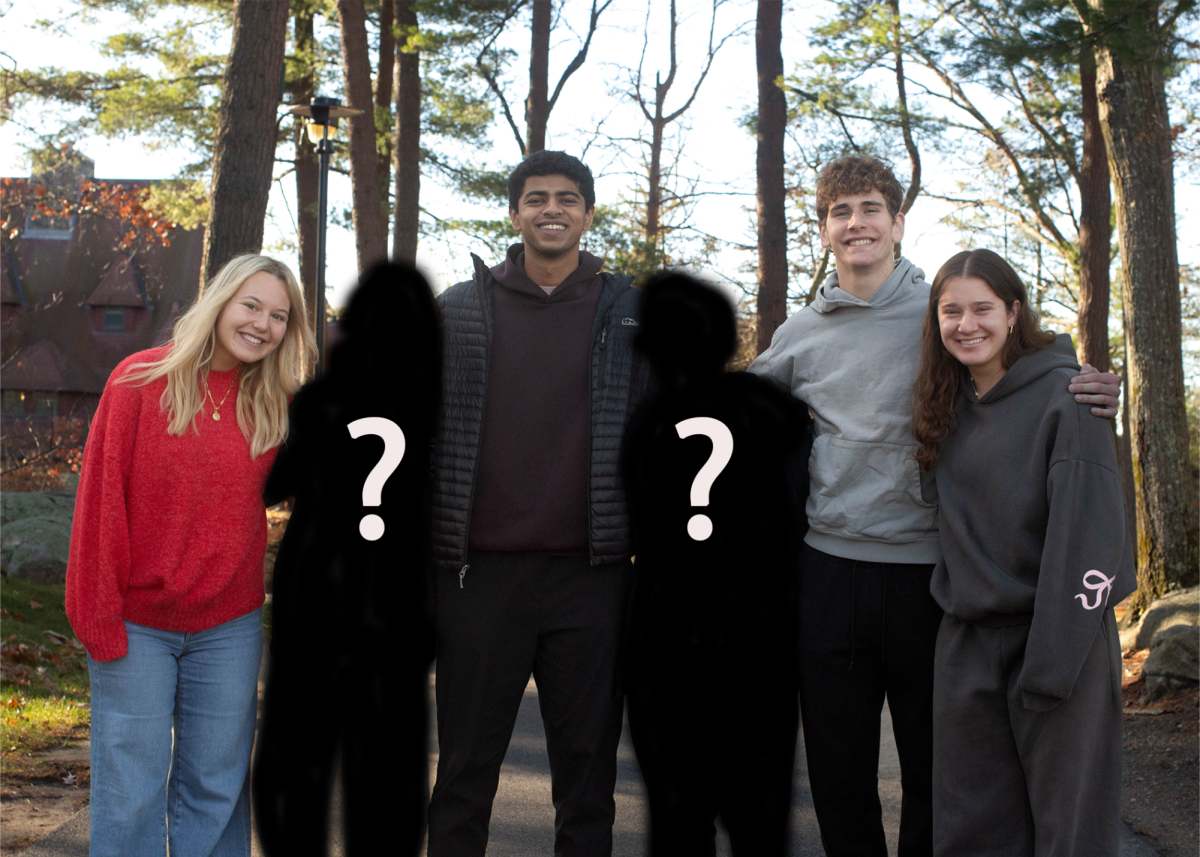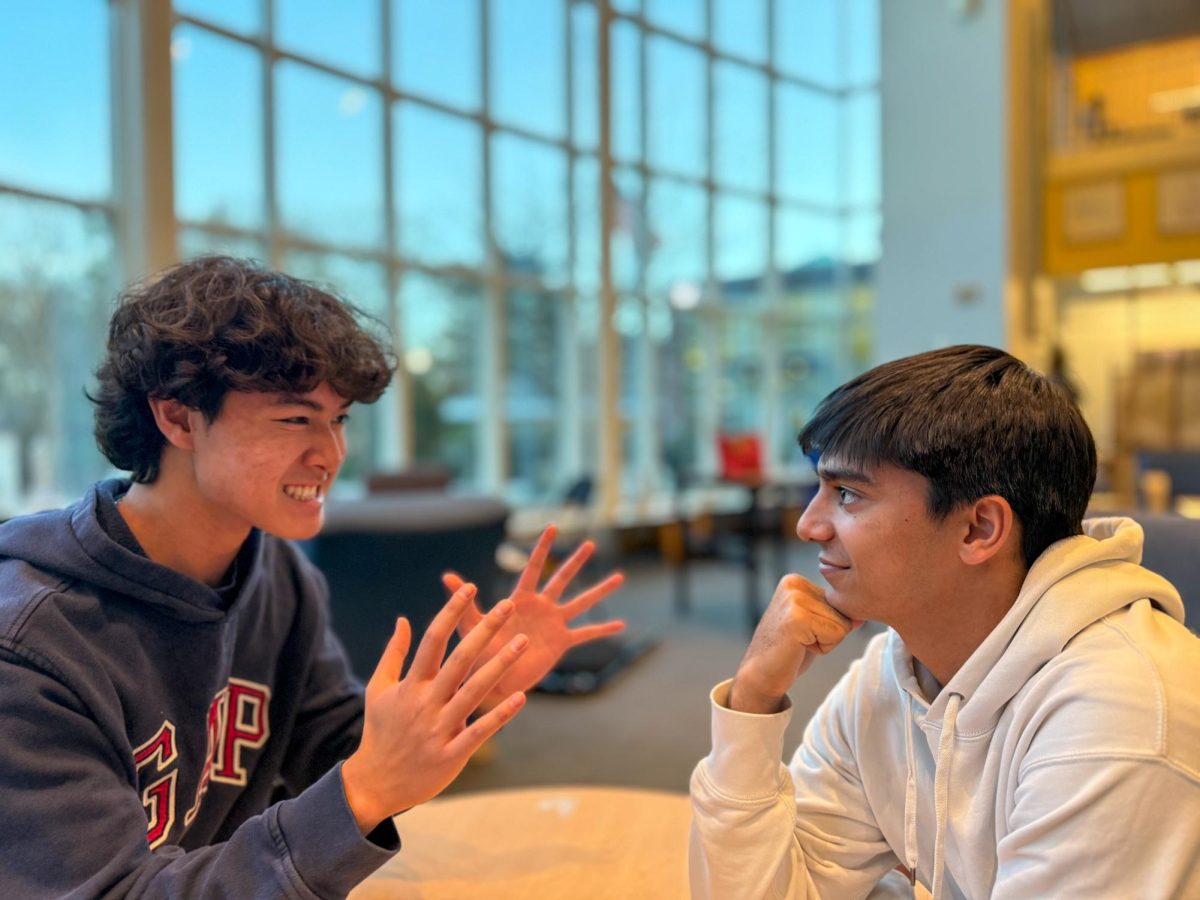


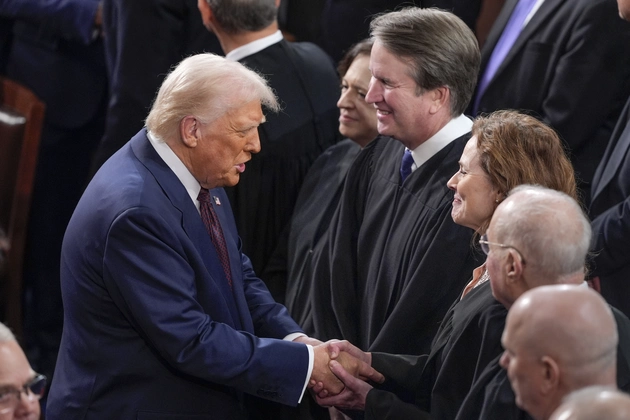

















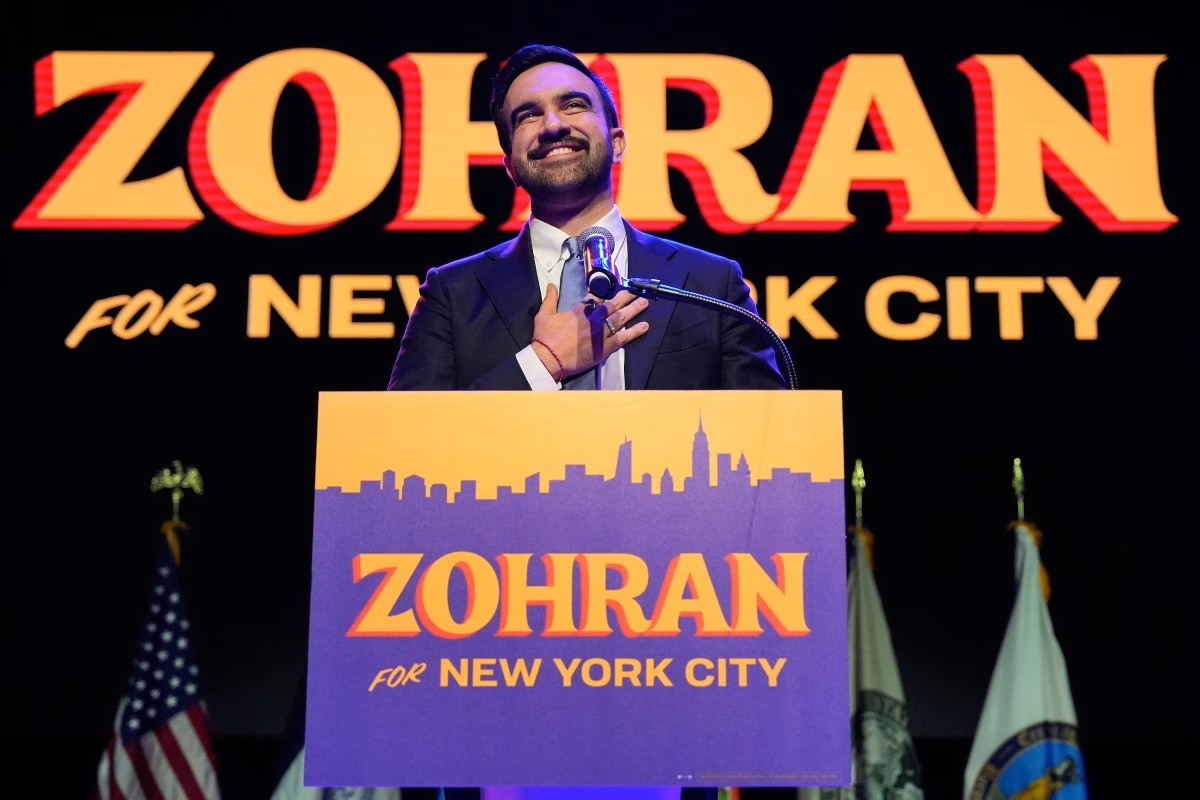
34-year-old democratic socialist Zohran Mamdani, elected mayor of New York City in November, has been a highly polarizing figure on the Nobles campus. Students consider New York a microcosm for national politics, and thus believe that his election has stakes beyond the Big Apple. Devin Reid (Class III) said, “The election has shown the schism: you either support Trump or Mamdani, who’s a socialist. It’s hard to find an in-between.”
Social media has played a significant role in shaping student awareness and opinions. Mamdani’s path to victory was aided by his social media campaign, which students consider one of the most effective and influential they have ever seen. “I think he has one of the most strategic social media campaigns…I definitely learned about his platform from social media,” Lauren Peloquin (Class II) said. Peloquin’s positive assessment of Mamdani’s social media presence was echoed by Lara Sahagun (Class I). She said, “This was one of the first candidacies where there was a successful social media campaign that wasn’t necessarily built on sensationalism, and that drew me to support him.”
However, some students felt that Mamdani’s social media presence hinders voters from fully understanding what he is promising through reductive policy explanations. Guy Rabinovich (Class IV) said, “He says things that are meant to seem really good, but are kind of cropped and don’t offer the full picture.” This idea of an intentionally simplified social media campaign is furthered by Theo Hirzel (Class IV), who argues that Mamdani’s social media efforts were also successful due to style rather than substance. “To go on TikTok and post a rousing speech can win him the election. I think that’s very concerning for the nation as a whole, and we might see a movement towards clickbait and engagement farming as opposed to actual well-thought-out policy,” Hirzel said.
Some students praise Mamdani’s socialist policies, like government-run grocery stores and free healthcare for children, which they view as an effective means to achieve affordability in the United States. Peloquin is largely in favor of his programs. She said, “By being a socialist, he’s giving these really critical welfare programs that, frankly, New York needs, since it has so many middle-class workers, and they are how the city is run.”
However, many students simply do not believe that socialist policies could function in America. “I think socialism only works in places that have heavily nationalized industry, for example, Norway … at the same time, all of their billionaires have fled the country,” Nayan Seetharam (Class I) said. Hirzel shares Seetharam’s fear regarding the practicality of socialist programs. “Rent freezing is very dangerous, I would say, because it disincentivizes long-term growth … No one’s going to build housing and maintain it… if they know that it’s not at all going to be profitable because there’s a rent freeze,” Hirzel said. By restricting annual rent increases for specific housing units, Hirzel is concerned that Mamdani’s approach would actually worsen the supply and quality of housing rather than resolve the housing crisis.
Although the mayor of New York has no say in American foreign policy, Mamdani’s view on the Middle East was a divisive issue. “I think it’s clear that he doesn’t want Israel to exist. He doesn’t believe in religious states, but I don’t see him going around saying that he’s anti-Saudi Arabia, anti-Jordan, or anti-UK. That kind of double standard bothers me and could prove to be harmful to Jewish people,” Rabinovich said. Reid provided an alternative perspective, explaining that Mamdani’s opinions on Israel could be appealing to people who are critical of the country’s actions. He said, “[his position on Israel] does make me more inclined to support him. I don’t think it’s a good policy to just say, ‘Oh, this doesn’t affect the city directly, so he shouldn’t care about it.’ I think that he should have a stance.” Interestingly, positions on conflicts that are not directly relevant to the election seem to seep into people’s perceptions of candidates, perhaps indicating that they are beginning to assume a more holistic perspective and consider all of the beliefs and policies of candidates.
Students believe this moment reveals deeper significance for American politics. Some view Mamdani’s election as a sign of increasing radicalization in American politics. “There’s a big party shift … The Republican Party is becoming more of the authoritarian party, and the Democratic Party is becoming more of the socialist party,” Seetharam said. Sahagun gleaned a different takeaway from Mamdani’s election. “The fact that Mamdani was very clear on his platform that he is a democratic socialist was, to me, a good step forward in political literacy. People had to learn to vote for someone who was a democratic socialist despite the stigma that the term ‘socialism’ often carries,” Sahagun said. This transition to more open-minded politics may highlight the potential for voters to focus more on policy than on political party affiliation.
When confronted with a complex and provocative politician like Zohran Mamdani, careful reflection and examination are essential for developing informed opinions. Students at Nobles have done an excellent job of thoughtfully engaging with his policies and campaign, demonstrating what it means to be educated citizens. Across the political spectrum, students emphasized the importance of understanding policies deeply so voters can best determine what suits their needs and values rather than simply voting based on party lines or other labels. In an era of increasing polarization, this commitment to substantive, policy-focused discourse offers a promising approach to modern politics.