













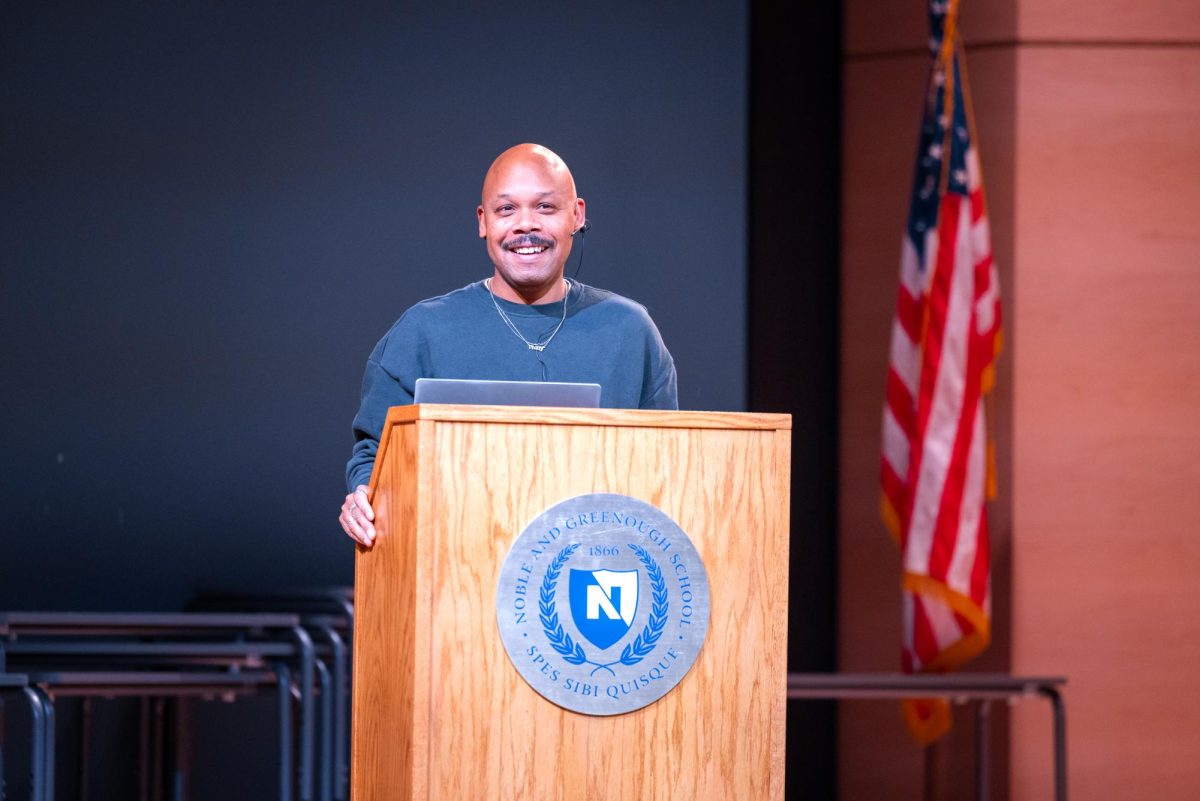
Tre Johnson’s Black Genius assembly in January received a mixed response from several in attendance. Some people, including many Black students, found themselves really enjoying the presentation, while others found that Johnson’s message did not resonate with them — not the concept of Black Genius itself, but the way in which it was presented in assembly.
Many report leaving Lawrence that morning without a clear definition of Johnson’s Black Genius. “I do wish that if we had more time to ask him questions, he would actually define what he thought Black Genius was,” Chief Equity Officer Edgar DeLeon said. “What I think he was trying to say is that we tend to put a lot of pressure on this idea of genius within the academic realm, but in reality, there’s genius in other aspects of society and culture.”
Specifically, there was much confusion about the distinction between Black Genius and the traditional concept of Black excellence. Jay Jay Destiné (Class I) said, “I still think Black genius is Black excellence … it’s just recognizing that Black success isn’t only financial or academic, but it’s what we do with what we’re given.” Despite Johnson’s attempt to differentiate between Black Genius and Black excellence, the overlap and potential lack of clear definitions between the concepts led many to believe they were the same. Blessing Oloyede (Class II) said, “I definitely put [Black Genius] in the same category as Black excellence.”
Despite the disparity between intentional messaging and what some students actually took away from the presentation, Johnson’s focus on numerous different areas where Black Genius is present resonated with many community members. Oloyede said, “He didn’t try to make his presentation fit a specific narrative about what it means to be a Black Genius. He showed people that it meant multiple things.”
However, Johnson’s attempt to cover so much ground led some to find gaps in his message. This required his audience to have had prior background knowledge in what he was talking about. “I feel like he presented Black Genius in a way where he assumed that people already knew this information about Black people, instead of in a way that informed them and taught them about the topic before,” Oloyede said.
Johnson’s overall goal to demonstrate that “genius” can be created in different areas — from gaming to biking to hair — is important to recognize. However, the tendency to dismiss a presentation as a whole when it is hard to understand raises broader questions about our community. Director of Diversity Efe Osifo said, “You have to let people land where they land, and [Johnson] doesn’t have to do a perfect job in order for something to be effective … I think some people are like, ‘You said something I didn’t like or that I disagree with, therefore I’m out all the way.’ We shouldn’t do that with any speaker.”
The conversation the assembly sparked makes it evident that community discussion should be emphasized more, as well as providing vital spaces for students of all opinions to share their beliefs, rather than feeling forced to keep their opinions to themselves. “In general, when we have assembly speakers share their personal stories or research, we need to build in time for the community to digest what they heard. Otherwise, questions can linger all day,” Osifo said. Giving students the space and opportunity to voice their opinions right after an assembly occurs can be preventative against future tensions or disagreements that people may have with one another and aren’t able to speak up about.
DeLeon said, “I think there were other people who were turned away by some of his messaging. I think that’s fine. What I think is not fine is to then go back and say ‘that was awful,’ where, instead, it could have been a moment of us coming together to have a conversation. It became this moment of disagreeing, but not in a positive way.”
This brings up the question of the spaces of acceptance in our community and whether sharing controversial, but real opinions can and should be done. DeLeon said, “I think the question we have to ask ourselves as an institution is, ‘Is it okay for someone to be on stage and have a different opinion?’…I think we have to be able to learn to actually navigate the spaces that you don’t actually agree with.”
Spaces for discussion are necessary to strengthen community cohesion. Destiné said, “I think a lot of people needed to hear it; I don’t think a lot of people listened to it.” Being more open to listening to new perspectives, especially ones that don’t align with your own, is a first step many should take. Additionally, increased effort from our administration to foster more places where people who disagree can discuss will lead us all to become more understanding individuals who can hold difficult, dissenting, but meaningful conversations.