
















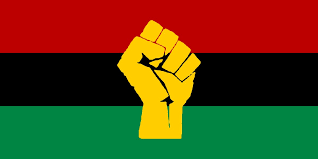
Modern Language Faculty Amadou Seck is known for taking the lead in many environments: the French classroom, the Boys Junior Varsity Soccer field, and the Model United Nations floor. What he is not as well known for, however, is his role as vice president of the Pan-Africanist Federalist Movement (PAFM), an international organization dedicated to the creation of a unified African state.
The PAFM was created in Mali, West Africa, in 2015. “[Its purpose is] to create the conditions, through an international campaign, to accelerate the process of unifying all African nations, including Africans from the diaspora. It is a huge undertaking,” Seck said. Seck was appointed as deputy regional coordinator in 2018, with responsibilities including managing PAFM outreach and awareness campaigns across the East Coast. “I was able to create a chapter in Rhode Island and Atlanta, which is actually one of the strongest in North America,” Seck said. The leadership core of the PAFM consists of roughly 50 people spread around Europe, North America, Africa, and a new delegation in Asia. “[We work to] agree on the most efficient way of reaching the same goal of creating a United African state,” Seck said.
Recently, he was appointed Vice President of the PAFM and meets monthly with representatives to discuss regional plans and outreach initiatives. He said, “Right now, we are in discussions with the government of Namibia to host a forum of African unionists. A delegation from the PAFM would be sent, and that forum, tentatively, would be convened in December 2026.” The groundwork for the creation of a United African state has already been laid, with Burkina Faso, Mali, and Niger establishing a confederation modeled on the system of the thirteen original colonies of the United States.
The desire to establish this congress stems from the belief that Africa, as a single country composed of its current 54 nations, could become a global superpower. “Africa will have the most human capital, 1.7 billion strong, 60% of which are under the age of 35,” Seck said. The youth of this new country will be able to progress for generations to come and be able to reclaim the sovereignty of Africans lost to colonization and slavery. “Countries inherited their borders from the [1884] Berlin Conference, and those borders are still the confines of the countries you see right now,” Seck said. There are still lasting effects of slavery, colonization, and neo-colonization, a process by which non-African countries try to influence the decisions and business of African countries through infrastructure and other projects.
Africa is increasingly becoming a target of this neo-colonization because of its natural resources and opportunities. “You have these new countries, especially China and Turkey [as well as Russia and Japan], that are really playing a role in trying to organize the economy and find new directions for African countries to develop,” Seck said. The neo-colonization by these countries can be incredibly harmful. “It threatens the sovereignty of the African Nations,” Seck said. Turkey, for example, built a modern airport in Senegal, an attempt to gain influence in African politics. If the PAFM were to achieve its goal of creating a Unified African state, Seck believes that it would be less likely to be influenced by non-African countries and could create a space among Africans to discuss such matters. “The terms of engagement for these deals would be much different, especially if Africa had that much more power. Africa would be in a position of power to negotiate with anyone, and others would face a very strong country,” Seck said. This new nation would be able to keep neo-colonizers out of Africa and be able to convene, ultimately choosing the best methods for advancing in the world today.
As the PAFM continues to gain followers and support, Seck is at the forefront of the PAFM’s push for African unity in addition to his presence within the Nobles community.