









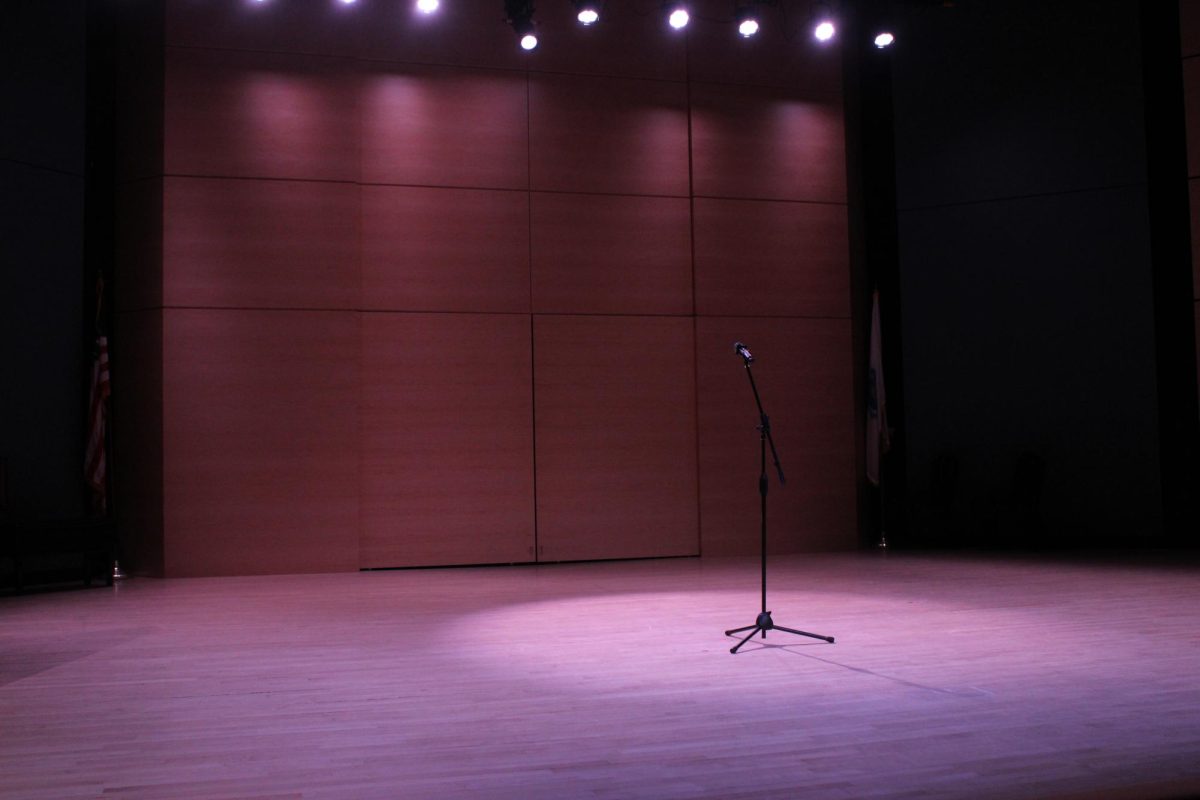
In the winter of 1998, fifth Head of School Dick Baker took to the assembly stage to deliver his routine morning address. Graduates who attended during Baker’s tenure remember how he used narratives to etch values into students’ minds before they were ever inscribed on campus walls. “He could lock you into a story for three minutes, and then you had a lesson at the end,” Olivia Boger (N ’99) said. On that particular morning, Baker did not preach the importance of perseverance or demand that students send him postcards from their travels. Instead, he announced a string of reported antisemitic acts that Nobles had been fighting throughout the year. “It was like disappointing your parents,” Boger said. Following Baker’s speech, a microphone was placed on the stage, and he invited anyone in the school to speak on the cultural state of their community. “I get goosebumps still thinking about it,” Amanda Helming (N ’99) said.
“The school that I came to in 1989 was very traditional, very conservative, not diverse at all,” former Head of Upper School Ben Snyder said. Baker’s predecessor, Ted Gleason, was an Episcopalian priest. “Every year, the entire student body would walk down to St. Paul’s Church for a Christmas service,” Assistant Head of School John Gifford (N ’86) said. From this homogeneity, Baker undertook the formidable task of making the Nobles community more representative of the metropolitan area in which it resided. This decision was met by a large pushback. On one occasion in the early 1990s, four families left the school after the hiring of an openly gay faculty member. Despite Baker’s efforts, the rise in hateful behavior on campus was disheartening. “He was disappointed that his message wasn’t getting through,” Gifford said.
The administration decided to turn to the public forum of assembly. “We thought that this would be an interesting way to handle this,” Gifford said. “Make it more about the person to your left. I think that’s why we gave it a go.” He recalls the uncertainty he had going into the morning, concerned over what students might broadcast to the school or whether they would even speak at all. “There’s so much risk. It was a really gutsy thing to do. You don’t know what direction it’s going to go,” he said.
After Baker exited the stage, it remained vacant for a considerable time. “The room was silent. He let it be silent. He let it be really uncomfortable,” Boger said. Eventually, students came around to the idea of sharing their experiences. Boger said, “One by one, people started going up to the stage and talking about a moment where they either saw something happen or felt it themselves.” While the first round of speakers expressed their feelings surrounding the incidents that triggered the assembly, the event snowballed into a far broader discussion about identity and belonging. Boger remembers one Black student speaking about their experience at a predominantly white institution. “He was like, ‘Does anyone else have a story where a mom gets pulled over right before getting to 10 Campus Drive because she’s being profiled by the cops?’” Boger said. She remembers that not only students who had been hurt spoke, but also those who had hurt others. “I have a vivid memory of a very popular older kid who everyone really looked up to. He stood up and talked about how he was really embarrassed that he had been part of hazing, and he was so tearful about it,” she said. “I can just remember being a younger student and being like ‘Oh my god, I would never have guessed he would have said something like that.’”
With those at that assembly finding it increasingly easy to be vulnerable on stage, Snyder felt that cutting off the forum would be a disservice to the student body. “The walls were just packed with kids who wanted to get up and talk. We’re not going to say to the kid who’s eighth in line, ‘Okay, time for third period,’” he said. So the speeches continued, stopping only once when the faculty sent students to get lunch at the Castle and then return to Lawrence for further discussion. “It takes a lot at a prep school like this to cancel classes for a day, so that lent a lot of gravity to it,” Kate Harrington (N ’00) said.
“There was a student who stood up and talked about how they considered suicide,” Helming said. She believes that hearing their story opened her eyes to the importance of unconditional compassion and empathy in everyday life, and she went on to exchange a letter with them following the assembly. “I probably still have that letter somewhere as a reminder of how important it is to be kind, especially in a circumstance where you don’t know what’s going on with the other person,” she said. It is anecdotes like this one that demonstrate the culture shift that this assembly contributed to at Nobles. What was initially seen as a “gutsy” move turned out to be quite a productive lesson on kindness.
“I left feeling like we should do this every week,” Harrington said. Despite the healing effect the six-hour assembly of ’98 had on some, the school has held a full-day forum like this only once since, when the community gathered in Lawrence for an entire day following 9/11. Gifford believes that because today’s assembly holds 200 more students than it did in 1998, these types of discussions are far more difficult. “It was a more intimate setting. We were more comfortable airing dirty laundry in that space than we are now,” he said. Additionally, the stakes are much higher for those facing disciplinary action today in an era of faster-moving communication. Speaking on how the ’98 assembly impacted those who were disciplined for the initial antisemitic acts, Gifford said, “I think it was still hard for those kids, but I think it would be harder today.” Snyder argues that these forums can turn into public shaming, which, in the modern day, may do more harm than good. “The consequences of impulsive adolescent behavior can have a significant ripple effect on that person’s life. That context has changed pretty dramatically,” he said. “Some would believe that that then circumvents or prevents there being a larger, more meaningful conversation.”
Still, the ’98 assembly was only a small step in the school’s greater evolution regarding diversity and inclusion. “That assembly didn’t solve anything,” former Head of Upper School Michael Denning said. “It was a statement at the time that we have work to do.” The administrative work done in the decades following this assembly to make the school more diverse, and the conversations held in classrooms and affinity groups today, have continued. It is a mission that is never done.