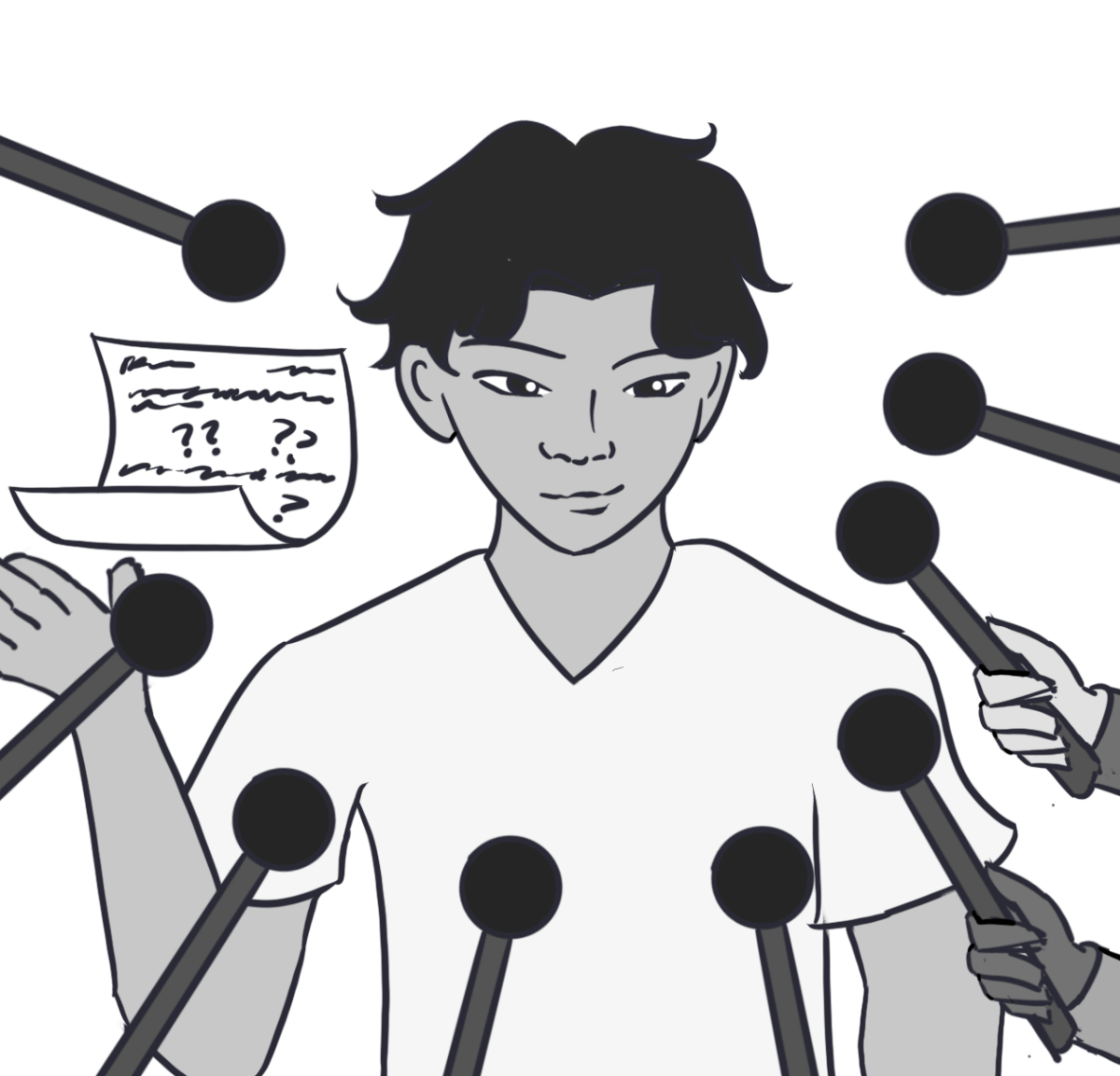




















“If you’re not looksmaxxing, you’re not lifemaxxing, and if you’re not lifemaxxing, you’re nothing,” male beauty streamer and “looksmaxxing” movement face Braden Peters, otherwise known as Clavicular, said.
Looksmaxxing is a prevalent online trend in which individuals, primarily men, use egregious, often pseudoscientific beauty routines and products to improve their appearance, believing society will favor them if they are more attractive. Clavicular has generally drawn much attention for his highly inflammatory, offensive statements and for his atypical methods of improving his appearance, such as absurd routines and drugs.
It seems that Nobles students frequently encounter looksmaxxing content online, often in the form of short clips from Clavicular’s livestreams. The promotion of self-improvement can be positive in theory. “One of my close friends out of school really took [looksmaxxing] to heart, and his appearance has changed a decent amount since the whole trend took off. And for him, he’s definitely grown more confident in his appearance,” Guierry Napoleon (Class I) said. “Making people take care of their bodies and appearances more, and taking pride in it, is the positive [aspect] of the movement. I’d say the only negatives come from the extremes that they sometimes push.”
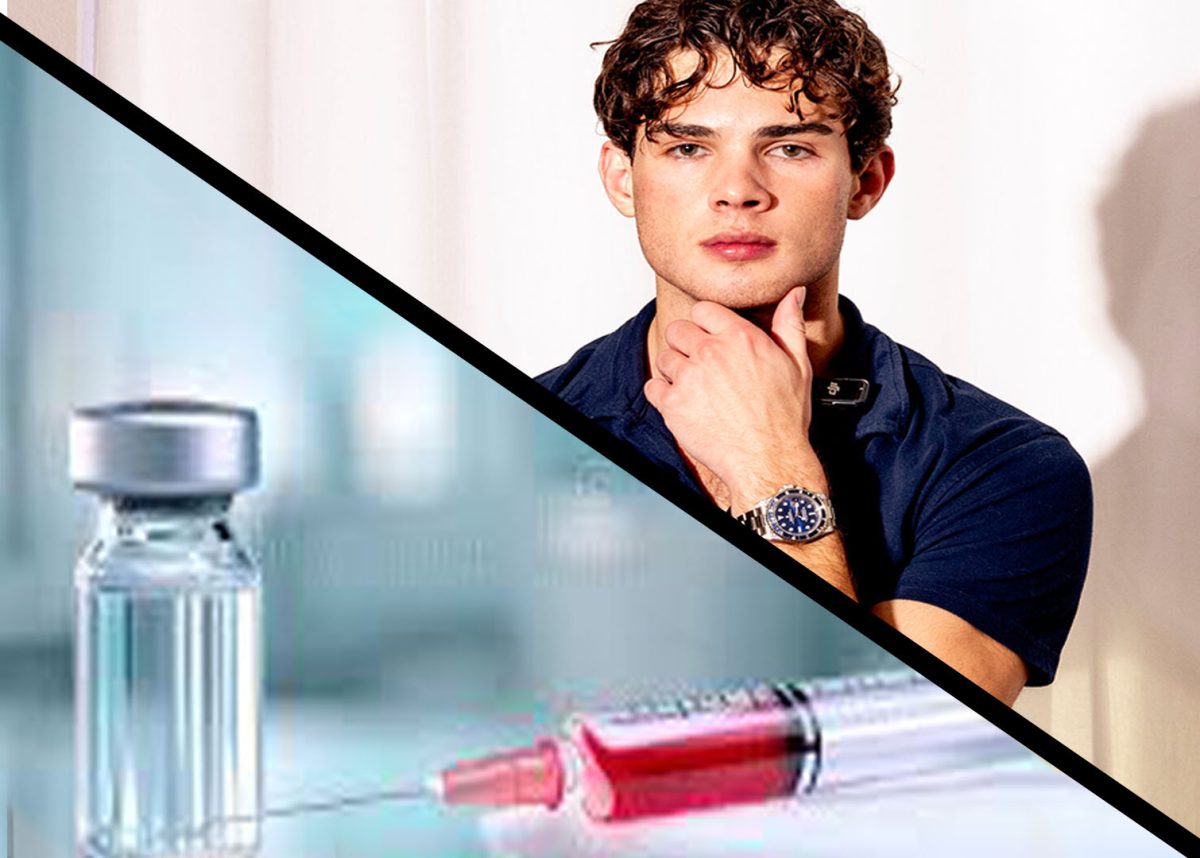
In practice, most looksmaxxing content is extreme. For example, one of Clavicular’s signature techniques is “bonesmashing,” in which he repeatedly hits his cheekbones with a hammer to reshape his skull. He has also been known to consume both supplements and drugs with the goal of enhancing his appearance.
The practices and products promoted in the looksmaxxing subculture are often dangerous or ineffective. “Very rarely do you see the conversations going down the right road, which is good nutrition, exercise, good sleep, good hydration, and consistency over time,” Strength and Conditioning Director Kevin O’Neill said.
Social media makes it easier than ever for influencers to earn money by convincing their viewers that they need to improve their looks. “I know someone who bought a nutrient gummy from TikTok Shop that’s supposed to be a mock GLP [weight management medication],” Helena Struzziery (Class III) said. “On TikTok Shop, people are able to earn commission from spreading false information.” When influencers can profit from a product, their priorities can easily be skewed. “I think kids need to keep in mind that the person they are seeing on social media most likely is there to sell a product and get more clicks rather than having their best interest in mind,” O’Neill said.
While it is indeed a slippery slope, the looksmaxxing trend is so exaggerated, and therefore amusing, that few take it seriously. “I feel like it gets to a certain point where these processes become so extreme that it gets [interpreted] as a joke,” Struzziery said.
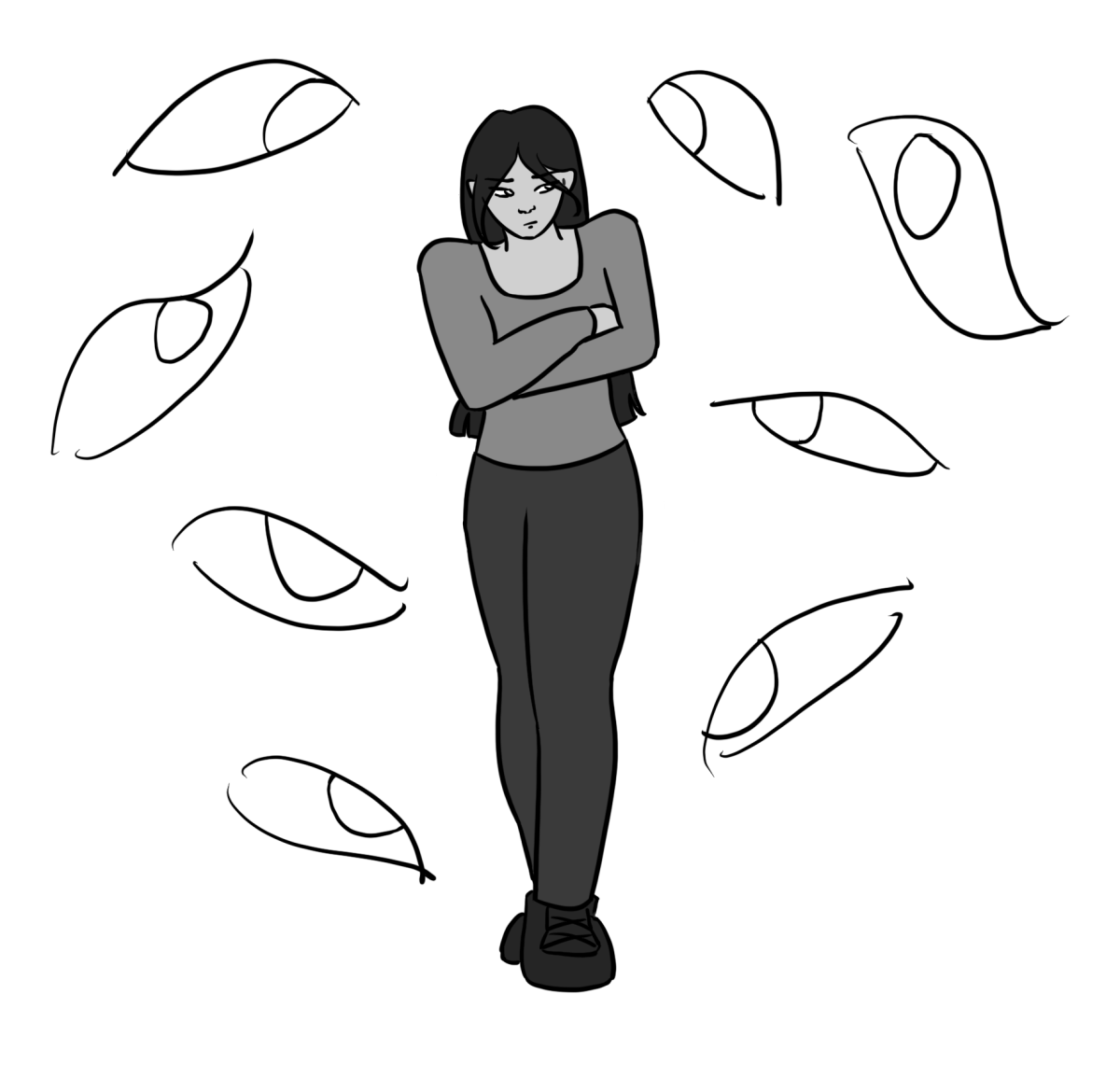
However, constant exposure to this trend could erode viewers’ self-perception over time. In his livestreams, Clavicular frequently rates others’ attractiveness, either on a numerical scale or by using slang terms: “Chad,” meaning very attractive; “Sub-Five,” meaning less attractive; and “Subhuman,” a highly problematic label for someone Clavicular perceives as unattractive. “I think if I had enough content on my page that was telling me that I was … not handsome enough, I’d probably eventually actually think that of myself,” Avery Ouellette (Class III) said. Lucas Carvajal Kossnar (Class II) said, “Online, I see people who are probably on steroids and who look incredible, but it’s not realistic. It can be really detrimental to your confidence and give you body dysmorphia.”
A hallmark of looksmaxxing is that it is one of the first beauty and insecurity-based movements to target a male audience rather than a female one. “A lot of the time, we associate [physical] insecurities and online movements with women,” said Hailey Rashes (Class I), co-editor-in-chief of Nobles’ feminist magazine The Twisst. “But what I’ve seen recently is a really big increase in this with men, especially with the manosphere [a highly chauvinistic and sometimes racist online community] and looksmaxxing. I think it’s putting a lot of pressure on boys to look a certain way.”
Insecurity and concerns about appearance are not consistent with traditional masculinity, often resulting in invalidation of men’s struggles with self-image. “When my eating disorder was at its worst, … there were times where I felt like I was pushed aside because of my gender,” Student Nobles Body Positive Facilitator Alex Mitchell (Class II) said. “The idea that [eating disorders and appearance are] a girls-only type of issue is definitely a narrative that has been forced in my face for a while.”
Eating disorders and other appearance-based issues historically have been associated with women. Clavicular’s viewers may give male insecurity less gravity because looksmaxxing and its consequences are presented as a meme.
In addition to looksmaxxing content preying on insecurity, it also idealizes typically white features, such as fair skin and European facial proportions. “With looksmaxxing, the goal is to reach a certain bone structure, which feels borderline eugenicist. People don’t quite pick up on it because it’s reframed in a new lens in the age of social media,” Mitchell said. In the looksmaxxing community, there is discussion of the pursuit of a “golden ratio,” and thus some looksmaxxers focus on enhancing their facial proportions, which bear a subtle resemblance to the anthropometric measurements used in some eugenics movements.
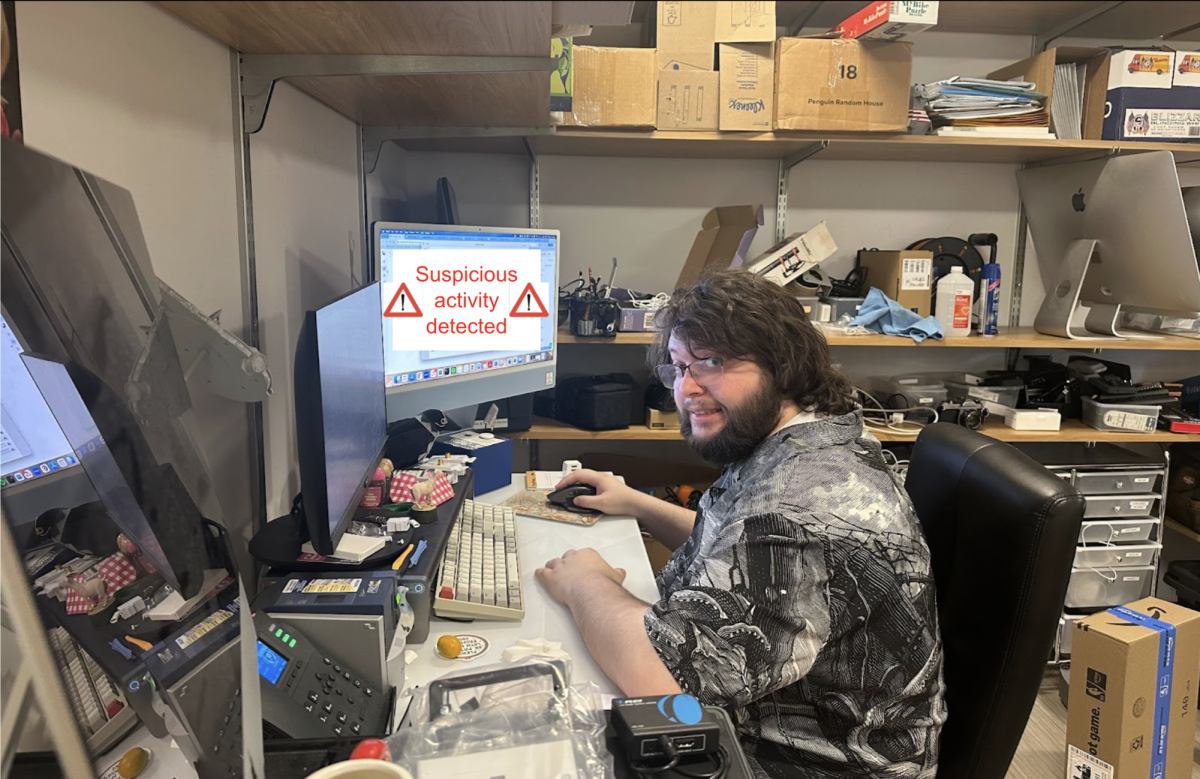
“I know there are a lot of people who joke about Clavicular, but I don’t think most people know that he’s actually a pretty racist guy, and the whole looksmaxing rabbit hole goes way deeper than people thought,” Avery Ouellette (Class III) said. Looksmaxxing is closely tied to the manosphere, thus its values are often congruent with those of the manosphere.
Looksmaxxing has attracted significant attention through clickbait-esque dialogue, yet has eluded online cancellation under a humorous pretext. However, it is imperative to see through such disguises and avoid the trend, given its harmful effects.