

















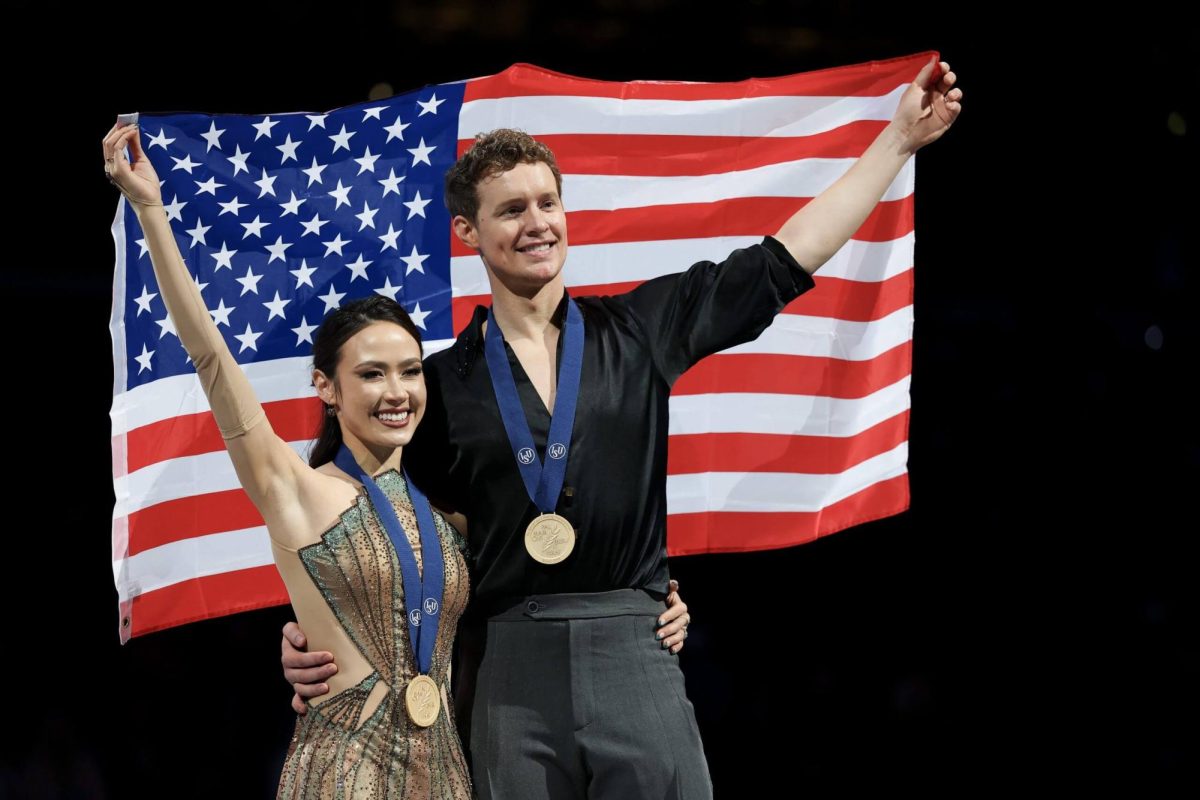
Athletes competing on behalf of the United States at the Winter Olympics in Milan, Italy, have grappled with what it means to represent the U.S. on a world stage, amidst a time when they may not be proud of the nation’s political and social state.
The outspokenness of many American athletes against the Trump administration has sparked controversy, as seen in the case of Men’s Olympic freestyle skier Hunter Hess. Hess recently clashed with President Trump over a statement he made while trying to understand and interpret the symbolism of the flag on his jersey.
Many question whether it is an athlete’s place to advocate for political and social ideas, as well as whether the blending of athletic entertainment and politics is appropriate. Mirroring the nationwide landscape, Nobles students have a range of views on whether there is a line between politics and entertainment, or where the line is crossed. “[Athletes] have their First Amendment right to say that something is wrong. If the U.S. wants to be considered a [world] superpower, it should be able to take criticism [from athletes],” Kate Osakwe (Class II) said.
Other students argue that Americans should seek apolitical unity under the American flag by supporting American athletes rather than using the Olympics as a reminder of America’s disharmony. Aidan Su (Class III) said, “Speaking out, especially in a divided country, can worsen political division. It might not ultimately be for the best because you’re emphasizing the fact that the country is divided when, in reality, the solution is to come together.”
Sophie Sunshine (Class II) competes for the Philippine National Women’s Alpine Ski Team, and recently travelled to Dubai, UAE, to represent the Philippines in the Saudi Arabian Championship. There, she was on the receiving end of the pride of the Filipinos watching her race. “[I felt] a connection to these complete strangers all under one flag. When I was racing in Dubai, there were so many Filipino workers at the indoor ski place, and when they saw my flag, they cheered for me purely because I was representing the Philippines,” Sunshine said. This positive interaction displays the benefits of politically unaffiliated athletic performances, showcasing the power of a flag’s unifying property.
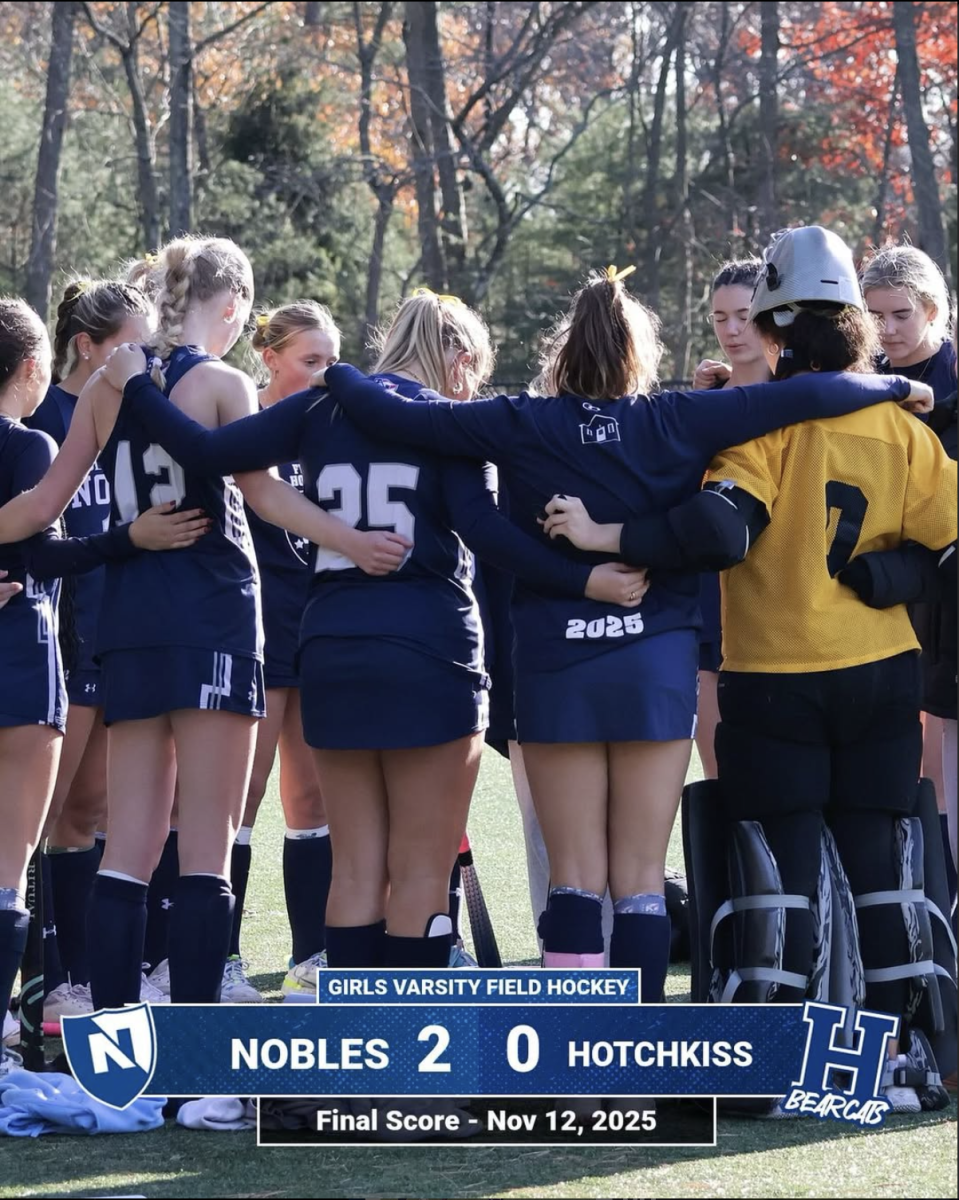
Catherine McCool (Class III) was one of three Nobles Girls Varsity Hockey players, along with Lily Bromley (Class II) and Ava Decourcey (Class II), who represented the U.S. at the U18 World Hockey Championship in Nova Scotia, Canada, this past January. “There’s more of a focus on bringing something home to your country, rather than what you’re bringing it home to. For me, that flag on my chest was the biggest honor. I just wanted to embrace it all, and respect the history and legacy of the U.S.,” McCool said.
Exactly what athletes are representing on a world stage can be hard to define. “You’re representing the U.S. to an extent, but there’s a lot of individual competition, so you’re focusing more on that,” Osakwe said. Sunshine interprets representation as something more communal and less personal. “It’s about the people cheering you on. That’s who you represent, because you’re an extension of the people’s support,” she said. Decourcey broadens this definition further, arguing that an athlete represents and embodies their country as a whole. “You’re representing the U.S.A. Those are the words on your jersey. It’s really everything in there,” she said.
In terms of how America is perceived in athletics versus on the geopolitical stage, students seem to feel there is a difference. “[In general], the U.S. is being painted in a really negative light,” Drew Palfrey (Class II) said. Strife and turbulence may characterize general perception of our nation, while in the Olympics, especially, America embodies victory and other positive ideas. Sunshine saw people’s perceptions of America in athletics as frozen in a specific era that best captures the country’s athletic prowess. “Many people still view America in athletics through a post-World War II lens, when sports showcased national strength and reinforced a culture of triumph,” Sunshine said.
Perhaps Americans can harness this sense of “strength” and “culture of triumph” and extend it to politics, bridging the ideological gap between different parties on a larger scale. The patriotism shown at the Olympics serves as a reminder that our nation is indeed capable of overcoming its differences and celebrating a cohesive American identity.