




















If you walk through the halls at Nobles and listen closely, you’ll hear a lot of relationship terms floating around, such as the talking stage, situationship, exclusive, or dating. They are used constantly, but ask people what they actually mean, and suddenly things get more complicated. Are they all just different words for the same thing? Or do they mark distinct stages in teenage relationships?
Most people agree the terms are different but only slightly. Rohan Rao (Class II) said, “Talking is more casual.” It’s the broadest and safest label often used when feelings exist but commitment doesn’t. “You might be interested in someone and texting them, but there’s no commitment,” Bixie Selkoe (Class IV) said. That vagueness is part of its appeal. “If you don’t have labels or know your situation, you can just say you’re talking,” Selkoe said.
Then comes the situationship, arguably the most debated term. “A situationship is kinda like will they, won’t they?” Oliver Stookey (Class II) said. Sophie Kalvelage (Class II) disagrees with the idea that it implies exclusivity: “I don’t think a situationship is exclusive until it’s defined,” she said. Students describe situationships as relationships that include consistent texting or hanging out but without clear labels, expectations, or public acknowledgment.
Dating, however, is much clearer to the general population. “Dating is commitment, and the rest of the terms are almost there,” Rao said. It is hanging out regularly with a mutual awareness of feelings. It’s the point where a relationship becomes recognizable to others.
Finally, there’s exclusive, the term many find redundant. “I feel like most of these things are inherently exclusive. If you have to say you’re ‘exclusive,’ that’s not a great thing,” Stookey said. What’s striking is how small the distinctions are. The labels don’t always describe different actions; two people might hang out, text constantly, and prioritize each other in the same way, but call it talking, exclusive, or dating. It depends on how defined or secure the relationship feels. Maya Afergan (Class III) said, “For many different people, labels mean different things and have more or less meaning.”
When asked which term teens use most, nearly everyone gave the same answer: talking because it carries the least risk. It implies interest without commitment, possibility without pressure. “Talking usually comes before dating, but it doesn’t always get there,” Stookey said. Some people remain in that stage for months, or even longer. Rao said, “People will be talking for a year because they’re afraid of commitment.”
The word has essentially become a placeholder for uncertainty. “We [teenagers] come up with weird in-between terms,” Kalvelage said. Teenage relationships, it seems, live in those in-between spaces.
Online conversations sometimes suggest that being in a relationship is uncool or embarrassing, an idea popularized by articles like “Is Having A Boyfriend Embarrassing Now?” in Vogue. However, Nobles students largely seem to reject that idea. “I think relationships are pretty normalized now,” Rao said. Students more often describe hesitation around relationships as practical rather than social. “I don’t think embarrassment is why people avoid relationships,” Kalvelage said. Selkoe has even heard the opposite sentiment: “I’ve heard a lot of people talking about wanting to be in a relationship or wanting to have a boyfriend,” she said. Rather than shame, there is often desire. Having someone to like or talk to is still socially appealing.
If teenagers aren’t embarrassed, their hesitation seems to come from commitment, not concern about their image. Some teenagers are intentional about avoiding relationships because they want freedom or don’t have much time. Students’ schedules are packed, and relationships require a lot of energy. Labels make expectations higher.
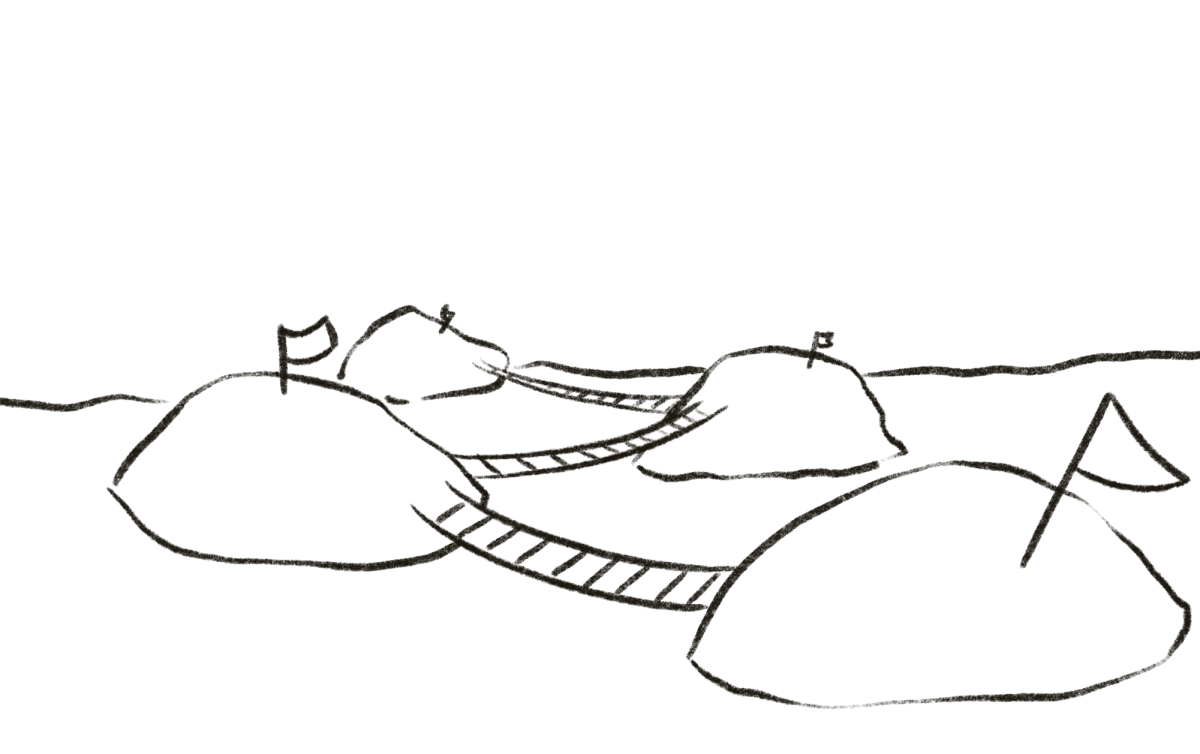
Dependence on context is the defining feature of modern teen relationships. Instead of fixed stages, there’s a spectrum: talking, situationship, exclusive, dating, each slightly more defined than the last. “You can’t really make a big generalization; it depends on the situation,” Stookey says.
In the end, what students seem to care about isn’t the label itself, but what it actually means. Whether you’re talking, in a situationship, or dating, the goal is usually the same: liking someone and figuring out where things might go. The labels just give a little structure, or not, if you want to keep it flexible. Most teens seem pretty comfortable leaving that part blurry, enjoying the connection without feeling like they have to define it right away.