

















Interspersed between regular performances, a handful of awards for Sixies through juniors are distributed during the final assembly of the year — perhaps the most prominent of them being the Trustees’ Prize for Scholarship. Annually awarding this prize to just one or two underclassmen per grade, in particular, has increasingly become an experience misaligned with the core values that Nobles champions. Contrary to the Trustees’ Prize for graduating seniors, the award, despite bearing the same name, carries a different, less positive meaning within the community than is intended and should be reconsidered as an underclassman award.
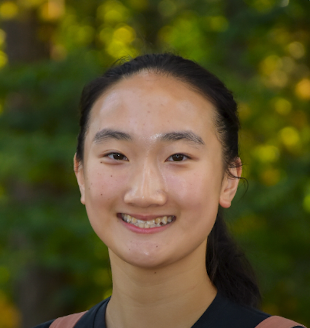
For seniors, the Trustees’ Prize is just one of many representations of years of consistent academic effort. In her senior year, Kate Wei (N ’24) shared the Trustees’ Prize with another one of her classmates and cherished Class I Awards Night. She said, “It was nice to sit with your senior class and watch everyone get recognized for everything that they’ve done over the past four years.” At the same time, Wei reflected on the contrast with her earlier years as a Nobles student. “The last assembly can be a stressful time, because a lot of people want to win the [Trustees’ Prize and other awards].” Not only is there much anticipation surrounding the announcement of the Trustees’ Prize recipients, but year after year, there are also far too many eligible students for the limited spots per grade.
Within Wei’s 2023-2024 senior year, the description of the Trustees’ Prize was changed to better reflect the school’s beliefs, establishing the final requirements for the award as the following: “The student has to earn above a 10.8 in at least one of the first three quarters of the academic year, and have demonstrated intellectual curiosity, academic leadership, and an eagerness to seek academic challenges. In addition, Trustees’ Prize recipients seek opportunities to support the learning and scholarship of others.”
Head of the Upper School Alison Easterling contributed to this definition shift, hoping to add clarity to the award’s requirements, beyond simply the highest academic results. “I think [the Trustees’ Prize] now is for someone who is achieving the highest level of excellence academically, but whose excellence isn’t only for themselves,” she said. “[It’s someone who] is, in their pursuit of academic rigor and excellence … a leader that raises the bar and the academic experience for other people around them.”
The transition to a more character-based academic award allowed the Trustees’ Prize to evolve with the school’s modern mission on paper, but some community members still feel conflicted about the award’s impact in reality. “I find prizes very challenging,” Easterling, for example, said. She recognized that awards generally demonstrate what a school values, yet are also few in quantity. “Award ceremonies, for the kids who are recognized, can be great moments, but everyone’s worked hard here, everyone’s grown, and everyone has achieved [so much] just by virtue of being at Nobles and being challenged over their years. It can be a mixed experience,” she said.
Catherine Curran (Class I) won the Trustees’ Prize in her freshman year, sharing it with Teja Hanumolu (Class I), and looks back on the memory fondly and with pride for her dedication. Still, Curran remembers feeling hesitant about the Trustees’ Prize defining her identity within the community. She said, “I kept [the award] very much on the down low when I won it, and I wasn’t really talking about it … A part of me knew that I had worked hard to deserve it, but what about the other 129 people in my class who were also putting the same amount of effort in and working really hard?” With such high academic achievement across the board in all grades, award recipients, feeling gratitude and honor for their selection, also wish there were a way to recognize all the work within their talented classes.
While it can act as a source of extrinsic motivation, the Trustees’ Prize can also easily become one’s singular goal for the school year. Students may find it difficult to enjoy or truly glean meaning from their studies under increased pressure to achieve near-perfect assessment scores. The fact that the award also serves to close out every academic year seems to emphasize results and titles over a long and steady learning journey.
The prize perhaps makes the most sense when presented to seniors at their designated Class I Awards Night, as it indicates consistent, distinctive academic achievement throughout the award recipient’s or recipients’ time at Nobles, similar to a class valedictorian in many high schools across the country. Although the Trustees’ Prize is not explicitly named the valedictorian award at Nobles, it is still widely seen as such among the grades. Johanna Heller (Class II) joined Nobles in seventh grade and found that her perception of the award, which she learned about at the end of her first year, has remained constant. “It took some time for people to realize that it was the valedictorian prize [that other schools have] … It also feels weird to name valedictorians something else [like the Trustees’ Prize],” she said. It is difficult for the new description of the Trustees’ Prize, despite its attempt to redesign what the award means, to gain traction, since the prize continues to be regarded as Nobles’ version of the valedictorian — the person who exemplifies the most traditional type of academic excellence — of each grade.
Redefining the Trustees’ Prize was intended to improve the award experience, but the sentiment surrounding the award and its suggestions for what academic success is have largely remained unchanged. The award’s recipients, past and future, are not at fault in any way; their hard work and commitment to academic excellence should not be blamed. Instead, the underclassmen awards should be reevaluated so that student identities are truly separated from the awards they do or do not receive and, more importantly, so they can focus on the process, rather than the outcome, of learning. Faculty work tenaciously to determine award recipients for the Trustees’ Prize, and it is just as challenging to choose the “best” athlete, writer, or modern language student to match the other traditional awards in underclassmen years. The near-impossible decision to select just one or two recipients out of so many qualified students for any award emphasizes the need for discourse about the Nobles awards culture — not just for the Trustees’ Prize — and how it could contribute most beneficially to the community. The Nobles experience is a marathon, not a series of one-year sprints, and it is imperative that the awards experience continues to evolve, with consideration of the generations of diligent students throughout the campus.