











On April 25, the leaders of the four faith-based groups on campus —Salaam, Credo, FOCUS, and Kehilla — held the first-ever Interfaith dinner, which brought individuals of differing faiths together to discuss how they practice their religion and to encourage positive dialogue among them. The leaders and members of Mosaic were also invited, as their cross-cultural group seeks to bridge gaps across aspects of students’ identities, including religion.
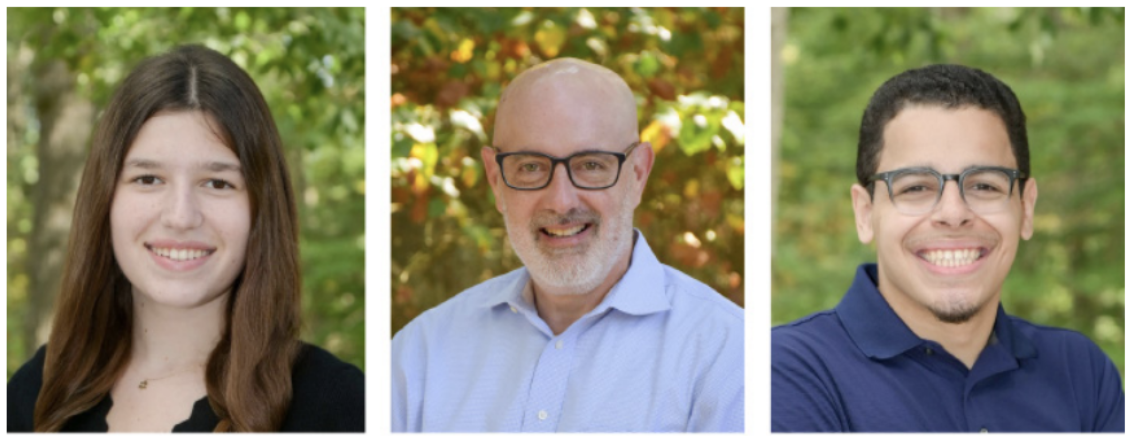
“As important as it is to have a smaller space [with only people of your identity] so you can … be surrounded by people who have similar experiences, it’s almost as important to be able to share those experiences with others,” Kehilla Leader Eitan Friedman (Class II) said. “At the end of the day, we’re all living in the same world together, and we’re not going to go about our lives divided into groups, so it’s important to bridge that gap.” The Interfaith dinner, along with the Athlete Ally forum in April and the recurring Multicultural Students Association (MSA) meetings, brought students together to make connections across identities, as Friedman had in mind.
At the dinner, attendees broke into small groups of around 10 people, including members from several affinity spaces. Naeem Logan (Class II), a leader of Salaam and MSA, said, “It created good conversation and good learning experiences for everybody because you got different perspectives, and you were able to use those to shape your own thinking process and build even more.” To foster discussion, students shared their favorite aspects of their religion, the principles of their faith they feel most connected to, and how their faith plays out in their lives at Nobles.
The dinner, which offered an opportunity to learn more about different faiths and how individuals practice them, encouraged discussion and reduced judgment. “It was really good learning about other people’s religions more deeply, because sometimes we can make judgments based on things we’re not entirely knowledgeable about,” Andrew Grosso (Class III), a leader of Credo, said.
Like the Interfaith Dinner, MSA, revitalized by students with the help of Modern Language Faculty Violet Richard and Chief Equity Officer Edgar De Leon, aspires to connect students of differing backgrounds. “My hope and my thought is that MSA can be a conversation where we can just learn from each other,” De Leon said. “If it’s a political topic, for example, we could disagree, but at least we know where we are all coming from. That’s the bigger goal,” he said. MSA offered a new chance for students from diverse backgrounds and experiences to share how those experiences impact them, similar to how the Interfaith dinner and Athlete Ally have sought to do in the past few weeks.
Started in 1995 as one of the first affinity groups on campus, De Leon revived it in 2024, when students pushed for a group to bridge the gap among the ever-increasing affinity groups serving students of a particular identity. “The hope for MSA was to give, just like it used to back in the day, a space for people to come together. I wanted both the physical space of a classroom, where students and teachers came together, and also the symbolic space of people of different backgrounds… who need conversations to happen,” De Leon said.
Both MSA and the Interfaith dinner were organized primarily by students, and De Leon believes this is just how it should be. “If we are in a school where I don’t have to create spaces, and people just come to me and tell me that they’re doing this and ask if I can pay for pizza, I think that’s a highly functioning, really productive institution,” De Leon said.
Athlete Ally, another recent gathering that brought together people of varying backgrounds, offered students a chance to lead discussions on sexual identity and allyship in athletics. Mathematics and Computer Science Faculty Molly McGuigan is a leader of the group, along with Class II Dean Chris Pratt and Director of Sports Medicine Gwen Chiaranda. “Athletics is still a hard place to be LGBTQ+, and we wanted to acknowledge that reality and provide an opportunity for this specific need to be addressed,” McGuigan said. In breakout groups, student leaders shared experiences of allyship in their sport and opened the floor to attending faculty and students to share theirs. Director of Strength and Conditioning Kevin O’Neill said, “We have really insightful students who have great voices and great ideas, and that’s what was so impactful about Athlete Ally, because we were able to have conversations that we usually don’t have, especially in the Weight Room.” The discussion brought students and faculty together to explore ways to make athletic culture as inclusive as possible. Athlete Ally, along with MSA and the Interfaith dinner, led with the principle of motivating students from diverse backgrounds to share their experiences, in the hopes that their distinct perspectives would inspire meaningful and productive conversations.
Ultimately, the Interfaith dinner, MSA, and Athlete Ally each sought to find common ground with community members of differing identities and inspire future discussions. While each of these discussions was carefully planned and cultivated to foster needed and positive dialogue, the leaders of each group hope that these discussions continue beyond these events.